

| Mitochondria play a central role in numerous
fundamental cellular processes ranging from ATP generation,
Ca2+ homeostasis, and apoptosis. Deregulation of
the mitochondrial Ca2+ homeostasis and free radical
production has been implicated in the development of neurodegenerative
diseases, diabetes, cardiomyopathy, and aging. Our long-term
research objective is to elucidate an integrative mechanism
by which mitochondria control intracellular Ca2+
signaling and reactive oxygen species (ROS) generation under
both physiological and pathological conditions. Current research
efforts are to focus on the four funded projects:
(1) Mitochondrial Ca2+ Transport in Heart Cells
Our immediate efforts are to characterize the
mitochondrial Ca2+ influx and efflux mechanisms in cardiac muscle cells and determine how these mechanisms
regulate excitation-contraction coupling. Our working hypothesis is that cardiac mitochondria contain
a Ca2+-activated, ryanodine-sensive and a Ca2+-activated cyclosporin-sensitive
Ca2+ permeable channel that are responsible for the fast uptake of Ca2+ into
and fast release of Ca2+ out of mitochondria, respectively. These dynamic Ca2+ transport
systems participate actively in regulating cardiac excitation-contraction coupling process, due to
their structural proximity to the junctions between sarcoplasmic reticulum and L-type Ca2+ channels.
(2) Mitochondrial Ca2+ Transport in Hypertrophied and Failing Heart
Our main objective is to determine the role of mitochondrial Ca2+ transport underlying cardiac hypertrophy and
heart failure. The working hypothesis is that a reduction in the magnitude of Ca2+ sequestration by
mitochondria, either due to a displacement of mitochondria from Ca2+ release sites of sarcoplasmic
reticulum and L-type Ca2+ channels and/or a defect in mitochondrial Ca2+ uptake mechanisms,
leads to a reduction in cardiac contractility and ATP production (heart failure).
(3) Mitochondrial Modulation of Neuronal Excitotoxicity
Our immediate goal is to determine the role of mitochodrial Ca2+ overload and oxidative stress in neuronal cell death. Our working hypothesis
is that Ca2+- and ROS-dependent mitochondrial permeability transition (MPT) opening is central
to the process of excitotoxic cell death, and that energetically impaired cells are more susceptible
to excitotoxic cell death because they have a higher likelihood of MPT occurrence in response to a
given excitotoxic stimulus.
(4) Mitochondrial Glutathione: Protection Against Spinal Cord Injury
In this proposal, we will test the hypothesis: "Enhancement
of mitochondrial glutathione concentration ameliorates oxidative
stress-induced damage to spinal cord neurons." The information
obtained from the present investigation will not only test
a unique hypothesis of how reactive oxygen species (ROS) mediates
spinal cord injury (SCI) but will also provide new and novel
strategies for the development of therapeutic agents for the
treatment of SCI.
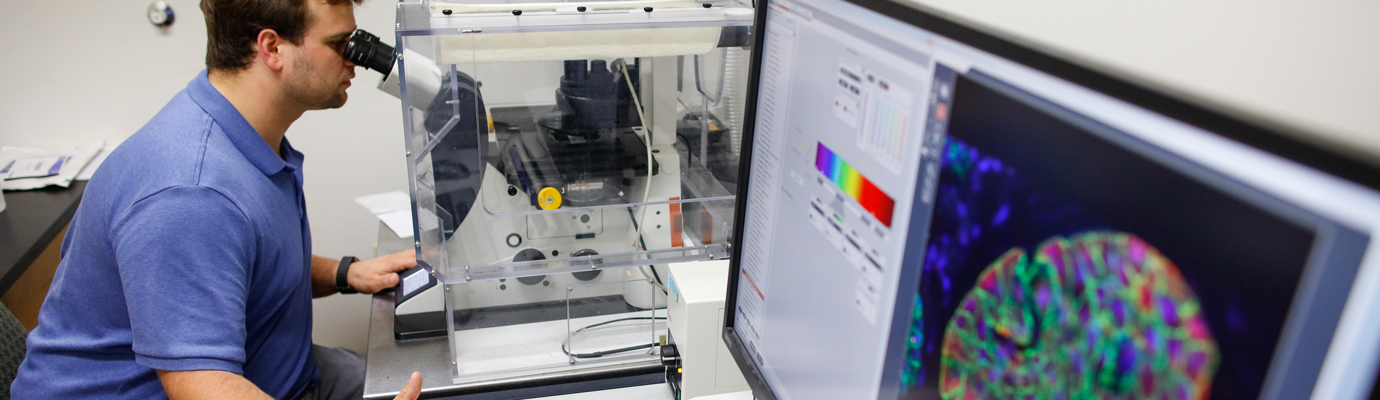
We will use a multidisciplinary approach, encompassing single
cell fluorescence confocal microscopy to measure cytosolic
and mitochondrial Ca2+ concentrations, patch clamp
to record L-type Ca2+ currents, and biochemical
and molecular biological techniques to probe the mitochondrial
Ca2+ transport proteins. This research will provide
important information regarding the fundamental principles
of mitochondrial Ca2+ transport mechanisms in heart
and brain cells. This information is critical for our understanding
of the participation of mitochondria in the etiology of cardiovascular
diseases such as cardiac arrhythmia, cardiomyopathy, and heart
failure as well as neurodegenerative diseases such as Alzheimer's
disease, Huntington's disease and Parkinson's disease. Ultimately,
it will provide insights to design novel targets for therapeutic
intervention in these diseases.
|
|
Anders MW, Robotham JL, and Sheu S-S. Mitochondria-targeted antioxidant prodrugs and methods of use. US Provisional Patent Application, 2005.
Beutner G, Sharma VK, Lin L, Ryu SY, Dirksen RT, and Sheu S-S. (2005) Type 1 ryanodine receptor in cardiac mitochondria: Transducer of excitation-metabolism coupling. Biochim. Biophys. Acta 1717:1-10.
Brookes PS, Sheu S-S, Anders MW. Method for attenuating mitochondria-mediated cell injury. US Provisional Patent Application, 2005.
Itoh S, Lemay S, Osawa M, Che W, Duan Y, Tompkins A, Brookes PS, Sheu S-S, and Abe J-I. (2005) Mitochondrial Dok-4 recruits SRC kinase and regulates NF-κB activation in endothelial cells. J. Biol. Chem. 280:26383-96.
Watanabe T, Suzuki J, Yamawaki H, Sharma VK, Sheu S-S, and Berk BC. (2005) Losartan metabolite EXP3179 activates Akt and eNOS via VEGF receptor-2 in endothelial cells: AT1 receptor-independent effects of EXP3179. Circulation 112:1798-805.
Anders MW, Robotham JL, Sheu S-S. (2006) Mitochondria: New drug targets for oxidative stress-induced diseases. Expert Opin. Drug Metab. Toxicol., 2:71-79.
Brdiczka DG, Zorov DB, and Sheu S-S. (2006) Mitochondrial contact sites: Their role in energy metabolism and apoptosis. Biochim. Biophys. Acta 1762:148-163.
Sheu S-S and Lemasters JJ. (2006) Special Issue: “Mitochondria in Diseases and Therapeutics”. Biochim. Biophys. Acta 1762:139.
Sheu S-S, Nauduri D, and Anders, M.W. (2006) Targeting antioxidants to mitochondria: A new therapeutic direction. Biochim. Biophys. Acta 1762:256-265.
Maekawa, N, Abe J-I, Itoh S, Ding B, Sharma VK, Sheu S-S, Blaxall BC, Berk BC. Inhibiting p90 ribosomal S6 kinase prevents Na-H exchanger-mediated cardiac ischemia-reperfusion injury. Circulation. 2006 (in press).
PubMed Publication List
PubMed is maintained by the National Library of Medicine
and provides complete abstracts of all 'sheu ss' publications,
as well as links to the full text of many articles (at journal homepages).
|