Polycystic Kidney Disease
What is polycystic kidney disease (PKD)?
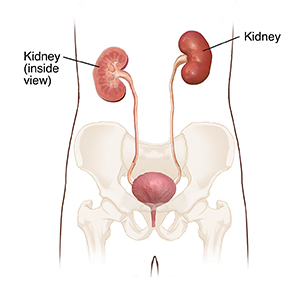
Polycystic kidney disease (PKD) is a rare genetic disorder. It causes cysts filled
with fluid to grow in the kidneys. PKD cysts can impair how the kidneys work. If numerous
cysts grow or become enlarged, this may lead to kidney failure. People with PKD can
also have cysts in the liver and problems in other organs, such as the heart and blood
vessels in the brain.
PKD is the fourth leading cause of kidney failure. It affects about 600,000 people
in the U.S., according to the National Kidney Foundation. About half of people with
the autosomal dominant form of PKD end up with kidney failure by age 50. About 3 in
5 will have kidney failure by age 70.
What are the different types of PKD?
There are two main forms of PKD that are inherited.
Autosomal dominant PKD
Autosomal dominant PKD (ADPKD) is the most common form of PKD. It accounts for about
90% of all PKD cases. Autosomal dominant means that if one parent has the disease,
there is a 50% chance that the disease will pass to a child. Both males and females
are equally affected.
ADPKD used to be called adult polycystic kidney disease. It is often diagnosed in
adulthood. Usually, at least one parent must have the disease for a child to inherit
it. In 1 in 10 cases, there may be no family history of PKD. These cases are new mutations
in a family. In very few cases, this type of PKD happens suddenly after conception.
Parents would not be at increased risk to have more children with PKD. But people
with PKD have a 50/50 chance of passing the gene on to their children.
Symptoms often start between age 30 and 40. But they can begin in childhood. They
may include:
-
Belly pain
-
Detectable belly mass
-
Pale color to skin
-
Easy bruising
-
High blood pressure
-
Kidney stones
-
Bulging of the walls of blood vessels (aneurysms) in the brain
-
Pouches in the intestines (diverticulosis)
-
Urinary tract infections
-
Blood in the urine (hematuria)
-
Liver and pancreatic cysts
-
Abnormal heart valves
ADPKD may happen with other conditions, such as:
-
Tuberous sclerosis (a genetic syndrome involving seizures, intellectual disability,
benign tumors, and skin lesions)
-
Liver disease
-
Severe eye problems
The symptoms of ADPKD sometimes look like other health problems. Always see your healthcare
provider for a diagnosis.
Diagnosis of ADPKD may include the use of imaging tests to detect cysts on the kidney
and other organs and a review of the family history. There are three different dominant
genes that have been identified. They further subdivide this type into PKD1, PKD2,
and PKD3.
A healthcare provider will create a treatment plan after careful consideration of
symptoms and health history. Treatment may include:
-
Pain medicine
-
Surgery to shrink cysts and ease pain
-
Treatment for high blood pressure
-
Treatment for urinary tract infections
-
Dialysis
-
Kidney transplant
Autosomal recessive PKD
Autosomal recessive PKD (ARPKD) is a rare form of PKD. It is thought to be caused
by a particular genetic flaw. This is different from the genetic flaw that causes
ADPKD. Parents who don't have the disease can have a child with the disease if both
parents carry the abnormal gene and both pass the gene to their child. Carrier parents
have a 1 in 4 chance with each pregnancy to have a child with this type of PKD. All
adults are equally affected.
ARPKD is sometimes found before birth (prenatally) using a fetal ultrasound. Symptoms
can start before birth. In most cases, the earlier the onset, the more severe the
outcome.
Children born with ARPKD may develop kidney failure in a few years. They often have:
-
High blood pressure
-
Urinary tract infections
-
Frequent urination
The disease also often affects the liver, spleen, and pancreas. This results in low
blood cell counts, varicose veins, and hemorrhoids.
The symptoms of ARPKD may look like other health problems. Always talk with a healthcare
provider for a diagnosis.
Diagnosis often includes ultrasound imaging of the developing baby or newborn to reveal
cysts in the kidneys. An ultrasound exam of kidneys of relatives may also be helpful.
A healthcare provider will figure out a treatment plan for ARPKD after careful consideration
of the child's symptoms and health history. Treatment may include: