

|
The cellular actions of many neurotransmitters and hormones are dependent on receptor-activated
increases in intracellular calcium concentrations ([Ca2+]i) in their target cells.
Our research is concerned with the pathways involved in the generation and control of these
[Ca2+]i signals in secretory and other "non-excitable" cells. Such signals
involve the receptor-mediated generation of a series of inositol phosphates one of which, inositol 1,4,5-trisphosphate
(InsP3), is known to be responsible for the transient release of Ca2+ from certain
intracellular stores initiating the Ca2+ signal. However, sustained signals depend on a
receptor-activated entry of Ca2+ from the extracellular medium. The major focus of our research
concerns the precise relationships between this receptor-activated entry of Ca2+ across the plasma
membrane, the generation of specific inositol phosphates, and the status of the agonist-sensitive intracellular
Ca2+ stores - particularly during the pronounced [Ca2+]i oscillations that
form the signals that are usually seen under physiological conditions. We have recently identified and
described a novel Ca2+ entry pathway regulated by a phospholipase A2-mediated generation
of arachidonic acid that appears to be specifically responsible for the control of Ca2+ entry
under such conditions. The nature, and mechanism of activation, of this novel pathway is the major focus of
our current research.
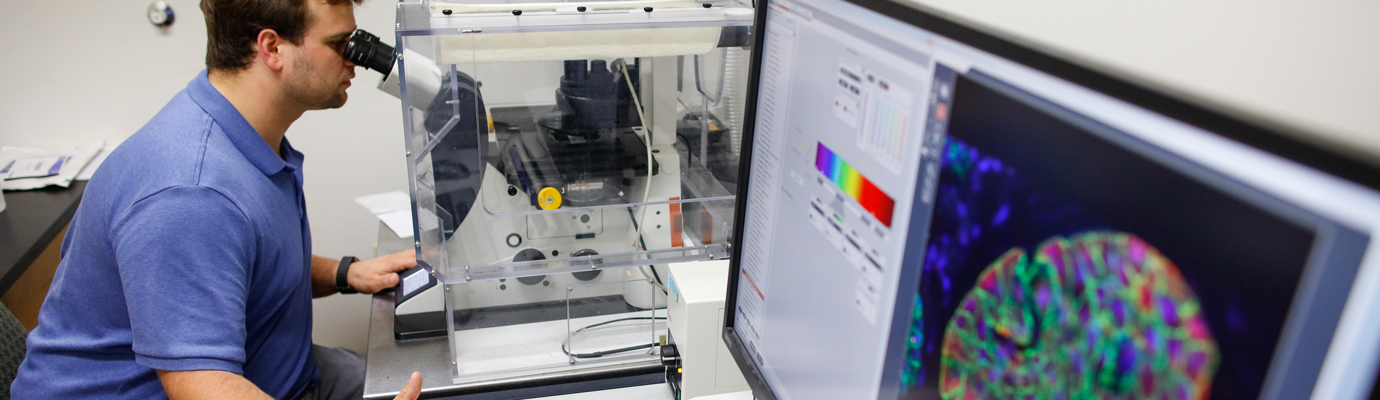
Techniques used include digital imaging, real-time confocal imaging, and photon-counting microfluorimetric
measurements of intracellular Ca2+ concentrations in single cells; flash photolysis of intracellularly
incorporated "caged" molecules; patch-clamp analysis of ion-channel activities; and biochemical and molecular
studies of the generation and metabolism of inositol phosphates, arachidonic acid, and other intracellular signaling molecules.
|
|
Melvin, J.E., Yule, D., Shuttleworth, T.J., and Begenisich,
T. (2005) Regulation of fluid and electrolyte secretion in
salivary gland acinar cells. Annu. Rev. Physiol. 67:445-469.
Mignen, O., Thompson, J.L., and Shuttleworth, T.J. (2005) Arachidonate-regulated Ca2+-selective (ARC) channel activity is modulated by phosphorylation and involves an A-kinase anchoring protein. J. Physiol.567.3:787-798.
Mignen, O., Thompson, J.L., Yule, D.I., and Shuttleworth,
T.J. (2005) Agonist activation of arachidonate-regulated Ca2+-selective
(ARC) channels in murine parotid and pancreatic acinar cells.
J. Physiol. 564.3:791-801.
Mignen, O., Brink, C., Enfissi, A., Nadkarni, A., Shuttleworth, T.J., Giovannucci, D.R., and Capiod, T. (2005) Carboxyamidotriazole-induced inhibition of mitochondrial calcium import blocks capacitative calcium entry and cell proliferation in HEK-293 cells. J. Cell Sci. 118:5615-5623.
Mignen, O., Thompson, JL., and Shuttleworth, T.J. (2007) STIM1 regulates Ca2+ entry via arachidonate-regulated Ca2+-selective (ARC) channels without store depletion or translocation to the plasma membrane. J. Physiol. 579.3:703-715.
Wood, C.M., Munger, Thompson, J., and Shuttleworth, T.J. (2007) Control of rectal gland secretion by blood acid-base status in the intact dogfish shark (Squalus acanthias).
Respir. Physiol. Neurobiol.
156:220-228.
Mignen, O., Thompson, J.L., and Shuttleworth, T.J. (2008) Both Orai1 and Orai3 are essential components of the arachidonate-regulated Ca2+-selective (ARC) channels. J. Physiol. 586.1:185-195.
Mignen, O., Thompson, J.L., and Shuttleworth, T.J. (2008) Orai1 subunit stoichiometry of the mammalian CRAC channel pore. J. Physiol. 586.2:419-425.
PubMed Publication List
PubMed is maintained by the National
Library of Medicine
and provides complete abstracts of all 'shuttleworth tj'
publications,
as well as links to the full text of many articles (at journal
homepages).
|