

University of Rochester Medical Center
SearchDirectoryNewsEventsStrong HealthURMC Home


Ph.D. (1981)
Indiana University
Suzanne Y. Stevens
Associate Professor
Neurobiology and Anatomy


For more details about Suzanne Stevens:
Go to the Department of Neurobiology and Anatomy Website

Research: Neural Immune Interactions

Contact Information:
  E-Mail: suzanne_stevens@urmc.rochester.edu
University of Rochester
School of Medicine and Dentistry
601 Elmwood Ave, Box 603
Rochester, New York 14642
Medical Center 5-7617
Phone: (585) 275-2030
Fax: (585) 756-5334
Research Overview

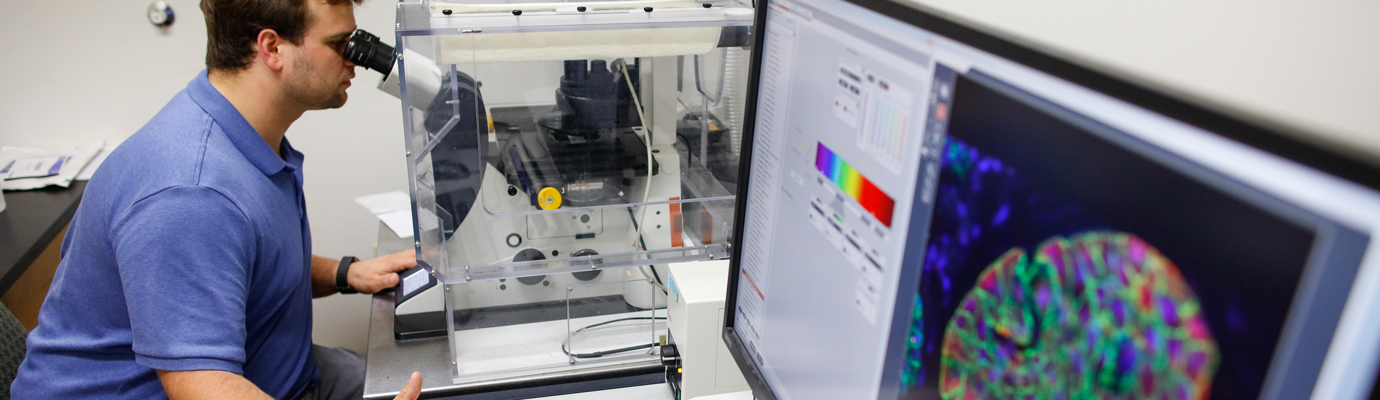
Monoamine systems, in both the periphery and the central nervous system are vulnerable to toxic insult from a variety of sources, including oxidative products of metabolism, response to injury or challenge, and exogenous toxic substances. This laboratory uses a number of anatomical, neurochemical and pharmacological methods, including immunocytochemistry, in situ hybridization, autoradiography, electron microscopy, HPLC, in vivo electrochemistry, in vivo microdialysis, and in vitro superfusion to investigate the function of these systems, and to elucidate mechanisms by which damage may occur. In collaboration with other laboratories, behavioral, molecular, and physiological techniques are also applied to these basic research problems.

Currently, the main focus of the work done in this laboratory is the investigation of insult to central dopamine systems resulting from exposure to pesticides, particularly pesticides used in combination. Much of this work is being done in collaboration with Dr. Deborah Cory-Slechta. Her laboratory has determined that certain heavily used agricultural pesticides can act synergistically to produce changes in motor behavior and selective damage to nigrostriatal dopamine neurons, suggesting that exposure to these compounds may be a risk factor for Parkinson's Disease. This laboratory is carrying out studies to determine neurochemical mechanisms by which these pesticide combinations may do their damage. Further studies will emphasize the effects of aging and route of exposure. Based on these studies, strategies designed to protect the system from damage and promote plasticity will be investigated and include reuptake blockade, monoamine oxidase inhibition, and the use of pre- and post synaptic agonists to decrease release of endogenous transmitter. The age at which these protective strategies must be initiated to be effective is an important variable as is the presence and availability of various growth factors.

This laboratory collaborates with that of Dr. Chang-seng Liang in the Department of Cardiology to investigate damage to sympathetic innervation of the failing ventricle in various models of congestive heart failure. At least some of the denervation associated with heart failure can be prevented using uptake blockers or antioxidants.

Recent Publications

PubMed Citations

Liang C.S., Mao W., Iwai C., Fukuoka S., Stevens S.Y. Cardiac sympathetic neuroprotective effect of desipramine in tachycardia-induced cardiomyopathy. Am J Physiol Heart Circ Physiol. 2006 Mar;290(3):H995-1003. Epub 2005 Oct 7.

Bellinger D.L., Stevens S.Y., Thyaga Rajan S.Lorton D., Madden K.S. Aging and sympathetic modulation of immune function in Fischer 344 rats: effects of chemical sympathectomy on primary antibody response. J Neuroimmunol. 2005 Aug;165(1-2):21-32.

Collier, T.J., Greene, J.G., Felten D.L., Stevens S.Y., Collier K.S. Reduced cortical noradrenergic neurotransmission is associated with increased neophobia and impaired spatial memory in aged rats. Neurobiol Aging. 2004 Feb;25(2):209-21.

Kelley, S.P., Moynihan, J.A., Stevens, S.Y., Grota, L.J., Felten, D.L. 2002, Chemical Sympathectomy Has No Effect on the Severity of Murine AIDS: Murine AIDS Alone Depletes Norepinephrine Levels in Infected Spleen. Brain Behav. Immun., 16(2):118-39.

Rice, P.A., Boehm, G.W., Moynihan, J.A., Bellinger, D.L., Stevens, S.Y. 2002, Chemical sympathectomy alters numbers of splenic and peritoneal leukocytes. Brain Behav. Immun., 16(1):62-73.

Qin, F., Vulapalli, R.S., Stevens, S.Y., Liang, C.S. 2002, Loss of cardiac sympathetic neurotransmitters in heart failure and NE infusion is associated with reduced NGF. Am. J. Physiol. Heart Circ. Physiol., 282(1): 363-71.

Shite, J., Qin, F., Mao, W., Kawai, H., Stevens S.Y., Liang, Chang-seng 2001, Antioxidant Vitamins Attenuate Oxidative Stress and Cardiac Dysfunction in Tachycardia-Induced Cardiomyopathy. J. Am. Coll. Cardiol., 38(6):1734-40.

Rice, PA, Boehm, G.W., Moynihan, J.A., Bellinger, D.L., Stevens, S.Y. 2001, Chemical sympathectomy increases the innate immune response and decreases the specific immune response in the spleen to infection with Listeria monocytogenes. J. Neuroimmunol., 114(1-2):19-27.


Go to Neurobiology and Anatomy

GEBS Clusters:
MTEM

NS