

University of Rochester Medical Center
SearchDirectoryNewsEventsStrong HealthURMC Home


Ph.D. (1990)
University of Rochester

Thomas Foster
  Professor

Primary Appointment:
  Radiology

Joint Appointments:
  Physics and Astronomy, Institute of Optics, and Cancer Center

GEBS Cluster Affiliation:
  BSB - Biophysics and Structrual Biology


Research:   Visit the Foster lab web pages.
  Optical methods in cancer treatment and diagnosis.

Contact Information:
  E-Mail: Thomas.Foster@rochester.edu
University of Rochester
School of Medicine and Dentistry
601 Elmwood Ave, Box 648
Rochester, New York 14642
Medical Center 3-5333
Phone: (585) 275-1347
Research Overview
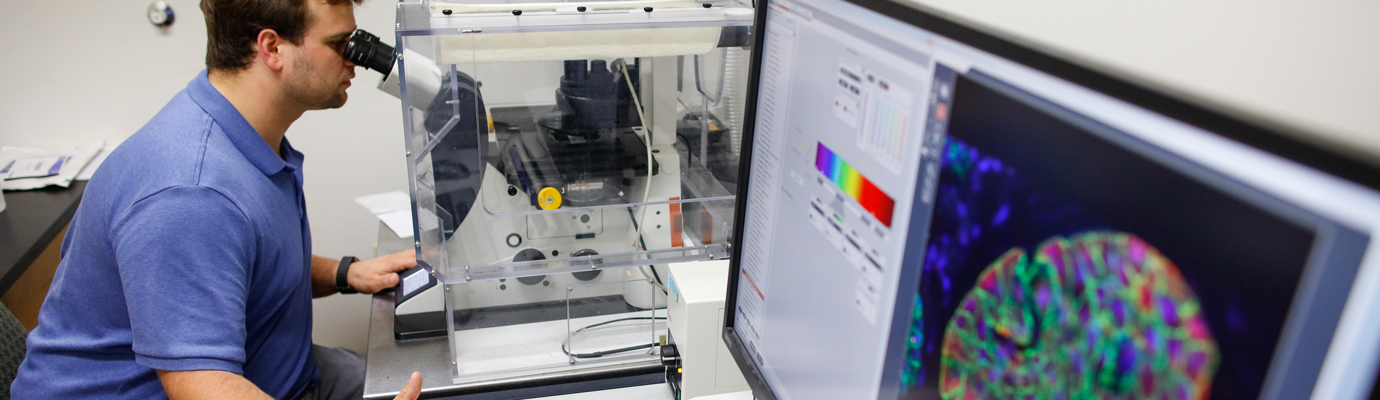
Professor Foster's research activities involve medical diagnostic and therapeutic applications of visible and near-infrared light. In particular, the group is studying various aspects of photodynamic therapy (PDT), which is a relatively new cancer intervention that recently received limited approval in the U.S. and several other countries. PDT uses certain tumor seeking compounds which, when irradiated with visible light, initiate cytotoxic photochemical reactions that produce local tumor necrosis. These photochemical reactions depend on oxygen consumption. Professor Foster's group is studying the detailed kinetics of the photochemical depletion of tissue oxygen and its re-supply through diffusion. Microelectrode measurements of oxygen consumption in multicell tumor spheroids during laser irradiation have been an important source of information regarding the rates of these processes and the rates and mechanisms of photosensitizer degradation (bleaching). Recently we have extended these experiments to include direct measurements of photosensitizer fluorescence and photoproduct formation in vivo. In parallel experiments, we are using laser scanning confocal fluorescence imaging and spectroscopy to monitor these quantities in spheroids. In close collaboration with molecular biologists, we have begun to explore the use of fluorescent reporters of gene induction by PDT.

The group is also interested in optical properties of tissue and specifically, in spectroscopic methods to characterize tumor oxygenation and other aspects of the tumor micro-environment non-invasively. Quantitative spectroscopy is complicated by the fact that tissue is strongly scattering at visible and near infrared wavelengths. Using approaches based on radiative transport theory, the group has recovered accurate hemoglobin absorption spectra from strongly scattering, tissue-simulating phantoms and from the surface of laboratory tumor models in vivo. We have begun to use confocal fluorescence imaging of tumor sections to observe the recruitment of immune cells into the tumor and to measure the activity of enzymes that may contribute to tumor micro-invasion and metastasis.


The energy level diagram of the photosensitized type II production of 1O2. Ground state (S0) sensitizer molecules with absorption cross section s absorb light of intensity I. The resulting excited singlet states (S1) return to (S0) at a rate kf or are converted to the triplet state (T1) via intersystem crossing at a rate kisc. These triplets are quenched through collisions with 3O2 at a rate kot. A fraction of these quenching collisions results in energy transfer and the formation of 1O2. Oxygen is removed from the system through the chemical reaction of 1O2 with substrate.
Recent Publications
Publication list, as provided by PubMed.
PubMed is maintained by the National Library of Medicine and provides complete abstracts of all publications, as well as links to the full text of many articles (at journal homepages).

For a more complete list of publications and current research activities, please go to the Foster group on the web.


Back to Radiology

GEBS Cluster:
BSB