




Welcome to the Morrell Lab
Research in our lab is focused on the complex interface between platelets, the vasculature, and immune cells. Platelets are not only the cellular mediators of thrombosis, but also have important roles in inflammatory and immune cell responses. Ongoing and past studies by our group have examined platelet, and platelet derived inflammatory mediator interactions with both vascular and immune cells, and the impact of these interactions on tissue injury responses in disease relevant contexts. These studies demonstrated that platelets are regulators of all aspects of inflammatory responses, including the induction of acute phase responses, innate immune cell activation and trafficking, T helper cell differentiation, and B cell development. Our lab regularly uses advanced mouse models to dissect molecular interactions and vascular inflammatory signaling pathways both in vitro and in vivo, establishing our lab as leaders in understanding how platelets regulate vascular and immune cell homeostatic and inflammatory responses. Our work continues to define many novel implications for platelet immune regulation in vascular and inflammatory disease processes.
Mentoring and Teaching
I am actively involved in research training at URMC. Over the course of my research career I have mentored 7 undergraduates (3 women, 1 underrepresented minority), 8 doctoral students (7 women, 4 underrepresented minorities), 2 masters students (both underrepresented minority females), and 6 postdoctoral fellows (4 female, 1 underrepresented minority). Presently, I mentor 3 doctoral students and 1 post-doctoral fellow. I have sat, or currently sit, on the thesis committees of 14 graduate students. In addition, I am a member of the MSTP (MD/PhD) admissions committee at URMC.
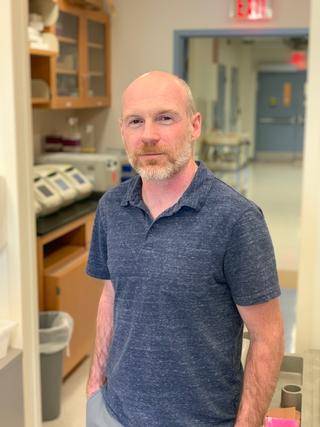
Craig Morrell, D.V.M., Ph.D.
Principal Investigator
Selected Publications
Shi G, Field DJ, Ko K, Ture S, Srivastava K, Levy S, Kowalska MA, Poncz M, Fowell DJ, Morrell CN. “Platelet Factor 4 Limits Cardiac Allograft Rejection in Mice by Suppressing Th17 Differentiation”. Journal of Clinical Investigation. February 3, 2014; 124(2):543-52.
Cameron SJ, Ture SK, Mickelsen D, Chakrabarti E, Modjeski KL, Seaberry M, Field, DJ, Le NT, Abe JI, Morrell CN, “Platelet ERK5 is a Redox Switch and Triggers Maladaptive Platelet Responses and Myocardial Infarct Expansion”. Circulation. July 7, 2015;132(1):47-58.
Field DJ, Aggrey-Amable AA, Blick SK, Ture SK, Johanson A, Cameron SJ, Roy S, Morrell CN (2017). “Platelet Factor 4 Increases Bone Marrow B cell Development and Differentiation”. Immunologic Research. 65(5):1089:1094 (2017).
Cameron SJ, Mix DS, Ture SK, Schmidt RA, Mohan A, Pariser D, Stoner MC, Shah P, Chen L, Zhang H, Field DJ, Modjeski KL, Toth S, Morrell CN. “Hypoxia and Ischemia Promote a Maladaptive Platelet Phenotype”. Arteriosclerosis Thrombosis and Vascular Biology. Jul;38(7):1594-1606 (2018).
Hilt ZT, Pariser DN, Ture SK, Mohan A, Quijada P, Asante A, Cameron SJ, Sterling JA, Merkel AR, Johanson AL, Jenkins JL, Small EM, McGrath KE, Palis J, Elliott MR, Morrell CN. “Platelet-Derived b2M Regulates Monocyte Inflammatory Responses”. Journal of Clinical Investigation Insight. March 7, 2019;4(5).
Hilt ZT, Ture SK, Mohan A, Arne A, Morrell CN. “Platelet-Derived b2M regulates age related monocyte/macrophage functions”. Aging. 2019 Dec 18;11(24):11955-11974.
View All PublicationsAffiliations
- Medicine
- Pathology & Laboratory Medicine
- Microbiology & Immunology
- Aab Cardiovascular Research Institute
- Center for AIDS Research
- NIH T32 Training Grant in Immunology
- Pulmonary T32 Training Grant
- Cellular and Molecular Pharmacology and Physiology Ph.D. Program
- Immunology, Microbiology, and Virology Ph.D. Program
- PhD Program in Pathology - Cell Biology of Disease
- Translational Biomedical Science Ph.D. Program
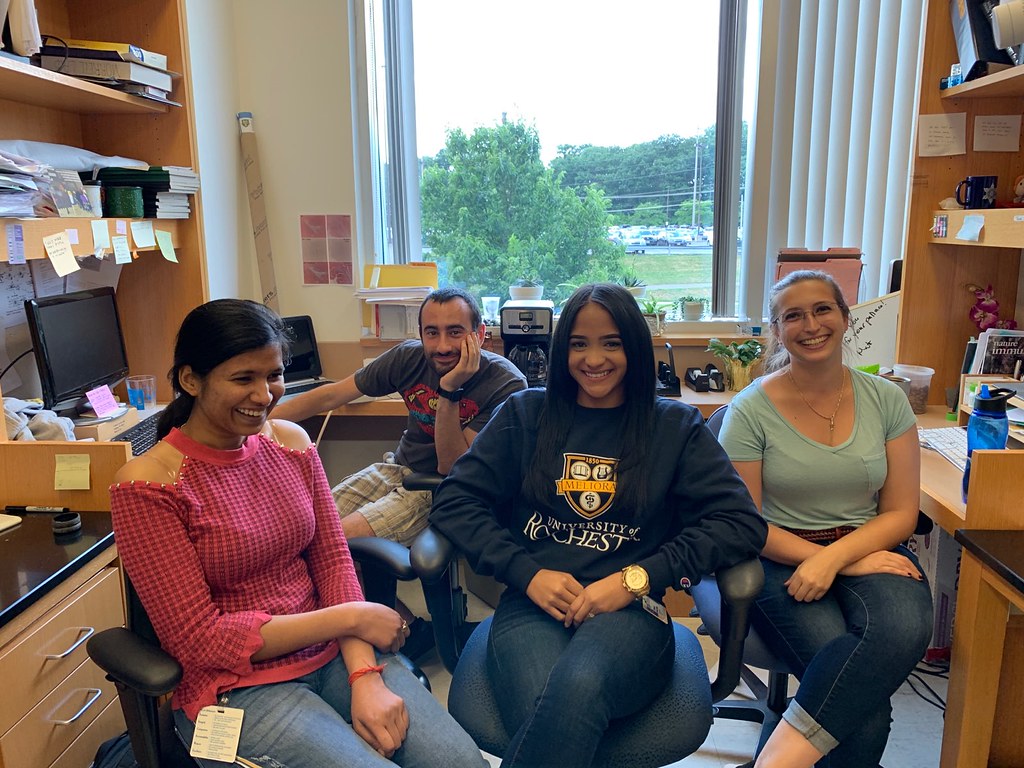
Lab Photos
Contact Us
Morrell Lab
601 Elmwood Ave
Box CVRI
Rochester, NY 14642