

Anatomy and Neurochemistry of Major Psychiatric Illnesses
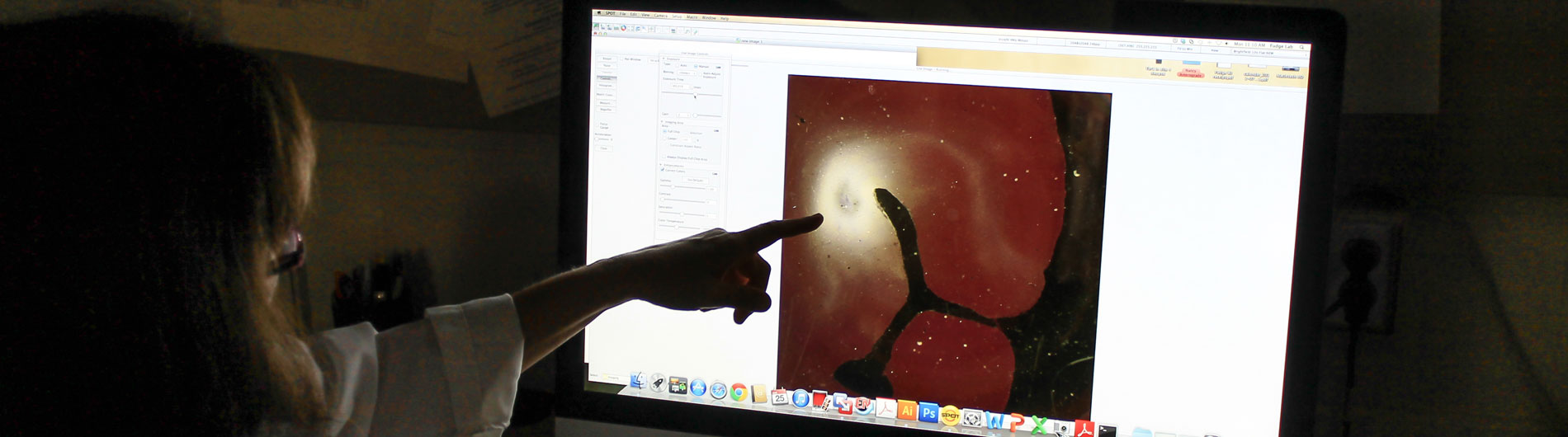
A longstanding focus of our laboratory is to examine how pathways through the amygdala in nonhuman and human primates are positioned to mediate symptomatology of severe mental illnesses. Scores of human neuroimaging studies over the last several decades show that amygdala dysfunction—its structure, function, or both—is a component of many psychiatric syndromes. Broadly speaking, this is not surprising since the amygdala has long been known to code the ‘salience’ of external experience. Yet how does the amygdala participate in many diverse and specific functions including fear conditioning and extinction, safety signaling, recognition of emotion in facial expression, and affective responses to primary rewards and punishments? Many of these functions have seemingly opposing goals, raising the question of whether discrete amygdala cell groups in specific nuclei participate in circuits, or whether circuits are flexibly configured with many cellular types that ‘tune’ circuit responses. These questions can only be answered at the cellular level, in brains close to the human.
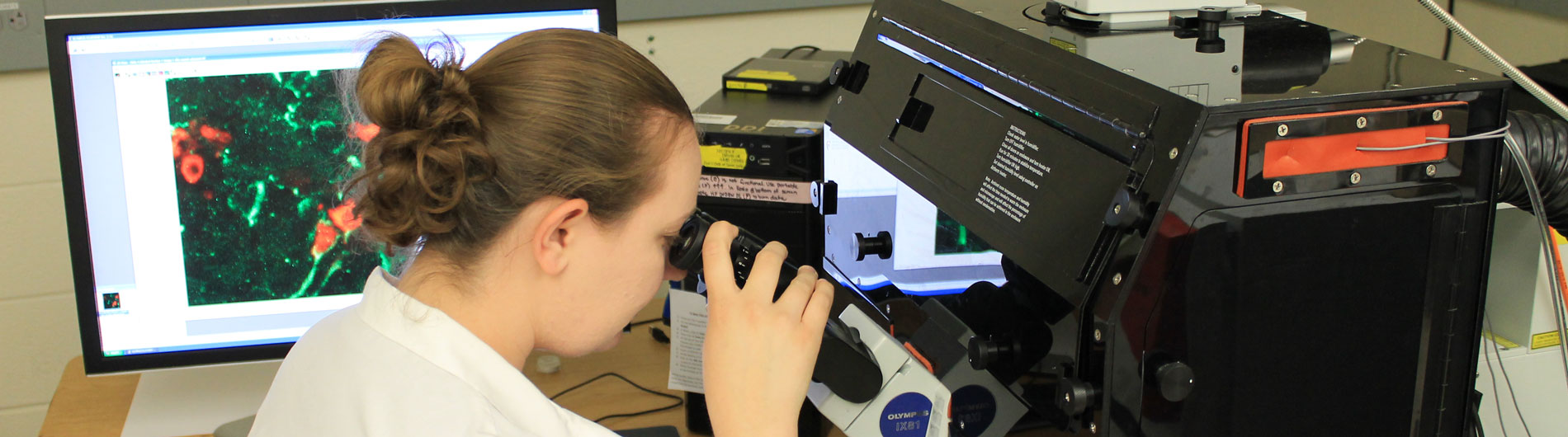
Ongoing studies in our laboratory use nonhuman primate models to identify how input/output pathway through the amygdala converge and segregate in order to understand how various types of emotional coding might take place in the human. We are leveraging single-nuclear RNA sequencing to identify molecular phenotypes involved in specific circuits. Our work is important in helping to design and interpret outcomes of human neuroimaging work, to understand the ground-truth of circuits, their cellular characteristics. We work collaboratively with several groups studying brain-behavior manifestations of psychiatric disease in humans.
Finally, because many psychiatric symptoms emerge in early life, and are brought on by stress, we are studying the cellular and molecular development of the nonhuman primate amygdala in infancy and adolescence monkeys. The monkey and human amygdala are striking similar anatomically, and develop slowly until late adolescence. Importantly, a dense collection of late-developing glutamatergic neurons migrate and differentiate in the interval between infancy and adolescence, likely incorporating into new circuits. We have shown that these ‘building’ blocks of the amygdala are decreased by early life stress, and may explain aberrant amygdala signaling and connectivity later in development
We invite you to visit our research projects page to see specific projects ongoing in the laboratory.
A word to undergraduates…
Get the scoop on undergraduate rotations! See details.
Highlighted News from the Lab
It's a wrap: presenting Dr. Dennisha King
 Dr. King presented and defended her work on 'The role of microglia in shaping neural development in the macaque amygdala.' Dennisha's work has added an amazing dimension to our understanding of primate amygala development and how disrupted maternal care sets up a long-lasting change in microglia in this region, with potential consequences for neural development and survival. We look forward to great things from her --she is on the job market!
Congratulations!
Daulton Myers presents at SFN 2025 Minisymposium
 Neuropsychiatric disorders with ‘internalizing’ features such as depression and anxiety involve a brain region known as the ‘anterior cingulate cortex (ACC)’. Newer therapeutics build on previous knowledge of ACC structures to robustly ‘re-set’ brain circuits that do not function properly in these illnesses. Daulton Myers Co-Chaired and presented at our Minisymposium entitled ‘Circuit-based approaches to understanding the anterior cingulate cortex (ACC)’. His talk demonstrated that different cortical and thalamic connectomes are afferent drivers of classic ACC subregions, which likely underpin different functional targets. Other speakers delineated ACC circuit outputs, and cellular and behavioral effects of the latest treatment approaches.
Dennisha King wins admission to the 2025 Scholar Mentoring & Development Program for Biotechnology (SMDP Biotech)
 This competitive award supports a year-long mentoring program with industry scientists, in which Scholars develop a Personalized Mentoring Plan and explore roles in the Biotechnology Industry.
This program is supported by the International Center for Professional Development, launched and working globally through the UNESCO framework.
Dennisha kicks off this exciting year at the 2025 BIO International Convention, Boston, MA next month.
Congratulations!
UR Expo 2025 features 125 undergraduate scientists: Phoebe Shin
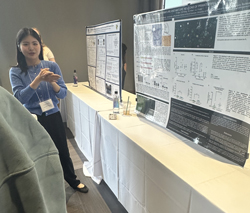 Phoebe Shin, a neuroscience major, presents new work that tries to unravel when and how new neurons in the amygdala are lost after early life stress. She presented new findings showing increased apoptosis in developing neurons, potentially explaining neuronal loss in young animals following an early life stressors. Come see a reprise of her work at the Department of Neuroscience Annual Retreat, April 25, Memorial Art Gallery.
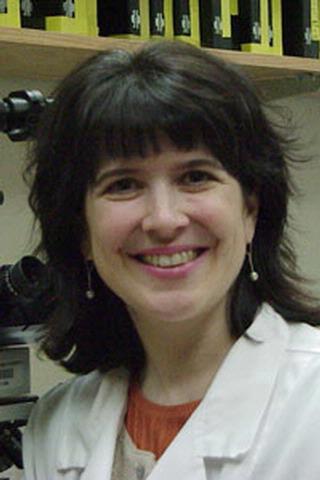
Julie Fudge, M.D.
Principal Investigator


- Cortical and thalamic afferent connectomes distinguish ACC subregions of the macaque brain.; bioRxiv : the preprint server for biology. 2026 Mar 05.
- Disrupted maternal care alters neural-microglia interactions in the primate paralaminar (PL) nucleus of the amygdala.; bioRxiv : the preprint server for biology. 2026 Jan 06.
- Circuit-Based Approaches to Understanding the Anterior Cingulate Cortex (ACC).; The Journal of neuroscience : the official journal of the Society for Neuroscience; Vol 45(46). 2025 Nov 12.
- Translating stress systems: corticotropin releasing factor, its receptors, and the dopamine system in nonhuman primate models.; Genomic psychiatry : advancing science from genes to society; Vol 1(3), pp. 28-43. 2025 May 13.
News
Affiliations
April 16, 2026
It's a wrap: presenting Dr. Dennisha King
January 20, 2026
Daulton Myers presents at SFN 2025 Minisymposium
November 17, 2023
Daulton Myers presents on PFC networks to anterior cingulate hubs
Contact Us
Fudge Lab,
601 Elmwood Ave,
Rochester, NY 14642