

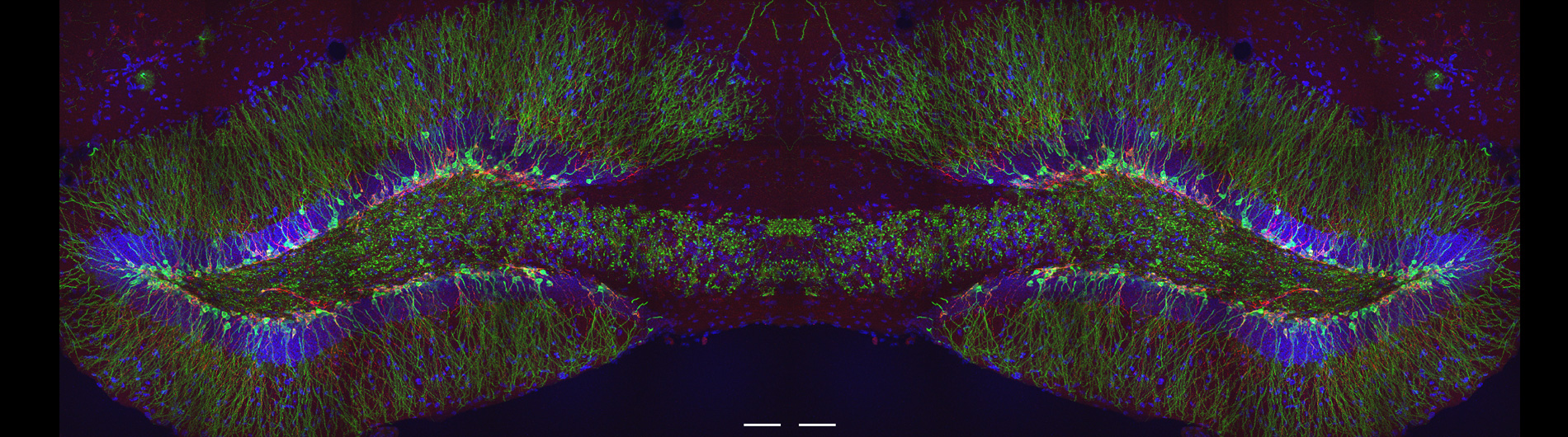
CNS Neuroinflammation Research
There is increasing recognition that inflammatory processes underlie many acute and chronic diseases, including those of the central nervous system (CNS). In particular, the glial and vascular components of the brain play significant and unique roles in inflammatory processes, both as sources of inflammatory mediators and as targets for local innate and acquired immune responses. Moreover, there is increasing recognition of the importance for glia in all aspects of brain function, ranging from normal homeostasis to repair and repopulation following injury. Our laboratories utilize mouse models to focus on the role of neuroinflammation in neurodegeneration and CNS injury.

M. Kerry O'Banion, M.D., Ph.D.
Principal Investigator

John A. Olschowka, Ph.D.
Principal Investigator


- Iron toxicity potentiates cell-type specific amyloid beta proteotoxicity in C. elegans via altered energy homeostasis.; bioRxiv : the preprint server for biology. 2026 Mar 27.
- Microglial interferon signaling and Aβ plaque pathology are enhanced in female 5xFAD Alzheimer's disease mice, independent of estrous cycle stage.; Journal of neuroinflammation. 2025 Dec 27.
- The Differential Early Responses of Human Leukocytes to Influenza Virus and Respiratory Syncytial Virus.; Pathogens (Basel, Switzerland); Vol 14(10). 2025 Sep 26.
- Noradrenergic signaling controls Alzheimer's disease pathology via activation of microglial β2 adrenergic receptors.; Brain, behavior, and immunity; Vol 128, pp. 307-322. 2025 Apr 15.
- Partial microglial depletion and repopulation exert subtle but differential effects on amyloid pathology at different disease stages.; Scientific reports; Vol 14(1), pp. 30912. 2024 Dec 28.
News
Affiliations
- Neuroscience
- Del Monte Institute for Neuroscience
- Environmental Health Sciences Center
- James P. Wilmot Cancer Center
- NIH T32 Training Grant in Immunology
- Medical Scientist Training Program (M.D., Ph.D.)
- Neurobiology & Anatomy Ph.D. Program
- Neuroscience Ph.D. Program
- Toxicology Ph.D. Program
- Translational Biomedical Science Ph.D. Program
December 29, 2025
Brain Immune Cells May Drive More Damage in Females than Males with Alzheimer’s
October 16, 2024
Comparing gene sequences across species to understand aging and dementia
January 18, 2023
Kerry O'Banion speaks with Medical News Today
November 3, 2022
Kerry O’Banion recognized for national contributions to MD-PhD training
Contact Us
Kerry O'Banion
KMRB G-9602
601 Elmwood Ave,
Rochester, NY 14642
John Olschowka
KMRB G-9619
601 Elmwood Ave,
Rochester, NY 14642