




Welcome to the Seychelles Child Development Study
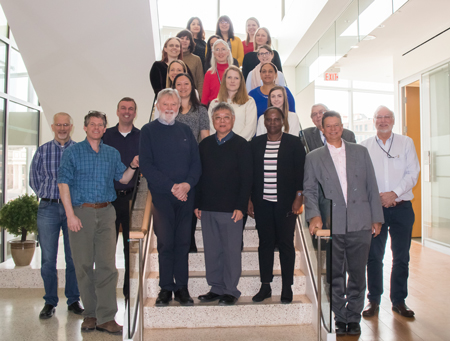
The Seychelles Child Development Study (SCDS) is a research project involving the Ministries of Health and Education in Seychelles, the University of Ulster in Northern Ireland, and the University of Rochester in the United States. The study began in the mid-1980s with the following objectives:
- To study child development in the Republic of Seychelles
- To study factors, such as diet, that may modulate associations between mercury exposure and child development
- To study effects of prenatal and postnatal mercury exposure
- To study exposure to organic and inorganic mercury
- To study factors that modulate associations between mercury exposure and child development
- To study the relation between mercury exposure and disabilities such as Autism
More Information
- What have been the main findings of the SCDS?
- Why are we studying children’s development?
- Why are we studying mercury?
- Why is the study taking place in the Republic of Seychelles?
- Our scientific approach
Recent Publications
- Zavez AE, McSorley EM, Yeates AJ, Thurston SW. A Bayesian Partial Membership Model for Multiple Exposures with Uncertain Group Memberships. JABES [Internet]. 2023 Feb 14.
- Zareba G, Harrington D, Scrimale T, Lesperance A, Watson GE, van Wijngaarden E, et al. Relationship of mercury and selenium in ocean fish frequently consumed in the Seychelles: A comparison to levels in ocean fish consumed in the US. Neurotoxicology. 2023 Sep 5;99:34–42.
- Wesolowska M, Yeates AJ, McSorley EM, van Wijngaarden E, Shamlaye CF, Myers GJ, et al. Potential role of selenium in modifying the effect of maternal methylmercury exposure on child neurodevelopment - A review. Neurotoxicology. 2023 Aug 31;99:59–69.
- Orlando MS, Love T, Harrington D, Dziorny AC, Shamlaye CF, Watson GE, et al. The association of auditory function measures with low-level methylmercury from oceanic fish consumption and mercury vapor from amalgam: The Seychelles Child Development Study Nutrition 1 Cohort. Neurotoxicology. 2023 Jan 5;95:46–55.
- McMullan JE, Yeates AJ, Allsopp PJ, Mulhern MS, Strain JJ, van Wijngaarden E, et al. Fish consumption and its lipid modifying effects - A review of intervention studies. Neurotoxicology. 2023 Oct 9;S0161-813X(23)00129-8.
- Klus JK, Thurston SW, Myers GJ, Watson GE, Rand MD, Love TM, et al. Postnatal methylmercury exposure and neurodevelopmental outcomes at 7 years of age in the Seychelles Child Development Study Nutrition Cohort 2. Neurotoxicology. 2023 Oct 11;99:115–9.
- Conway MC, Yeates AJ, Love TM, Weller D, McSorley EM, Mulhern MS, et al. Maternal fish consumption and child neurodevelopment in Nutrition 1 Cohort: Seychelles Child Development Study. Br J Nutr. 2023 Feb 10;1–21.
- Beggan LA, Mulhern MS, Mæhre HK, McSorley EM, Yeates AJ, Zavez A, et al. Associations between serum taurine concentrations in mothers and neonates and the children’s anthropometrics and early neurodevelopment: Results from the Seychelles Child Development Study, Nutrition Cohort 2. Neurotoxicology. 2023 Aug 25;99:43–9.
Contact Us
Seychelles Child Development Study
Edwin van Wijngaarden, Ph.D.
University of Rochester School of Medicine and Dentistry
265 Crittenden Road
CU 420606
Rochester, New York 14642