


Neurocognitive Bases of Autism
Support people with autism and their families through collaborative research aimed at understanding how individuals experience the world
 My program of research is broadly directed at examining the neurocognitive bases of developmental disabilities, with the ultimate goal of understanding how differences across neurocognitive development relates to everyday difficulties with adaptive functioning. My lab focuses primarily on understanding autism spectrum disorders, but we have also been working to understand other developmental disorders such as Down syndrome, as well as normal developmental processes.
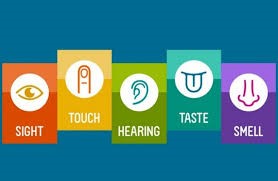
Our recent work examines the role of multisensory processing in several domains, including social communication and feeding. Some of our current projects in the domain of social communication in autism examine audiovisual speech perception, hearing-in-noise perception (including both speech-in-noise and music-in-noise), speech-and-gesture production and comprehension, and the role of atypical sensorimotor function in facial expressiveness. Our research on feeding investigates the role of multisensory processing in the development of restrictive food preferences (picky eating) in children with autism. We are interested in understanding the relative roles of sensory functions (including taste and olfaction), behavioral factors (e.g., restricted behavior style, neophobia), and family preferences on eating behaviors.
Become a Participant!
If you would like to learn more about our recruitment process, or wish to submit your contact information to the lab for participation consideration, please visit our recruitment page.

Loisa Bennetto, Ph.D.
Principal Investigator


Publications
View All Publications- Receptive prosody adaptation to contextual feedback in autistic young adults.; Frontiers in psychology; Vol 17, pp. 1779814. 2026 May 18.
- Publisher Correction: Perception and adaptation of receptive prosody in autistic adolescents.; Scientific reports; Vol 15(1), pp. 13892. 2025 Apr 22.
- "Look Who's Talking": Language Patterns in Autistic and Non-Autistic Youth Across Different Conversation Partners.; Journal of autism and developmental disorders. 2024 Oct 16.
- Perception and adaptation of receptive prosody in autistic adolescents.; Scientific reports; Vol 14(1), pp. 16409. 2024 Jul 16.
- Applications of identity-based theories to understand the impact of stigma and camouflaging on mental health outcomes for autistic people.; Frontiers in psychiatry; Vol 14, pp. 1243657. 2023 Sep 06.
- Grammaticality judgments in autism: Deviance or delay - CORRIGENDUM.; Journal of child language. 2023 Feb 06.
News
Affiliations
Contact Us
Bennetto Lab
P.O. Box 270266
Rochester, NY 14627-0266