

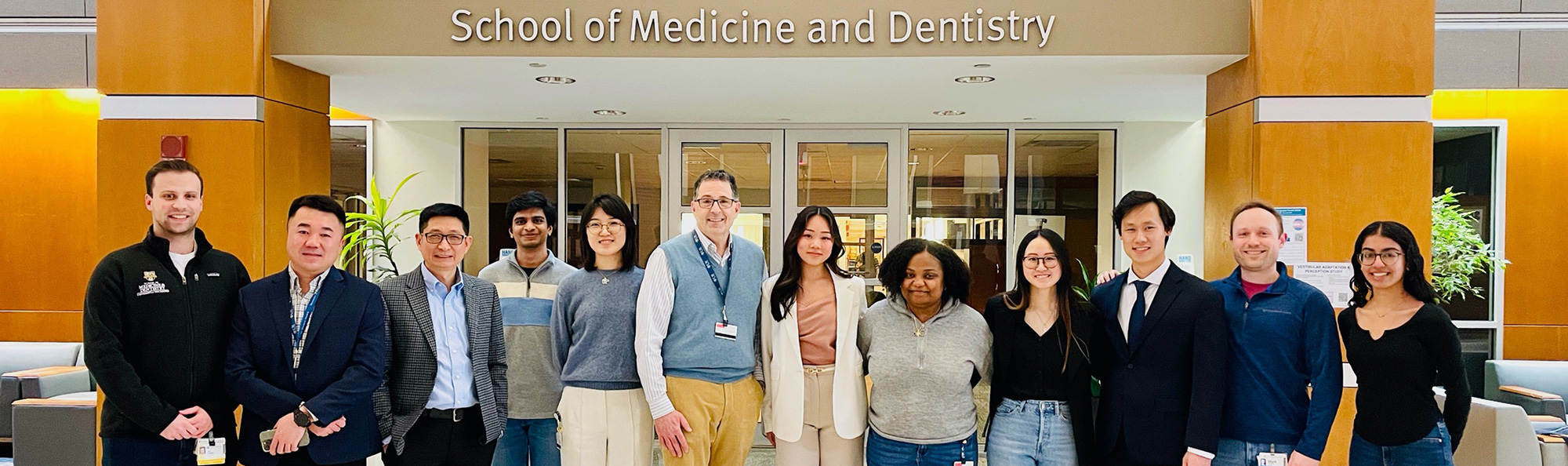
Welcome to the Schwarz Lab
Dr. Edward Schwarz is the Burton Professor of Orthopaedics and Director of the Center for Musculoskeletal Research at the University of Rochester Medical Center, in Rochester, NY. His laboratory focuses on inflammatory bone loss, such as that seen in rheumatoid arthritis, infections, tumor metastasis and wear debris-induced osteolysis around loose prosthetic implants.
Dr. Schwarz is also a leader in orthopaedic biologic therapy and stem cell research, for which his lab has developed a novel passive immunization for MRSA and revitalizing allograft approaches for bone and tendon regeneration.
Dr. Schwarz’s lab is also interested in developing translational in vivo imaging outcome measures include near infrared imaging of lymphatic flow to detect arthritic flare, and cone beam CT to assess bone healing in patients with orthopaedic implants. More recently, Dr. Schwarz’s lab has combined these biologic therapy technologies and outcome measures with biocompatible carriers and stem cells to generate novel tissue engineering constructs for bone, cartilage, ligament and tendon.
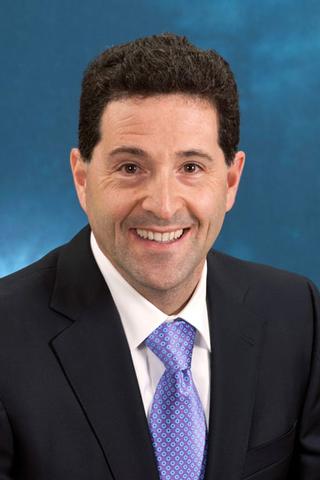
Edward M. Schwarz, Ph.D.
Principal Investigator


- Concentration and Frequency of Intraoperative Irrigation as a Strategy Against Implant-Associated Infection: Insights from a Preclinical Rat Model: Commentary on an article by Musashi Ima, MD, et al.: "Diluted Povidone-Iodine Irrigation for Prevention of Implant-Related Infection. A Comparative Analysis of Concentration and Frequency in a Rat Model".; The Journal of bone and joint surgery. American volume. 2026 May 19.
- Dual-Scale StaphAIR: Predictive Modeling for the Diagnosis of S. aureus Infection via Simultaneous Detection and Quantification of Cytokines and Antibodies.; Analytical chemistry. 2026 May 16.
- The 2025 International Consensus Meeting on Musculoskeletal Infection: Research Priorities and Future Directions.; Journal of orthopaedic research : official publication of the Orthopaedic Research Society; Vol 44(4), pp. e70179. 2026 Apr.
- Telocyte Deletion is Associated with Loss of Lymphatic Drainage and Exacerbation of Inflammatory-Erosive Arthritis in Mice.; Arthritis & rheumatology (Hoboken, N.J.). 2026 Mar 16.
Journal Covers
News
Affiliations
- Orthopaedics
- Biomedical Engineering
- Medicine
- Microbiology & Immunology
- Pathology & Laboratory Medicine
- Pediatrics
- Urology
- Center for Musculoskeletal Research
- James P. Wilmot Cancer Center
- Lung Biology and Disease Program
- NIH T32 Training Grant in Immunology
- Pediatric Rheumatology
- UR Stem Cell and Regenerative Medicine Institute
- Biomedical Engineering Ph.D. Program
- Biomedical Genetics and Genomics Ph.D. Program
- Immunology, Microbiology, and Virology Ph.D. Program
- PhD Program in Pathology - Cell Biology of Disease
- Translational Biomedical Science Ph.D. Program
- Rahimi Lab
- Xie Lab
November 6, 2017
URMC Awarded Nearly $6 Million to Study Deadly Bone Infections
May 24, 2017
Musculoskeletal Researchers Engage Local Under-Represented Students in Science
February 27, 2017
Bones made to order: UR Medical Center attempting to use 3-D printing, stem cells to regenerate bone tissue
December 27, 2016
Bacteria Responsible for Incurable Bone Infection Hide in Bone Micro-Channels
April 9, 2014
Three BME Students Awarded Whitaker Scholarships
March 15, 2013
URMC Orthopaedics Ranks No. 1 in Nation in NIH Funding
Contact Us
Schwarz Lab
MC 1-8545
601 Elmwood Ave
Rochester, NY 14642