

AOSLO imaging of mitochondria throughout the retina
AOSLO imaging of mitochondria throughout the retina
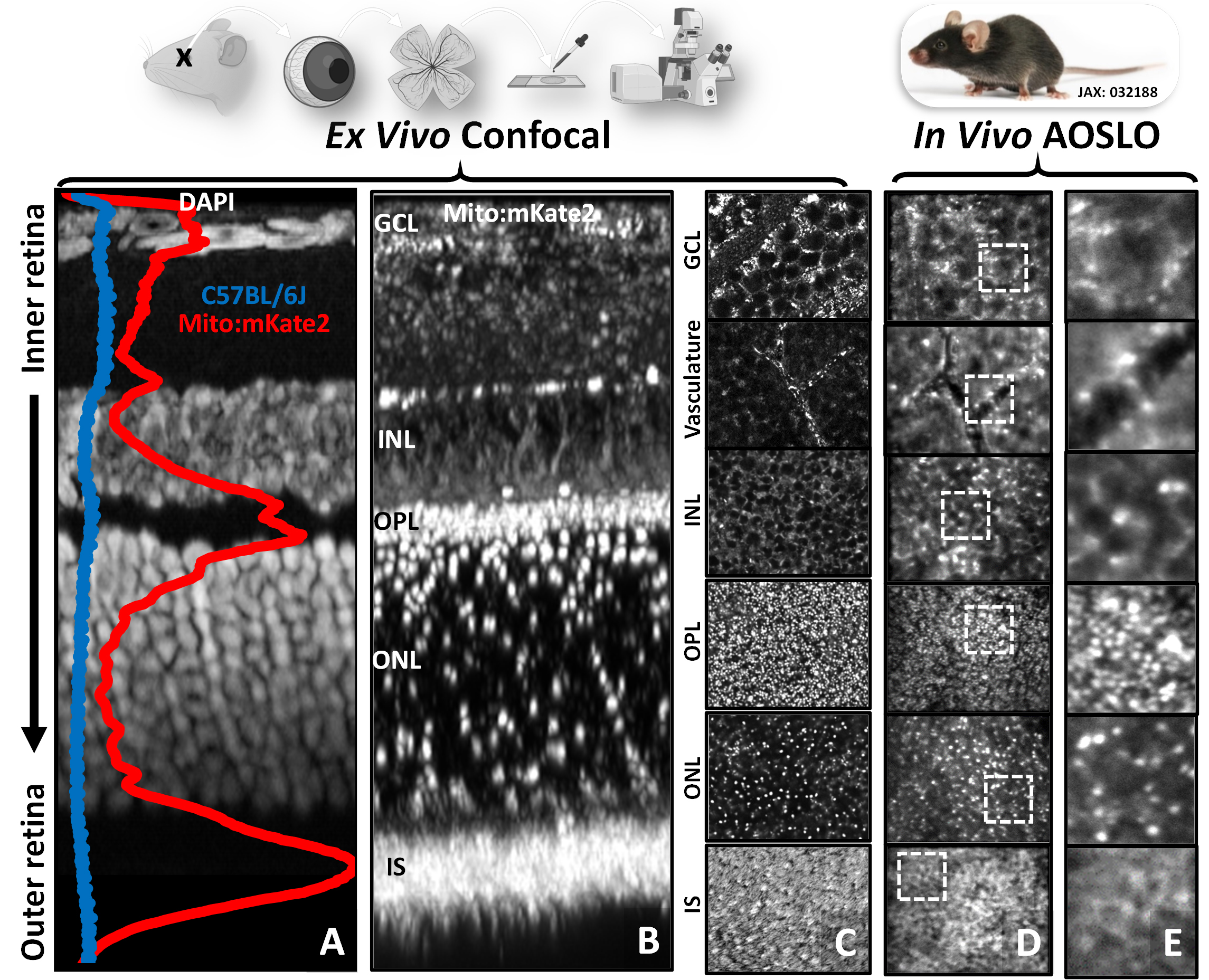
At the Schallek Lab, we are advancing AOSLO imaging beyond its traditional role of visualizing individual cells. By pushing the limits of resolution, we are beginning to explore the retina at the level of the organelle, opening a new window into the microscopic machinery that powers cellular function in the living eye. This advancement enables direct visualization of mitochondrial structure in the mito:mKate2 mouse.
The retina is among the most metabolically active tissues in the body, with exceptionally high energy demands. These demands are supported by a dense network of mitochondria, that – up until now – were not explored with non-invasive, high-resolution ophthalmoscopy. Here, we use fluorescence AOSLO and confirmatory ex vivo confocal microscopy to reveal the mitochondrial distribution within this novel mouse model.
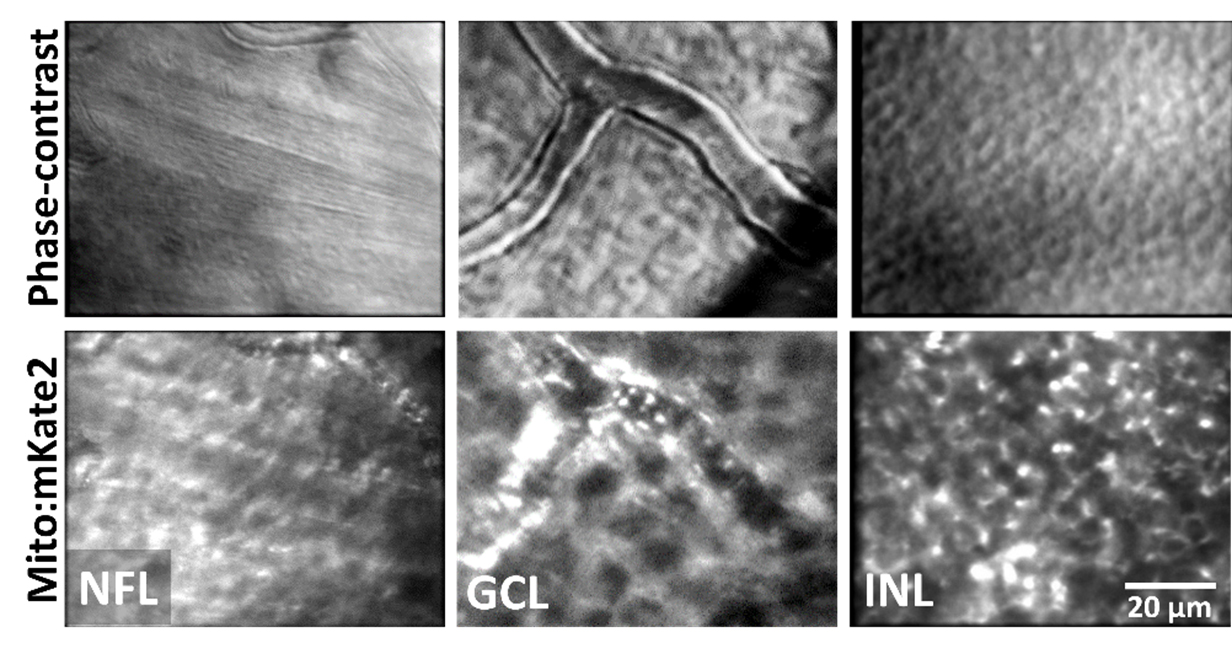
High-resolution AOSLO imaging revealed distinct mitochondrial patterns throughout the retina. In the nerve fiber layer, elongated fluorescent structures aligned with ganglion cell axon bundles, while the ganglion cell layer displayed ring-like mitochondrial organization surrounding the nucleus. Smaller punctate and ring-like patterns were also observed deeper in the inner nuclear layer, matching the expected morphology of retinal cells across these layers.
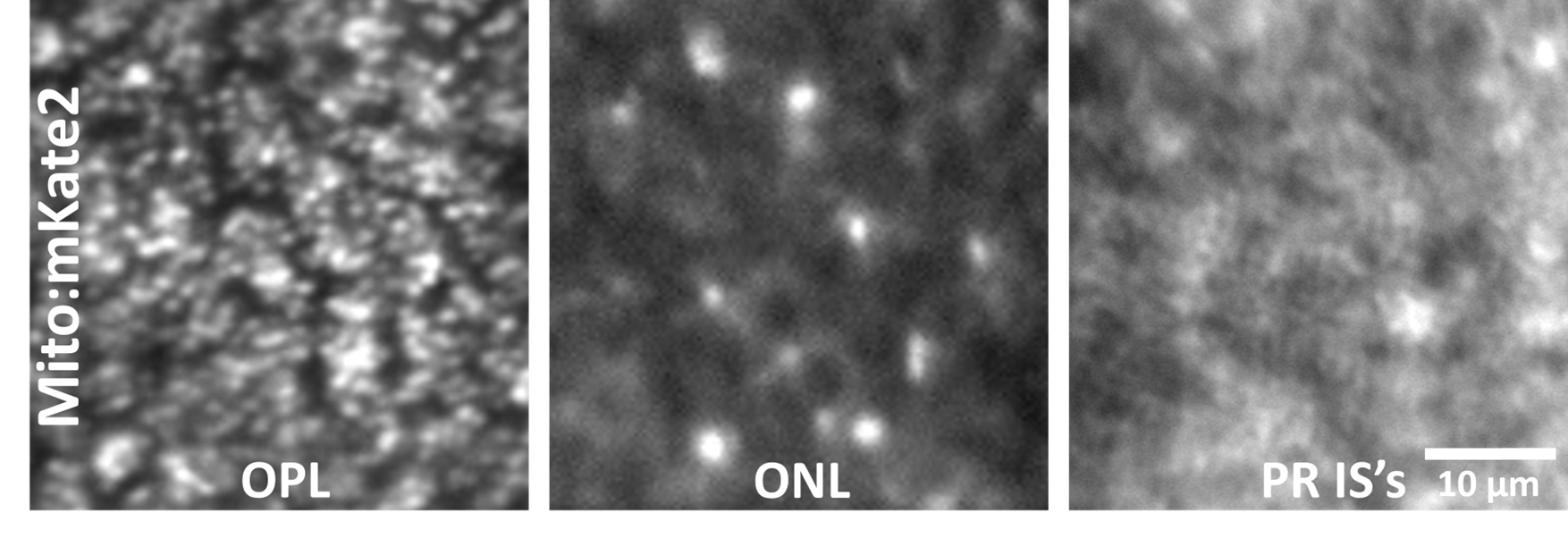
Furthermore, distinct mitochondrial patterns were observed throughout the photoreceptor layers. The outer plexiform layer displayed small puncta and clustered aggregations reminiscent of presynaptic mitochondria. Within the outer nuclear layer, sparse yet bright puncta were detected that are not consistently observed with conventional mitochondrial markers. Most strikingly, the photoreceptor inner segments revealed dense, bright fluorescent aggregations matching the size and organization of individual photoreceptors, highlighting the extraordinary mitochondrial enrichment that enables vision.
Notably, we identified prominent mitochondrial enrichment throughout the retinal vasculature, including arterioles, venules, and capillaries, revealing an complex metabolic landscape within the vessel wall.
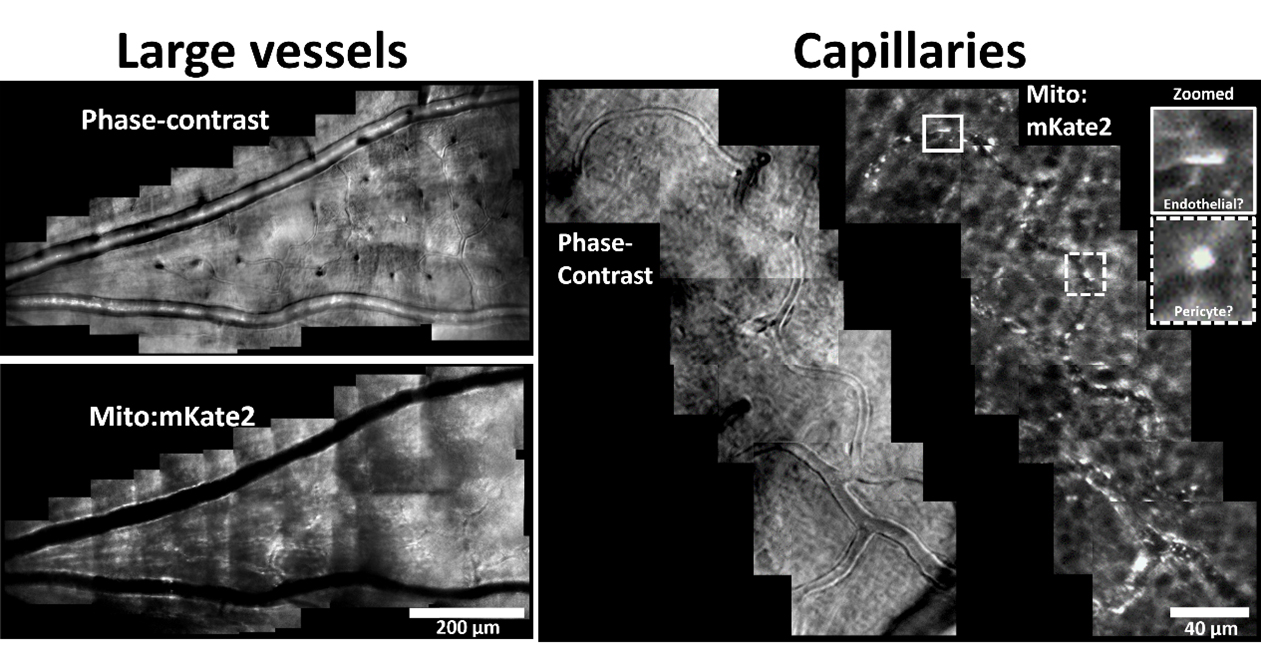
These vascular mitochondria displayed organization patterns consistent with endothelial and mural cell architecture, frequently forming striking perinuclear arrangements. Ex vivo confocal microscopy further revealed the intricate spatial organization of mitochondria within both retinal veins and arteries.

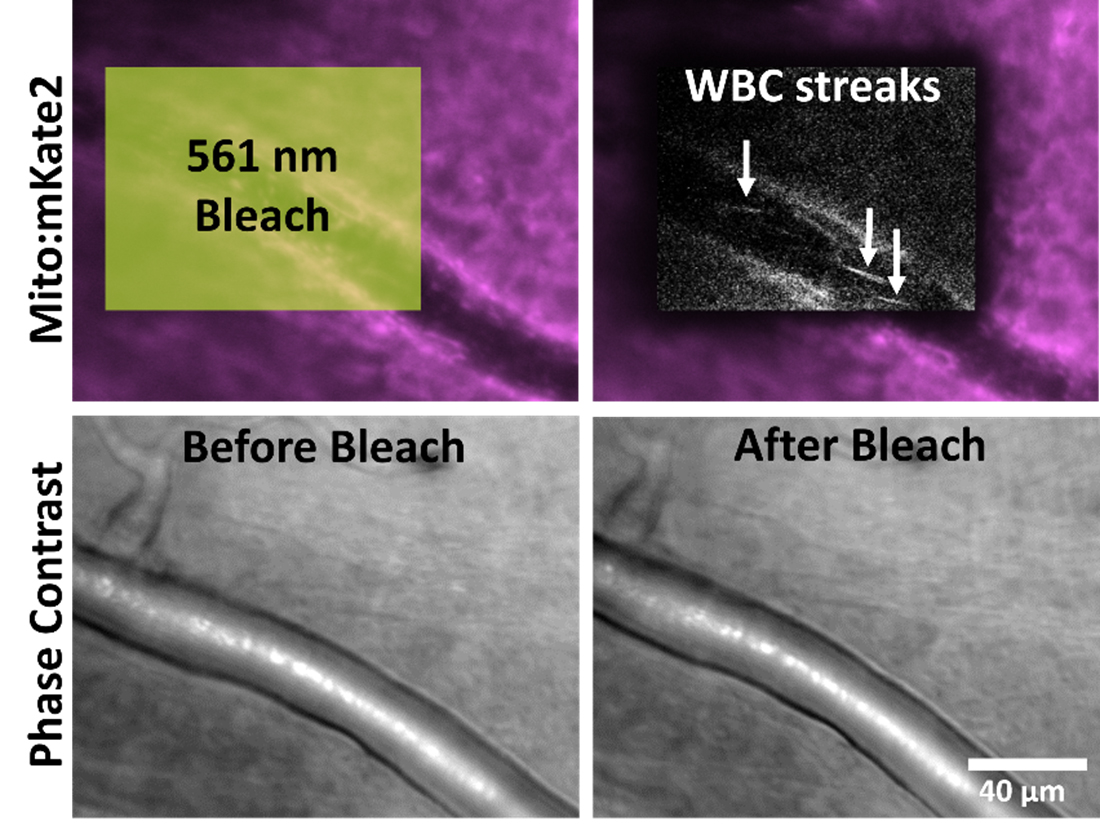
Additionally, mitochondria within circulating leukocytes were visualized as dynamic fluorescent streaks within the retinal vasculature, providing a unique window into the metabolic architecture of systemic blood cells.
Putative hyalocytes were also tracked in real time, revealing cellular dynamism not observable with conventional ex vivo histology.
Future work in the lab will focus on elucidating mitochondrial dynamics within retinal neurofiber bundles, with the goal of discovering the nature of mitochondrial transport using non-invasive AOSLO in both healthy tissue and disease states such as glaucoma. By linking subcellular transport to functional degeneration, this work aims to uncover fundamental mechanisms of neurodegeneration and identify early signatures of mitochondrial failure in vivo.