

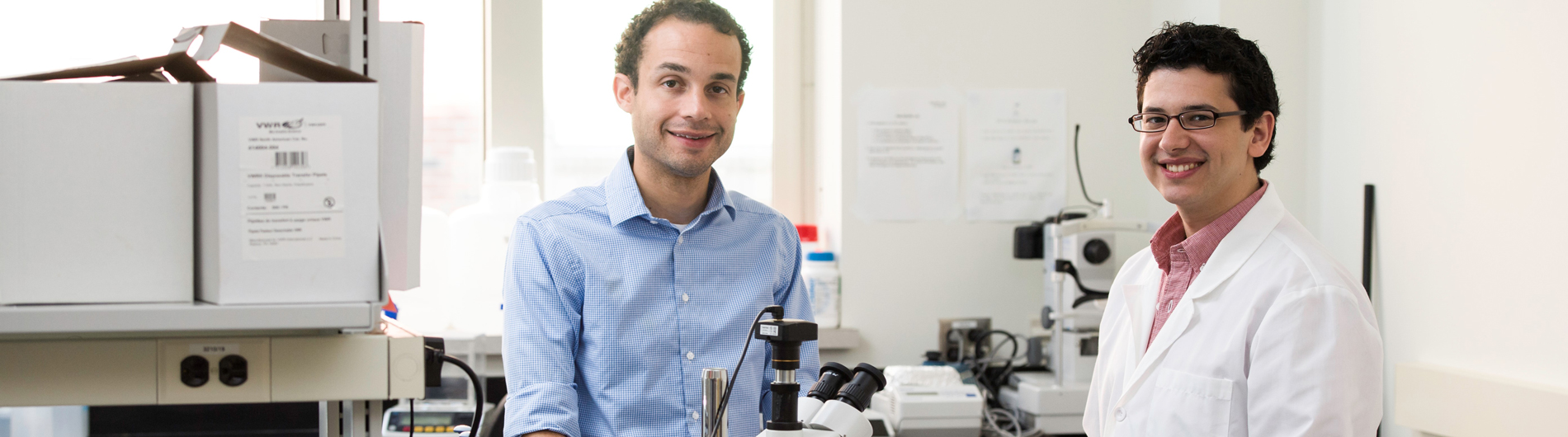
Welcome to the Buckley Soft Tissue Biomechanics Lab
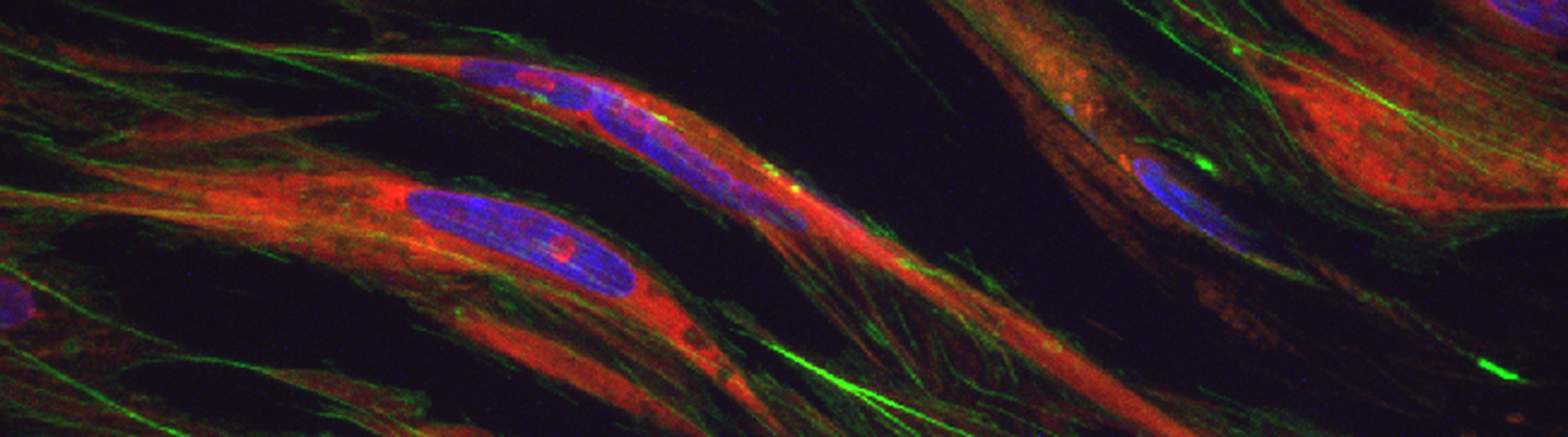
The goal of the Buckley lab is to exploit the principles of mechanics to improve treatments for diseases and injuries affecting soft biological tissues. Currently, we are primarily focused on musculoskeletal and ocular tissues including cartilage, tendon, intervertebral disc and cornea, and we study diseases ranging from osteoarthritis to keratoconus.
For example, we are investigating novel strategies to reduce damage to transplanted grafts during osteochondral (cartilage with bone) and corneal transplantation surgery. In these procedures, accidental graft damage increases risk of graft failure, but may be avoidable. We have begun to determine the types (e.g., shear or tensile) and magnitudes of mechanical stress experienced by sensitive regions of cartilage and cornea during transplantation procedures, as well as the types and magnitudes of mechanical stress that cause the greatest extent of damage to these tissues and their resident cells. Based on our findings, we are designing devices that either prevent imposition of stresses exceeding a critical level or alter graft properties to reduce vulnerability to mechanical stress.
We are also studying how cells in soft biological tissues (e.g., tendon) respond to external, multiaxial mechanical forces and deformations to alter tissue mechanical properties in vitro. Combining data from this study with our ultrasound-based characterization of in vivo tissue deformations during exercises and other activities, we can identify exercise interventions most likely to reverse pathology-associated mechanical changes.
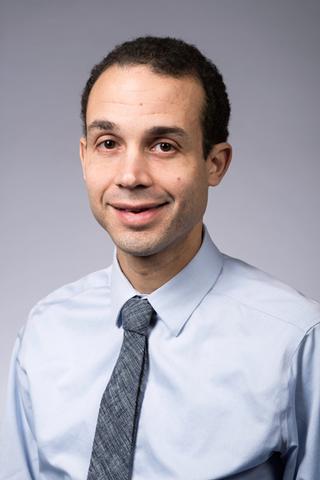
Mark R. Buckley, Ph.D.
Principal Investigator
Projects
View All Projects


Publications
View All Publications- Second-harmonic generation microscopy of murine scleral remodeling by collagenase and reparative collagen mimetic peptides.; Frontiers in medicine; Vol 12, pp. 1514073. 2025 May 20.
- Loss of Cochlin drives impairments in tendon structure and function.; Matrix biology plus; Vol 25, pp. 100168. 2025 Feb 15.
- Loss of Cochlin drives impairments in tendon structure and function.; bioRxiv : the preprint server for biology. 2024 Nov 14.
- Investigating the Tolerance of Corneal Endothelial Cells to Surgical Fluid Pressure Using Intact Porcine Eyes.; Translational vision science & technology; Vol 13(11), pp. 27. 2024 Nov 04.
- Quantification of Cartilage Poroelastic Material Properties Via Analysis of Loading-Induced Cell Death.; Journal of biomechanical engineering; Vol 146(8). 2024 Aug 01.
- The Micromechanical Environment of the Impinged Achilles Tendon.; Small (Weinheim an der Bergstrasse, Germany). 2024 Jul 05.
August 8, 2019
Professor Buckley receives Kearns Faculty Mentoring and Teaching Award for commitment to first-generation, minority students
June 15, 2019
Students make assembly line more accessible for workers with disabilities
May 20, 2018
Manny Ramirez-Garcia receives Center for Visual Science T32 training fellowship
Contact Us
Buckley Lab
Goergen Hall 321
Rochester, NY 14627