

Research Projects
Research Theme: Visual Plasticity After Brain Damage
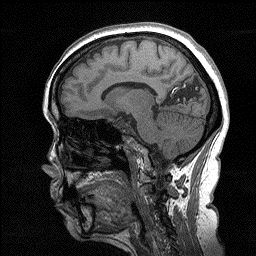 Damage to the primary visual cortex (V1) causes a loss of conscious vision over the same part of the visual field through both eyes. Clinically, his increasingly common cause of permanent disability is still considered intractable. However, the existence of blindsight (a largely unconscious ability to sense moving and flickering stimuli) suggests partial preservation of visual processing in cortically blind fields. The now, well-documented existence of visual pathways that bypass V1 and convey information from the eyes to higher-level visual cortical areas, begs the question: can they be recruited to restore vision in cortical blindness?
Our team recently discovered that visual training can recover normal threshold levels of discrimination and awareness for both simple and complex motion and orientation in trained regions of cortically blinded fields. However, the extent of recovery possible and the mechanisms underlying it are unknown. Our work aims to uncover them, setting the stage for the development of principled vision restoration strategies.
Vision restoration in occipital stroke patients
- Visual perceptual training: manipulating visual attention and low-level features to enhance recovery (collaboration with Marisa Carrasco, Duje Tadin)
- Modeling changes in visual computations that accompany damage and training-induced visual recovery (collaboration with Marisa Carrasco, Eli Merriam and Robbe Goris)
- Using AI to parametrize spontaneous versus training-induced progression of perimetric visual defects after stroke (collaboration with Brent Johnson and Sindhu Kishore)
- Persistence of training-induced recovery (collaboration with Holly Bridge and Hanna Willis)
- Critical or sensitive periods for recovery?
- Differences in visual processing in sub-acute versus chronic stroke patients
- Differences in efficacy and properties of visual training in sub-acute versus chronic stroke patients
Retrograde degeneration of early visual pathways
- Time course of structural changes and predictive power for recovery potential (collaborations with Holly Bridge, Farran Briggs, Kristina Nielsen)
- Does visual training alter the progression of retinal and LGN degeneration after V1 damage (collaborations with Sara Patterson, Farran Briggs, Kristina Nielsen)?
Functional plasticity of visual system circuits after V1 damage
- Consequences of V1 damage and training on response properties in LGN and extrastriate cortex (collaboration with Farran Briggs and Kristina Nielsen)
- Changes in human fMRI responses after V1 damage and visual training (collaboration with Elisha Merriam)
- Effects of training on tractography and neurochemistry of the residual visual circuitry (collaboration with Holly Bridge and Hanna Willis)
- Mechanisms underlying persistence of orientation and direction selectivity in the residual visual circuitry after V1 damage (collaboration with Elisha Merriam, Robbe Goris and James Bourne)
Effects of V1 damage on visually-guided actions
- Effect of cortical damage on microsaccades and fixational eye movements (collaboration with Martina Poletti)
- Steering and driving in virtual reality: processing of optic flow after V1 damage (collaboration with Gabriel Diaz, Duje Tadin and Brett Fajen)
Quality of life after occipital Stroke
- Natural progression
- Effect of visual training on quality of life