

All Families Deserve Sun Protection: One Initiative is Improving Access to Sunscreen
Sunscreen can make a big difference when it comes to reducing skin cancer risk, but Ella Engels, a medical student at University of Rochester Medicine, noticed something in talking with the community about sun safety: for some families, access to sunscreen is not so simple.
Addressing Barriers to Sun Safety in Monroe County
Skin cancer is the most common form of cancer in the United States, with more than five million cases occurring annually. Monroe County has one of the highest incidences of melanoma in New York state. Melanoma – the less common but more aggressive form of skin cancer – is most common on sun-exposed areas of the body. Sunscreen can reduce the risk.
However, research shows that Americans earning less than $25,000 annually are less likely to use sunscreen, primarily because of its cost. In the City of Rochester, over 40 percent of children live in poverty – meaning many children in the county probably have limited access to sunscreen at a time in their lives when sun safety is most important.
“Getting just one blistering sunburn as a child can double a person’s risk of melanoma in adulthood, and the more sun damage someone has over their lifetime, the more likely they are to get skin cancer,” says Charles Kamen, PhD, MPH, associate director for Community Outreach and Engagement at URochester Medicine Wilmot Cancer Institute. “Distributing free sunscreen to families, especially families in need, is an opportunity to make a real difference for the future of these children and their parents alike.”
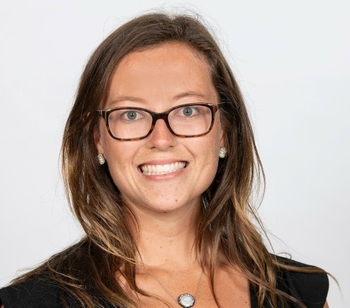
Engels, who is completing her fourth year at the School of Medicine & Dentistry, set out to address this problem, just as the summer sun is heating up in Rochester.
Her solution? Making free sunscreen available at various locations throughout the county. Dispensers are now at Seneca Park Zoo and Boys & Girls Clubs of Rochester.
“I wanted to find a sustainable way to bring free sunscreen to the community,” she says.
Two refillable IMPACT Melanoma dispensers, purchased with mini-grant funds awarded by the URochester Medicine Center for Community Health & Prevention (CCHP), can be found in high-traffic areas of the zoo. A third dispenser, funded by the Corn Hill Neighbors Association, is available to Boys & Girls Clubs of Rochester members near the nonprofit’s playground. QR codes on the sunscreen dispensers share links to educational resources on sun protection and skin cancer.
“We often diagnose patients with skin cancer in clinic who were unaware of the association of sun exposure with skin cancer and have developed significant ultraviolet (UV) damage over many decades,” reflects Alicia Mizes, MD, a dermatology resident at the School of Medicine & Dentistry and an integral part of the sunscreen dispenser initiative. “By encouraging children and younger people to adopt good sun protection behaviors early on, we hope to decrease their future risk of skin cancer.”
Community Partnerships Expand Access for Families
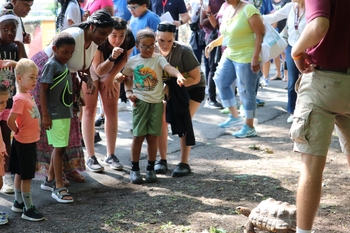
A popular outdoor destination for families, Seneca Park Zoo is a natural fit for sunscreen dispensers. So too is Boys & Girls Clubs of Rochester, a trusted organization in the community that promotes healthy habits and well-being among local youth.
"We are excited to partner with University of Rochester Medicine's Center for Community Health & Prevention to promote safe, healthy experiences for all visitors,” shares Bob Lee, director of Seneca Park Zoo. “As a community organization, we look forward to continued collaboration in bringing sunscreen access and sun safety education to Rochester’s children and families.”
The sunscreen dispenser project demonstrates how investments that center the priorities of community partners can have meaningful impact. By supporting partnerships through funding programs, we are creating opportunities for organizations to address local health needs and improve access to resources that promote healthy communities.

"Initiatives like this demonstrate the power of collaboration," shares Tysy Hughes, director of Program Operations at Boys & Girls Clubs of Rochester. "We are grateful to Ella, the School of Medicine & Dentistry, and the many community partners who made this possible."
This community education and prevention effort has been a passion of Engels' for several years. A member of the School of Medicine & Dentistry Dermatology Interest Group and a candidate for distinction in community health when she graduates, Engels is determined to transform passion into purpose. She is one of several medical students working toward the distinction in community health honor, a process led by Theresa Green, PhD, MBA, associate professor in the Department of Environmental Medicine and Public Health Sciences and director of Community Health Education and Policy at CCHP. A total of 16 medical students graduated with distinction in community health in May.
The sunscreen dispensers are provided in collaboration with medical students enrolled in the Dermatology Interest Group, the Department of Dermatology, and IMPACT Melanoma, with funding support from Community Outreach and Engagement at Wilmot Cancer Institute, Center for Community Health & Prevention, American Medical Women’s Society, and Corn Hill Neighbors Association.
Author
