

Eastman Institute for Oral Health to Investigate Microplastics
An orthodontist and researcher at the University of Rochester Medicine Eastman Institute for Oral Health has received a grant from the American Association of Orthodontists Foundation to test microplastic emissions from a common dental device.
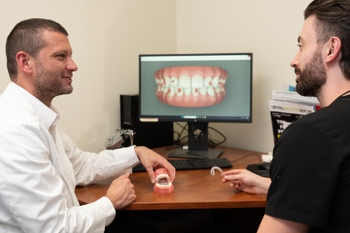
EIOH Associate Professor Dimitrios Michelogiannakis, DDS, MS, will look at whether clear orthodontic aligners—removable trays used to straighten teeth—release tiny plastic particles, known as microplastics, during normal use.
Microplastics are extremely small pieces of plastic that can enter the human body and may contribute to inflammation or other health concerns over time.
Millions of people wear clear aligners nearly 22 hours a day for about two years, placing thermoplastic devices in continuous contact with saliva, soft tissue, and body heat. No robust research has yet examined whether these devices shed microplastic particles under those conditions — or how much.
“We will simulate real-life conditions by placing different types of aligners in a lab setting that mimics the mouth, including artificial saliva, temperature, and chewing forces,” explained Michelogiannakis, program director for the EIOH Orthodontics and Dentofacial Orthopedics Residency Program.
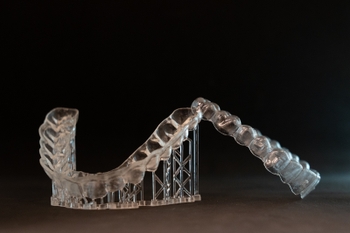
His research team will evaluate the release of microplastic particles and compare results across aligner types and timepoints. The goal is to better understand whether these commonly used dental devices contribute to microplastic exposure and to help guide the development of safer, more sustainable orthodontic materials in the future.
For patients currently in aligner treatment, Michelogiannakis says there is no need to panic or make any changes.
"Just because microplastics are released doesn't mean that they're going into our body," he noted. His research will help determine what the aligner-specific exposure picture looks like — and whether it warrants any change in clinical practice or product design.
The award comes as public concern about microplastic exposure in everyday products continues to grow. Michelogiannakis was recently quoted in The New York Times in a piece by Simar Bajaj titled "Should I Worry About the Plastic in My Floss and Toothbrush?"
"There simply hasn't been any robust testing on how different dental products release microplastics," Dr. Michelogiannakis told the Times. His new study sets out to change that, specifically for aligners.
The study reflects EIOH's commitment to research that connects oral health to broader systemic questions. Michelogiannakis and his team collaborate with colleagues in the University of Rochester Medicine Environmental Health Sciences Department, which brings established expertise in studying the impact of microplastics across biological systems.
“This cross-disciplinary partnership uniquely positions the University of Rochester,” added Michelogiannakis, “to combine clinical dental expertise with environmental health science to address this emerging public health concern.”
Author
