

He Started Over at 40. And Found New Purpose
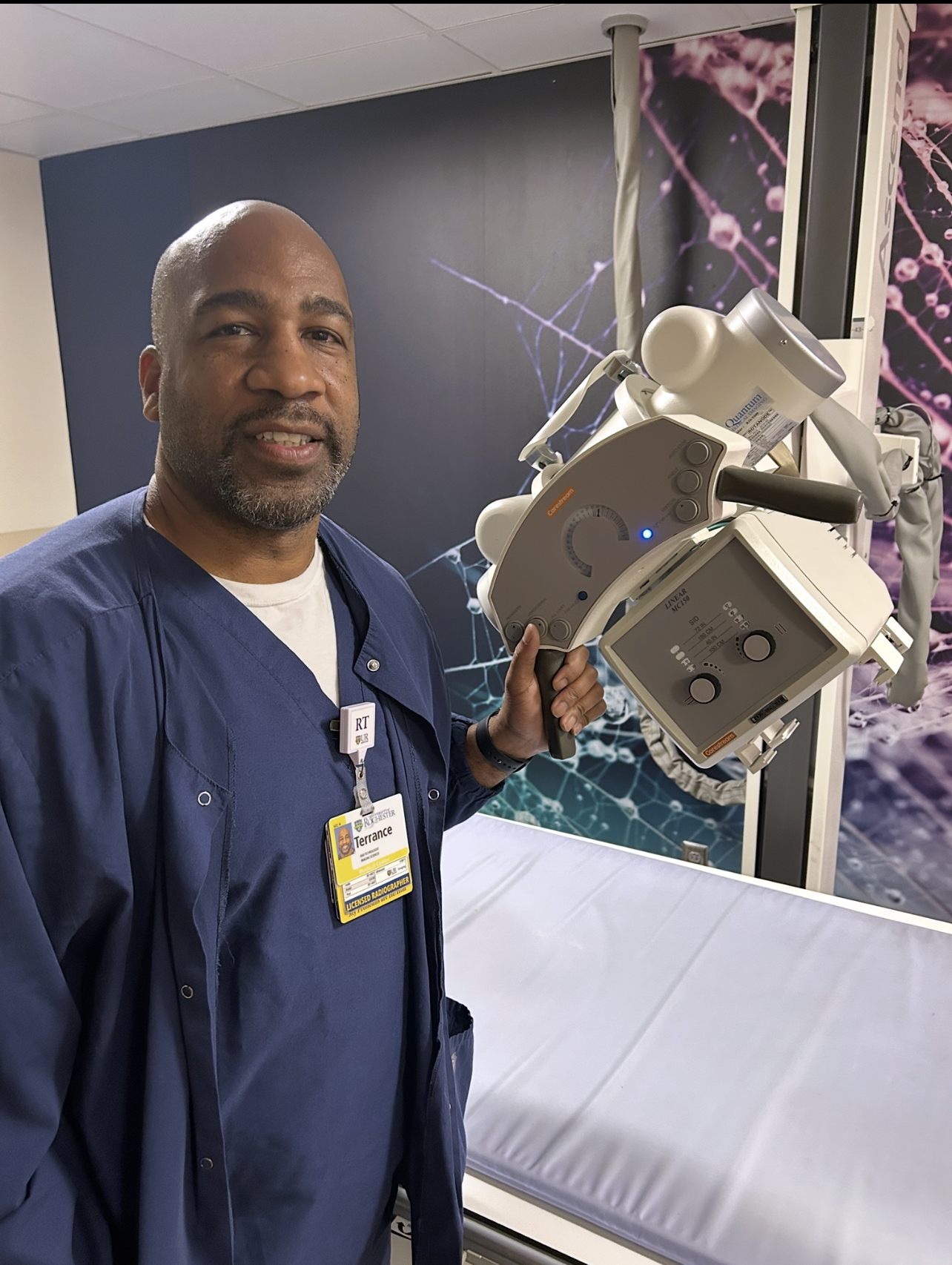
Starting over is never easy. Starting over later in life can feel even harder. But for Terrance Cooper, taking that leap led to a new career and a sense of purpose he hadn’t expected.
After more than a decade in banking and insurance, Cooper reached a crossroads.
“We actually knew we were losing our jobs for about five years,” he said. “Most companies don’t give you that kind of heads up.”
He had a good salary, years of tenure, and the appearance of stability, but beneath it all was growing doubt about the future because operations were being centralized and roles moved elsewhere.
Then a friend, Herb Gregory, made a suggestion.
“He said, ‘Hey, you should apply for X-ray. I think you’d be good at it,’” Cooper said.
Gregory, who used to work with Cooper in banking, was a traveling radiologic technologist and a former employee of Strong Memorial Hospital.
Cooper was intrigued, but it wouldn’t be easy. He would need to go back to school, get licensed, and take a major test at the end.
But his friend had faith. “I know you, I know your personality—I think you’d be good at it,” he told Cooper.
While still working as an insurance adjuster, at age 40, Cooper began taking prerequisite courses one at a time, with State Farm reimbursing his tuition as long as he passed. When he officially lost his job in November 2018, his next step was already in motion.
By January 2019, he had submitted his application to a radiologic technology program. The next few months would be stressful, balancing prerequisite courses and waiting to see if he would be accepted, while the outcome still felt out of reach.
“I really wanted to do my best in those [prerequisite] classes to make sure I didn’t mess up that chance or set my calendar back,” he said.
When he was accepted, he felt confident about the program itself and excited about pursuing a new career. But he also felt the weight of starting over.
“It was kind of scary, honestly,” he said.
He already had a bachelor’s degree. Now, 20 years later, he would be back in school to get an associate’s degree in radiology at Monroe Community College.
He was on his way to an entirely new path—but there would still be challenges to face.
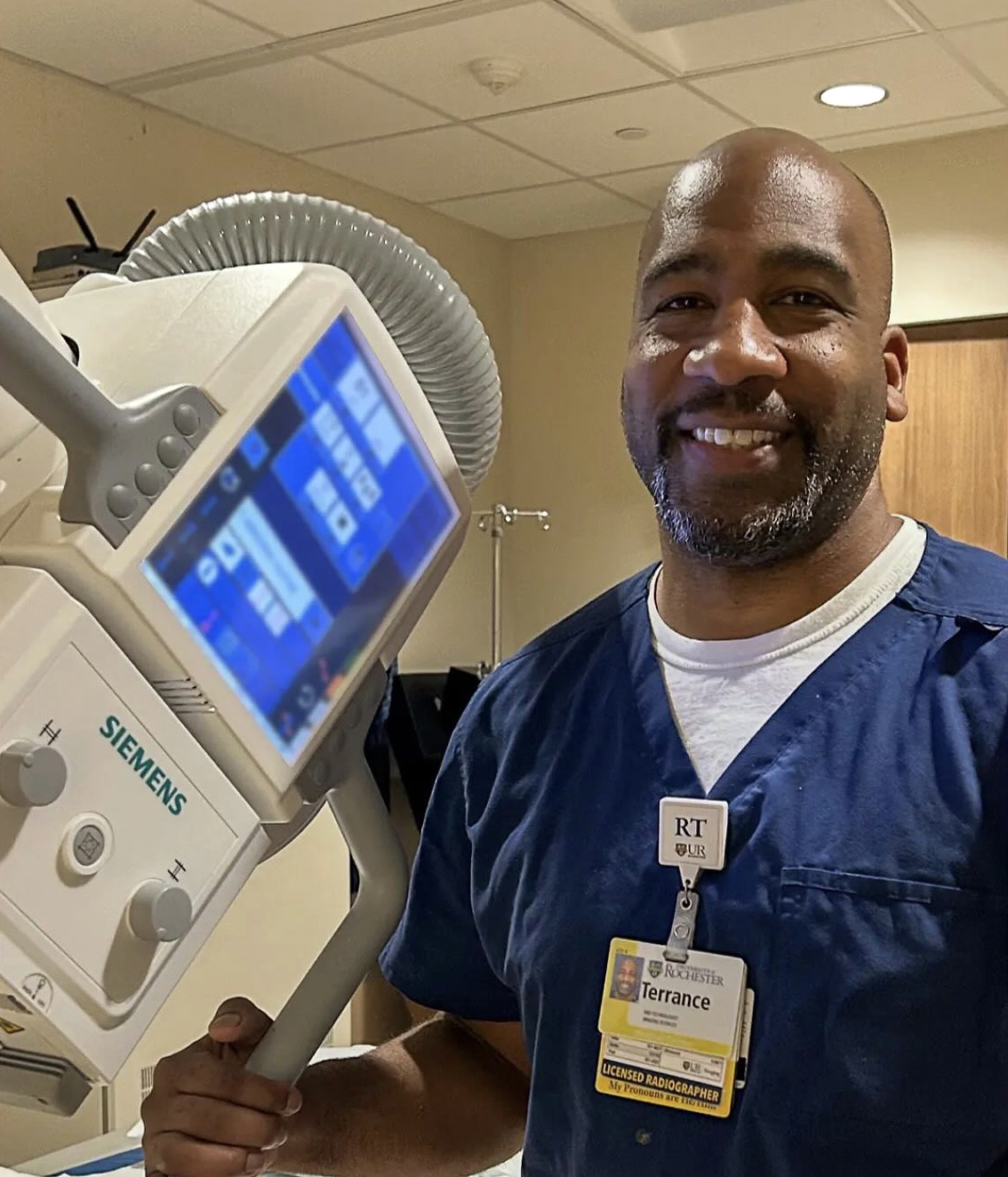
A Fresh Start, Then a Disaster
Even with a carefully planned timeline, there were no guarantees.
Once the program began, an unexpected challenge emerged. The COVID-19 pandemic disrupted clinical training and temporarily removed students from hospital settings.
“We actually got kicked out of clinicals; we weren’t allowed in the hospital,” he said.
The disruption added complexity to an already demanding transition, forcing the program and its students to adapt quickly as schedules shifted and timelines stretched.
Moments like that reinforced the mindset Cooper relied on throughout the process.
“You’re only as old as your ability to stop processing new information,” he said.
Returning to school later in life also meant adjusting to a new classroom environment and an intense clinical pace. But Cooper stayed focused on the work at hand. He leaned on classmates and family support to stay grounded through the uncertainty.
“We had a very diverse group, older and younger,” he said. “I naturally gravitated toward a few people, and we helped each other out.”
Through it all, Cooper remained fully immersed in the program.
“My sole focus was learning and understanding the nuances of X-ray,” he said. “A hundred percent of my time and attention was devoted to the program.”
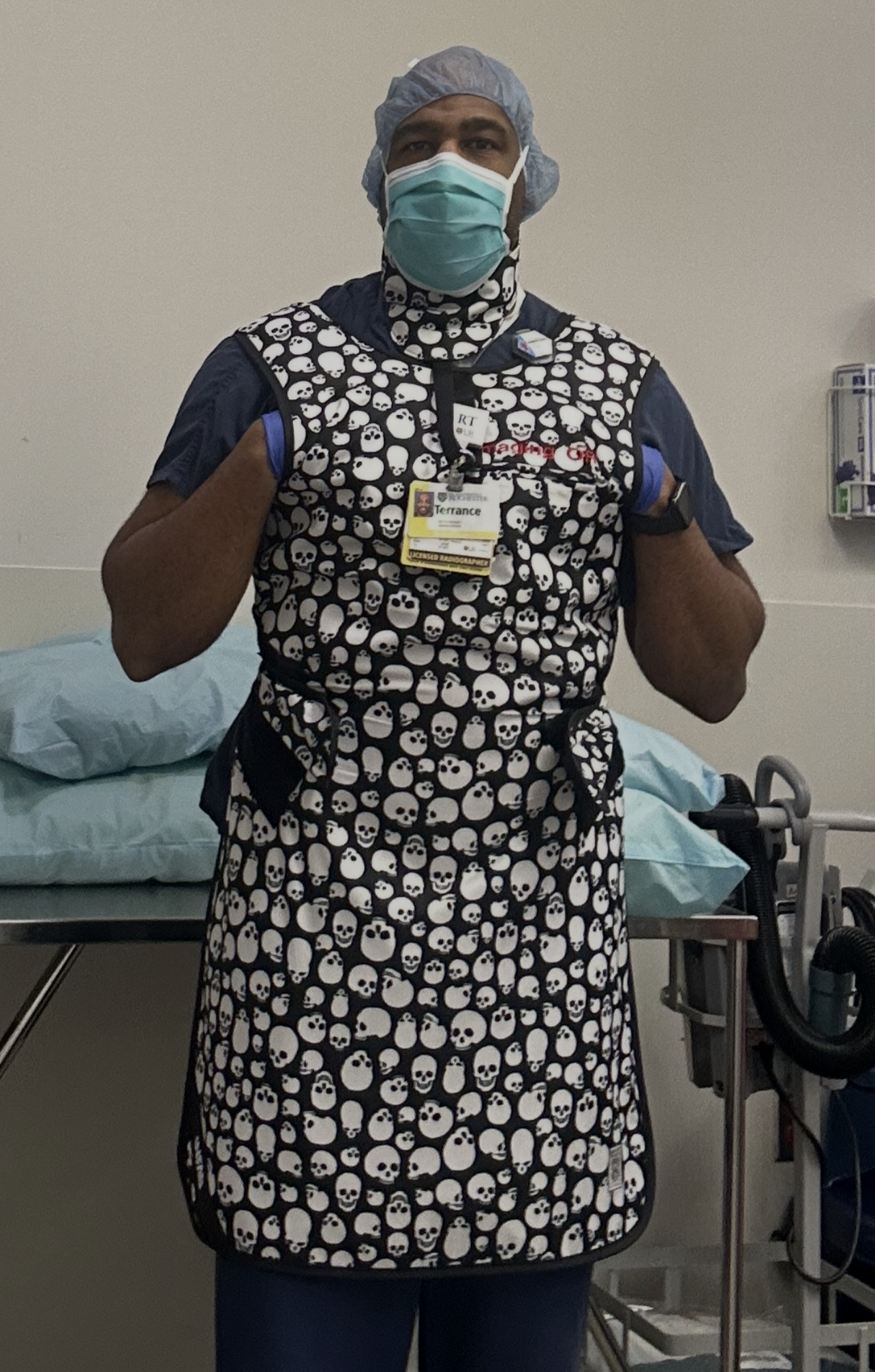
That level of focus didn’t happen by accident. For Cooper, mindset played a critical role in turning uncertainty into progress.
“If you believe in yourself and you know you’re willing to put the work in, it can be done,” he said.
Cooper’s discipline and commitment carried him through. He approached the program with intention, treating it as a full-time responsibility and staying focused on his long-term goal.
“The older I got, the more focused I became,” he said. “I was paying for this—so I wasn’t screwing around.”
With years of professional and life experience behind him, Cooper approached his education with a level of discipline and clarity he says he may not have had earlier in life.
“I honestly don’t know if I could have been that disciplined and focused at 18 to 21,” he said.
His previous work in banking and insurance also influenced how he showed up: strengthening his work ethic, professionalism, and communication skills in both the classroom and clinical settings. Those experiences helped him navigate uncertainty, manage stress, and stay accountable as the program demanded more of him.
For Cooper, the transition into healthcare brought something his previous roles had not—daily, tangible impact.
That sense of purpose is most evident in how he approaches patient care. Whether working in routine imaging or high-pressure trauma situations, he focuses on communication and reassurance. He helps patients feel informed and supported in stressful and unfamiliar moments.
“I feel my job is to be the calming presence, put their minds at ease, and leave them with a positive experience,” he said.
“No one wants to be in a hospital, so it’s already a very scary experience: You get more from patients when you explain what you’re doing.”
For Cooper, those small interactions matter just as much as the rest of the job.
“Treating people with respect and dignity, that’s what excellent patient care looks like to me,” he said.
The work also offers something he values deeply: hands-on, face-to-face interaction and the ability to make an immediate difference. In fast-paced or trauma settings, the responsibility of a Radiologic Technologist becomes even clearer.
“Time was of the essence,” he said. “My goal was to get the images right the first time, so I wasn’t slowing anyone down. It was really cool and scary at the same time.”
At the core of it all is a sense of continued growth. “It gave me a chance to try something new, to step outside of my comfort zone,” he said. “The fresh start was needed.”