

Louis “Sandy” Constine, MD, Receives 2026 Pediatric Oncology Award from ASCO
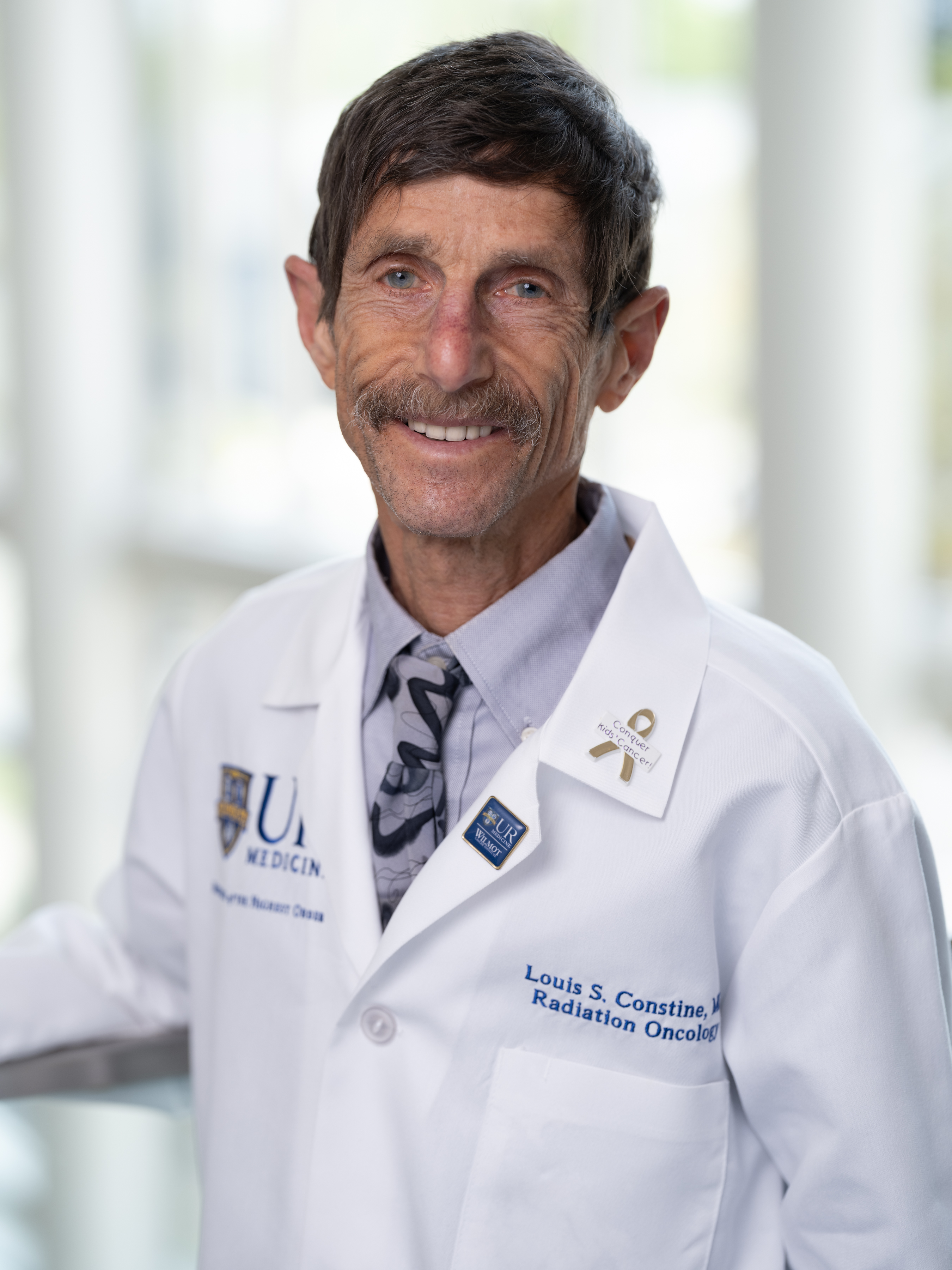
In honor of his pioneering work to improve the outlook of young cancer survivors, as well as advancing the treatment of childhood cancers – particularly Hodgkin Lymphoma – Louis Constine, MD, received the 2026 Pediatric Oncology Award from the American Society of Clinical Oncology (ASCO), the world's leading cancer clinical research organization.
ASCO is a charitable, educational, and scientific organization with a membership of 50,000 oncologists from 170 countries. Constine is the third radiation oncologist in ASCO’s history to receive this award, following two others who served as mentors throughout his career.
“Receiving this award was a tremendous honor and is humbling, since there are so many talented pediatric oncologists around the world,” Constine says. “It was a huge surprise and has validated my life’s journey. My work is a gift, and I am blessed to have many wonderful colleagues who have helped me along my personal journey.”
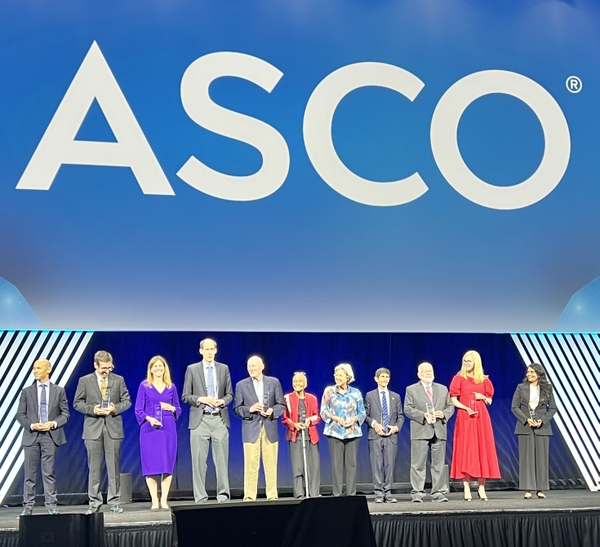
Louis Constine (fourth from right) stands on stage with other 2026 ASCO Special Award recipients.
Constine always knew he wanted to do something to help children. In medical school, he realized one of the most tragic events for a family was to have a child be diagnosed with cancer – and even those who are cured would often face debilitating side effects, such as heart disease or second cancers, what Constine refers to as the “agony of victory.”
As a parent himself – and now a grandparent – he saw a tremendous opportunity to make a difference.
“Every life is precious, but our hearts naturally go out to children since they have so many years ahead of them,” he says.
Over the last half-century, Constine has devoted his life to understanding how cancer treatments like chemotherapy and radiation therapy impact normal tissue in both adults and children. Often referred to as “late effects,” these are side effects that can happen years after a patient completes treatment. They include increased risk of developing a second cancer or problems with the heart, lungs, or other organs.
At Wilmot Cancer Institute, he is the Philip Rubin Professor of Radiation Oncology and Pediatrics (triple-boarded). He helped start the Long-Term Cancer Survivors Program within the Division of Pediatric Hematology/Oncology in 1987 and served as director of Wilmot’s Judy DiMarzo Cancer Survivorship Program from its inception in 2013 through 2024.
In 2012, he founded and continues to lead the Pediatric Normal Tissue Effects in the Clinic (PENTEC), an international consortium that investigates how radiation and chemotherapy treatments impact all the different organs in pediatric patients. PENTEC made seminal contributions in explaining the effects chemotherapy has on the function of developing organs that are exposed, since all are differentially affected. PENTEC also found that children are much more vulnerable when it comes to radiation damage than the field had previously assumed. This led to developing child-focused guidelines for radiation therapy, rather than just “scaling down” what is done for adults.
He was involved in the pioneering work on response-based treatments of children with Hodgkin Lymphoma and helped write a textbook on all childhood cancers that has been translated into multiple languages. He has advised many international committees on survivorship and late effects of cancer and led a task force under the Children’s Oncology Group (COG) to better understand normal tissue dose constraints. He was a member of the United Nations task force that summarized and distributed internationally a compendium on the adverse effects of radiation on children, and he has received a National Institutes of Health (NIH) Merit Award.
Whenever possible, Constine shares a mantra that has guided his life and career:
For the survivor of cancer, the world is full and each day is a celebration—for the physician, each patient is an inspiration—for the person fighting cancer, each day is precious and must be faced with courage.
He also encourages curiosity and being mindful of the extraordinary that is all around. But most important to him are his wife, Sally, of 54 years, his children and grandchildren, who are the center of his world.
“Congratulations to Dr. Constine. We are very proud of him and this achievement,” says Jonathan W. Friedberg, MD, MMSc, director of Wilmot Cancer Institute. “Dr. Constine built his career with an aim to help our youngest cancer survivors, and his dedication and impact are to be commended.”
Read more about Dr. Constine and his award in this profile by Blood Cancers Today and in this story from the American Society for Radiation Oncology.
Author
