
The Envelope, Please: UR Medical Students Open the Next Chapter of Their Careers
As big moments in life go, it’s hard to beat Match Day.
This annual event is when graduating medical school students across the country learn at which residency program they will train. All have completed four years of undergraduate study and then four years of medical school on their way to residency in the medical specialty they’ve chosen.
Noon on Friday, March 20, 2026, will go down as a pivotal life event for Class of 2026 University of Rochester School of Medicine and Dentistry members as they gathered in a packed-to-the-rafters Class of ’62 Auditorium alongside family and friends there to cheer them on. The biggest news of their careers came in the small envelopes they opened as the clock struck 12: brief letters that told them where they matched. The room rocked with joyous shrieks, hugs, and handshakes.
“It’s a very exciting time for students: the culmination of all their efforts, where they will train and what specialty they will pursue,” said David R. Lambert, senior associate dean for Medical School Education and professor of Medicine at the School of Medicine and Dentistry.
In their last year of medical school, students apply to a number of residencies and interview at the programs that invite them. After the application and interview process, students rank their choices from first choice on down, and the programs independently rank their applicants. The National Resident Match Program uses an algorithm to assign students to the program highest on their list where there is a “match.”
This year, approximately 28,000 students from Rochester and across the country were pursuing a residency spot. SMD students who applied to residency programs in ophthalmology, urology, and U.S. military programs learned earlier this year where they will be training. On Friday, the rest of the class received their match destinations.
"Match Day has become a way for me to reflect each year how much progress we've made in medicine over the years, and how that impacts the lives of both physicians and their patients," said David Linehan, MD, CEO of the University of Rochester Medicine Center and Dean of the School of Medicine & Dentistry.
He noted advances made since his Match Day in 1990, such as improved pancreatic cancer survival rates and development of mRNA, the science behind COVID-19 vaccines that saved hundreds of thousands of lives. "Our work is far from done and we need fresh ideas and new innovations" that will come from today's trainees in the decades to come.
|
|
- Internal Medicine
- Anesthesiology
- Family Medicine
- Emergency Medicine
- Child Neurology and Neurology
- Psychiatry
They will train in 22 different states and the District of Columbia. Forty-two will stay in New York state and of those, 30 will get training at University of Rochester Medicine.
States with the most SMD graduates after New York are:
- Pennsylvania: 11
- California: 9
- Massachusetts: 5
- Connecticut and Maryland: 4 each
"It's a new beginning for them," Lambert said. "It's also very exciting because all of the faculty, administration and everyone who helped support and educate the students through the years sees the fruit of their efforts as well. That's what makes Match Day special."
A Century of Training Future Physicians at Strong Memorial
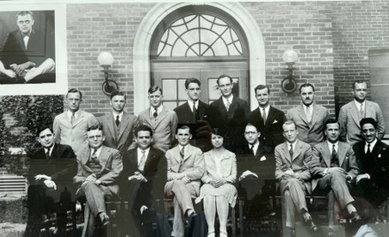
Match Day 2026 is also notable because it coincides with Strong Memorial Hospital’s centennial. In addition to serving the community, the hospital has been a fertile training ground for SMD students for the last century.
At its opening in 1925, SMD had a class of 20 men and 2 women. Its first graduating class of 1929 included 15 of the original students and three transfers.
The 105-member Class of 2026 has an almost equal number of men and women in its ranks; more than 60 identify as non-Caucasians, and 10 percent are historically underrepresented in medicine.
“One hundred years ago the medical school was new, and anyone who came here was taking a bit of a gamble because it didn’t have a track record,” Lambert said. “There was a lot less structure to the curriculum but even then, there was an emphasis on clinical care and research to make it a comprehensive program, and students could take a year out for research.”
Over the past century, the school evolved “in response to new content, new teaching and assessment methods, and the needs of society as well,” Lambert said. “We have enhanced opportunities for students outside of the required curriculum by making research experiences more robust and expanding international learning experiences.”
“We have a very robust system by which a student can do a year of research, and we have expanded international training opportunities. We have fully integrated clinical science and research and maintained training in biopsychosocial medicine that was developed here in Rochester, which distinguishes the medical training we provide. Feedback from the residency programs that get SMD students remark on their ability to engage with patients and see things in a very holistic way, with excellent clinical-reasoning skills.”
After 17 years as senior associate dean, Lambert will step down from the role and continue his internal medicine practice at UR.
“As the students are moving to a new position and role, I will be as well. SMD will bring on new leadership and ideas that will make the school continue to excel and allow us to maintain our tradition of outstanding graduates. We are all transitioning here, and it’s all good.”
This was one of the most successful Match Day events SMD has ever had, Lambert noted. His parting message to students on Match Day about the residency journey ahead of them:
“You think it’s going to be great; it’s going to be even greater than you anticipate. Residency is challenging, sure, but it’s a great challenge, because you are learning and growing and helping your patients. It all comes back to that.”