

When Minutes Count: State's First Ambulance Blood Transfusion Service Begins in Rochester
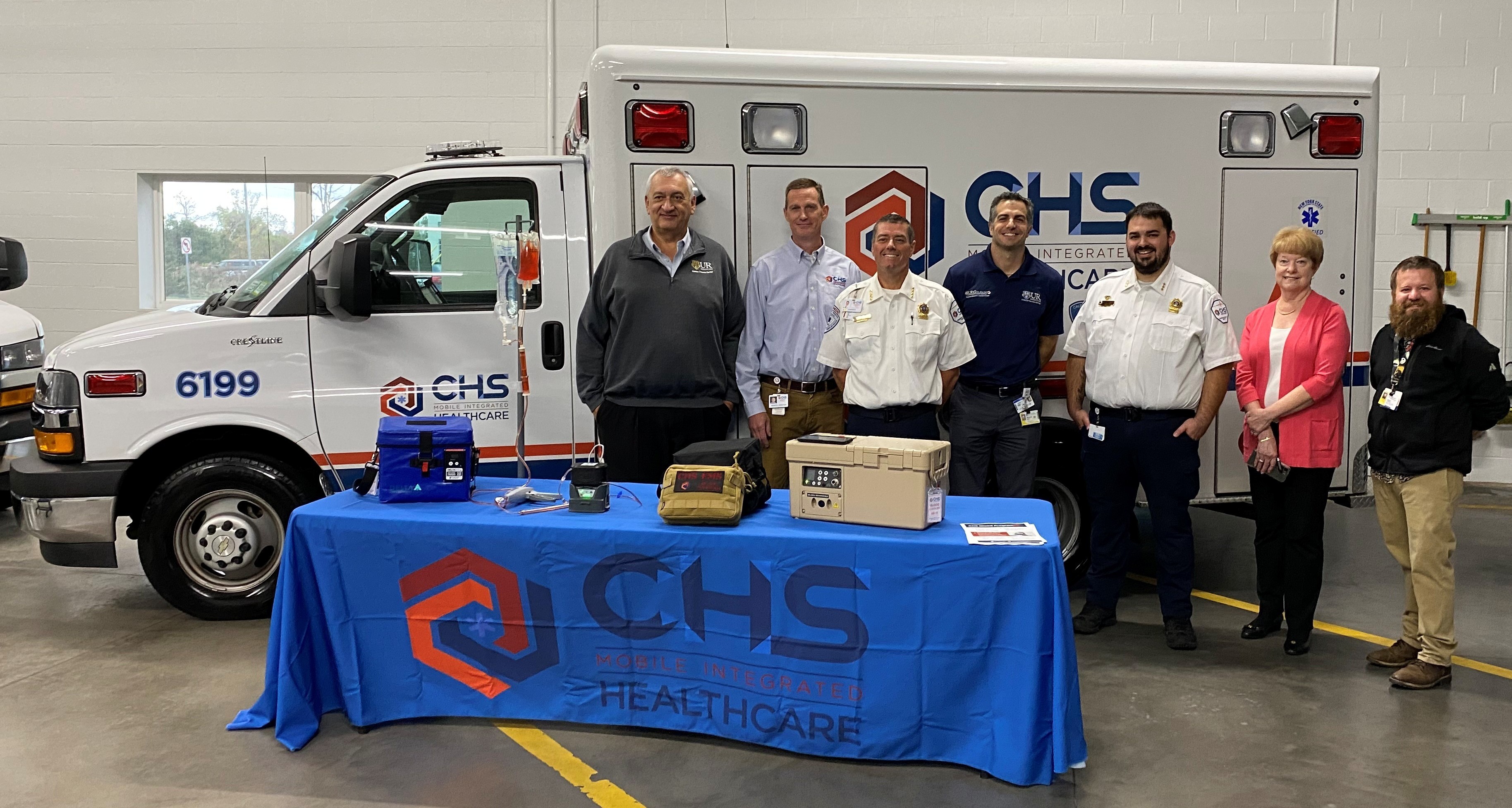
CHS Mobile Integrated Healthcare and University of Rochester Medicine have partnered to offer emergency blood transfusion services on ground ambulances for patients experiencing hemorrhagic shock. Across the U.S., approximately 400 ground ambulance crews offer this life-saving service; the new CHS-URochester partnership is the first in New York state.
In-field transfusion allows ambulance crews to administer blood products at the scene of an injury or during transport to the hospital.
“Studies show that in-field transfusions can be a life-saving difference for some trauma patients who experience significant blood loss,” said Jeremy T. Cushman, M.D., Chief, Division of Prehospital Medicine, and Professor of Emergency Medicine. “This partnership is the result of leadership by CHS to bring this service to our region, and the efforts of our hospital Blood Bank, Prehospital Medicine and Trauma Medicine teams.”
Beginning Sept. 14, CHS began transfusion services in its coverage area to appropriate patients. The blood products are from the Blood Bank at URochester’s Strong Memorial Hospital. CHS purchased equipment that properly stores blood products at the required temperature, as well as equipment that quickly warms them immediately prior to infusion into a patient. It also invested significant time and resources to train and credential 9 of its approximately 40 paramedics in handling the blood products and performing in-field transfusion.
Timely Transfusion in the Field Saves Lives
Approximately 80 percent of the transfusions will be for patients suffering hemorrhagic shock from trauma; common causes include motor vehicle accidents, gunshot or stab wounds, and industrial and farming accidents. The remainder will assist women suffering blood loss from childbirth, a leading cause of maternal mortality, and patients with gastrointestinal bleeds. Based on their prior call reports, CHS estimates that they will perform prehospital transfusions for approximately 40 patients a year.
With rapid blood loss, timely transfusion can mean the difference between life or death.
“This is a great addition to the care that patients get from emergency responders and people working in the hospital,” said Michael A. Vella, M.D., Trauma Medical Director, Kessler Trauma Center. “As trauma surgeons, we regularly care for patients who have lost a great deal of blood when they come to us, and there are times when patients’ outcome could be different if they received a transfusion sooner. “This is great news for the patients in our region.”
A Program Based on National Best Practices and Zero-Waste of Blood Products
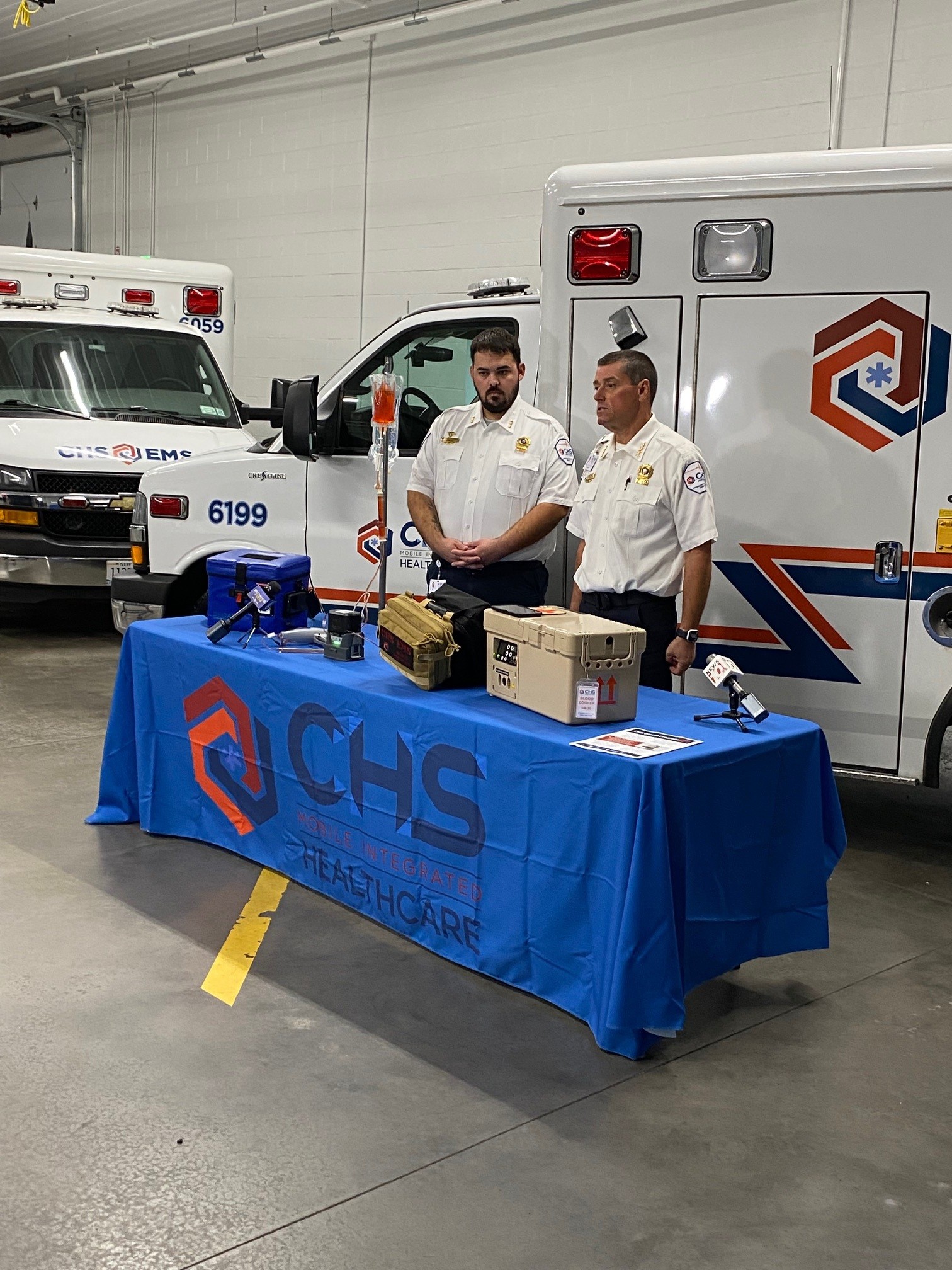
CHS’s Chief Francis Manzo and Deputy Chief Shane O’Donnell spearheaded the project, fueled by their experiences in emergency medical care. Prior to his current role, Manzo was a full-time nurse practitioner in the Kessler Burn and Trauma Center where he treated trauma patients, many of whom had suffered significant blood loss prior to hospitalization. He remains a part-time NP at Kessler.
“Ground ambulance crews around the country are saving patients’ lives with this service and we wanted to bring it to the patients we serve,” Manzo said. “We are also a resource for other ambulance services in the area that may need it for their patients.” Ambulance services can request transfusion support from CHS, which will dispatch one of their ambulances carrying blood products to the scene. The CHS paramedic credentialed to do transfusion will assist with the case.
O’Donnell previously served as a helicopter ambulance paramedic and saw dramatic improvement in patients who received transfusions in transit to the hospital.
“Without the ability to offer blood products on the ground, we would administer IV fluids to patients with severe blood loss, but they are not as helpful. IV fluids don’t carry oxygen or clotting factors as blood products do, and they can worsen acidosis. As a helicopter paramedic I saw that a transfusion can make an immediate difference; patients’ blood pressure and other vital signs improve, and they are more alert and able to communicate with us as we transport them to the hospital for the next stage of their care,” said O’Donnell.
Amid a national blood shortage, CHS and URochester Medicine developed a process that ensured no blood would be wasted. They benchmarked with emergency medical services around the country that already offer in-field blood transfusion.
The Blood Bank provides CHS with three units at a time with an expiration date approximately three weeks out. Three CHS vehicles carry one unit each; if any of the units are not used prior to seven days of expiration, they return to the Blood Bank for in-hospital transfusions. The Blood Bank provides new units to CHS with a three-week expiration deadline as needed.
Emergency In-Field Transfusion by Paramedics a Growing National Trend
“This service took a year of careful planning and close collaboration, and it demonstrates the vital partnership between community emergency medicine providers like CHS and our URochester Medicine hospitals,” said Mark L. Gestring, M.D., professor and chief of Acute Care in the Department of Surgery. “Our Blood Bank’s manager, Debra Masel, and quality control supervisor Andrew LeBlanc worked through all the logistical and regulatory issues required for our hospital and CHS to make this work. We’re excited to see this project to completion.”
More than 400 ground emergency medical services across the U.S. now carry blood products, up significantly from approximately 5 agencies in 2016. They administer more than 22,000 prehospital blood transfusions annually. New York state has allowed prehospital blood transfusions on helicopter and air ambulances since 2021 and passed a law in 2024 enabling paramedics in ground transport to offer the same service.
The new service underscores the importance of blood donation, said Masel. “Our blood supplier is the American Red Cross, and it continues to face a national shortage of blood donations. Anyone who wants to donate can learn more by visiting redcross.org to learn how and where to donate. We would like to increase our inventory of Group O blood so we can ensure a continued supply of life-saving units to CHS ambulance crews in our community.”
Author
