

Q&A with Chigusa Kurumada, PhD
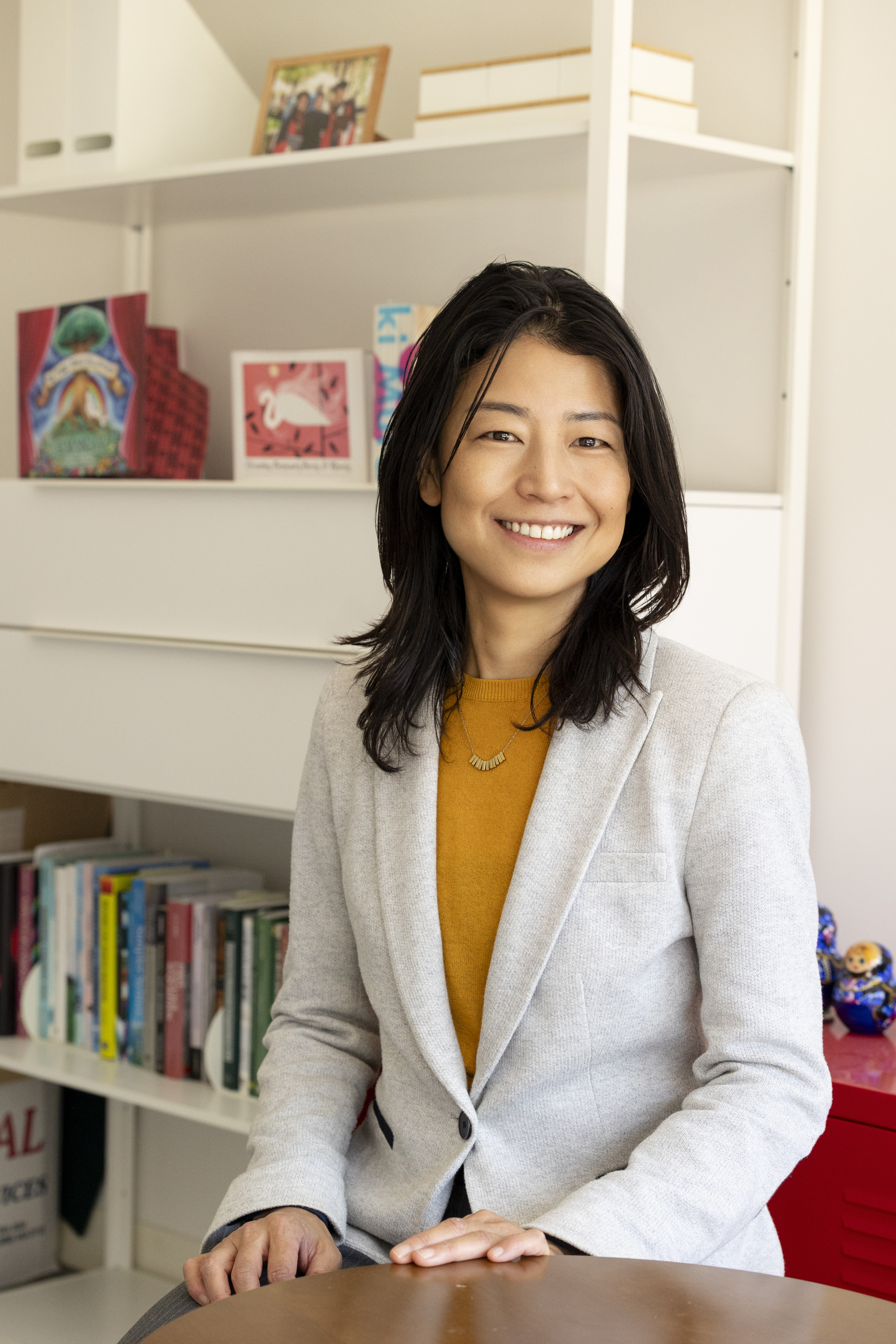
Chigusa Kurumada, PhD, is an associate professor of Brain and Cognitive Sciences (BCS) at the University of Rochester. Kurumada first came to the University for her postdoctoral training. She has a PhD in Linguistics from Stanford University, an MA in Language and Information Sciences from the University of Tokyo, and a BA in Cross-Cultural Studies from Kyoto Prefectural University. Her research studies how we understand language. Kurumada is also dedicated to her students. As a mentor, she co-founded the URochester Women in the Neurosciences (URWINS) to support scientists at all career levels.
Please summarize your research.
“My research studies how language is used to share thoughts and intentions. In our daily conversations, we communicate information at a remarkable speed – on average, about 2.5 words every second – and convey many layers of meaning. There is also significant variability in how people use language: factors such as age, gender, accent, and language background can affect our voices and how we speak. I am interested in how we can still understand each other, despite all the variability and time pressure.”
How did you become interested in your field?
“Since I was a young child, I have been fascinated with how language works. When a news anchor made a small mistake, I was always happy to point it out to my parents. I also liked thinking about how knock-knock jokes (or their Japanese equivalents) and other wordplay work, or how irony and sarcasm can be so powerful in conversation. The pivotal moment in my early scientific life was when I was a college student and worked as a volunteer Japanese language teacher at two primary schools in Australia. I was fascinated by how young children learn to speak, sometimes in more than one language. That’s when I decided to pursue a PhD in linguistics.
The opportunity to collaborate with colleagues from various areas of cognitive science—like language and vision—and to co-mentor students with innovative ideas was particularly exciting.
What brought you to the University of Rochester?
The Department of Brain and Cognitive Sciences at UR has long been a world leader in psycholinguistics and language development, two fields that have strongly influenced my research. I was also drawn to Rochester’s collaborative culture, where researchers regularly work across disciplines to solve complex problems. The opportunity to collaborate with colleagues from various areas of cognitive science—like language and vision—and to co-mentor students with innovative ideas was particularly exciting. More than a decade later, that interdisciplinary spirit remains one of my favorite aspects of being at UR.
Who do you collaborate with at Rochester, and how is the relationship impacting your science?
I work closely with Dr. Florian Jaeger in BCS, Dr. Loisa Bennetto in Psychology, Dr. Zhen Bai in Computer Science, and Dr. Wyatte Hall in Public Health Sciences, among others. These collaborations allow me to use language science to solve problems in the real world. For example, I investigate the connection between social and language skills in teenagers with autism. I also develop assistive technology to help families with deaf or hard-of-hearing children. I also value opportunities to build scientific communities and mentor trainees. For instance, I co-founded the University of Rochester Women in the Neurosciences (URWINS) with Dr. Farran Briggs to support scientists at all career levels.
What is your favorite piece of advice?
I received some particularly helpful advice from a senior colleague in the field. She told me that there is no single “right” way to be a successful researcher. Her advice helped me refocus on building a research program that reflects my own goals, values, and strengths—and it continues to guide how I lead my lab today.
