Refractive Research

Refractive Surgery is a treatment of the eye that brings images into sharp focus on the retina, the tissue that sends the images back to the brain. These procedures eliminate or reduce the need for glasses and/or contact lenses.

Groundbreaking work in refractive surgery and corneal disease are among Rochester’s most productive areas of investigation. These procedures eliminate or reduce the need for glasses and/or contact lenses.

Currently, ophthalmologist and refractive surgery specialist Scott MacRae, M.D., is conducting clinical trials on the latest refractive surgery techniques. Patients are treated briefly with a laser beam that sculpts the cornea. The procedures he has helped develop have allowed hundreds of thousands of patients worldwide to literally throw away their glasses or contact lenses.

Customized Ablation, "Super Vision"

Dr. MacRae is looking at a unique form of the surgery known as “customized ablation,” an innovative technique that allows doctors to precisely tailor the surgery to compensate for the smallest imperfections within a person’s eye. Soon, Dr. MacRae plans to launch the largest study ever of customized ablation. Doctors will compare conventional laser vision correction to the customized version. Such studies are crucial to making the procedure safer and making sure that people benefit as much as possible.

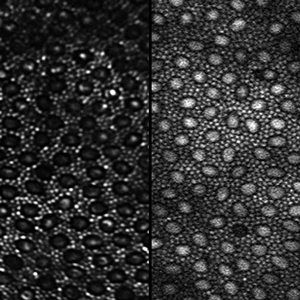
Dr. MacRae is part of a Rochester team of scientists and physicians who founded the field of customized ablation—also known as “super vision” among many eye experts. He works closely with University of Rochester scientist David Williams, Ph.D., who was the first person to design and build a system to allow doctors to see such extraordinary detail that single retinal cells can be studied. Using the same technology that allows astronomers to remove the twinkle from starlight, Dr. Williams has discovered dozens of previously unknown visual imperfections in the human eye. Dr. MacRae is among a handful of surgeons using that knowledge to correct a patient’s vision in unprecedented detail.

Basic Research—Optical Aberrations

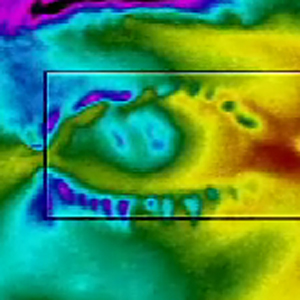
Wavefront sensing is an advanced method for looking at imperfections in the optics of the eye capable of blurring images on the retina and thereby reducing visual acuity.

At the basic science level, Drs. MacRae and Williams are collaborating with Krystel Huxlin, Ph.D., and Geunyoung Yoon, Ph.D., to develop a model for refractive surgical experiments that will tease out the causes of optical aberrations and test ways of preventing or correcting them. Dr. Yoon also is developing new technologies, including a miniature, portable wave front sensing device—highly specialized imaging equipment. Wave front sensing is an advanced method for looking at imperfections in the optics of the eye capable of blurring images on the retina and thereby reducing visual acuity.