

Halloween Safety Tips and Tricks
Key Takeaways
- Make sure your child can be seen in the dark. Add reflective material to costumes and treat bags, and carry a flashlight or glow stick.
- Choose a costume that fits, so that your child can see clearly, move comfortably, and walk without tripping.
- Check candy before eating for allergens, candy types, or choking hazards, to make sure it's right for your home.
- Make Halloween welcoming for everyone. Consider sensory-friendly decorations and non-food treats for children with food allergies or other needs.
Halloween doesn’t have to be scary. If your family is trick-or-treating or adding some spooky decorations to the house, it’s important to keep safety front of mind. Pediatric and orthodontic experts at University of Rochester Medicine suggest following these tips to make sure your child has a fun—not frightening—time.
1. Be seen in the dark.
Being struck by a car is the greatest risk for trick-or-treaters. As well as reminding your child about traffic safety, pediatrician Elizabeth Murray, D.O., M.B.A., encourages parents to incorporate glow sticks and reflective material into costumes. “Remember that sparkly or shiny doesn’t necessarily mean reflective,” she emphasizes.
Make visibility part of your Halloween plan:
- Add reflective tape or material to costumes, shoes, and treat bags. Test it in a car’s headlights if you’re unsure whether it reflects light.
- Give children a flashlight or glow stick so they can see where they’re walking and help drivers see them.
- Use sidewalks and cross at corners or crosswalks. Remind children to look for cars in every direction.
- Walk with young children. Older children should travel in a group, follow an agreed-upon route, and have a set time to return home.
- Remind children to put phones away while walking.
Drivers can help, too. Slow down, watch for children near parked cars and driveways, and stay alert for trick-or-treaters.
2. Choose the right costume.
If your trick-or-treater has a disability, consider an adaptive costume, which is specially designed to accommodate the needs of people with physical, sensory, or developmental disabilities.
These costumes use features like Velcro fastenings, openings for medical devices, and designs that fit over wheelchairs to make the outfit functional and comfortable for trick-or-treaters with mobility aids, sensory sensitivities, or medical equipment.
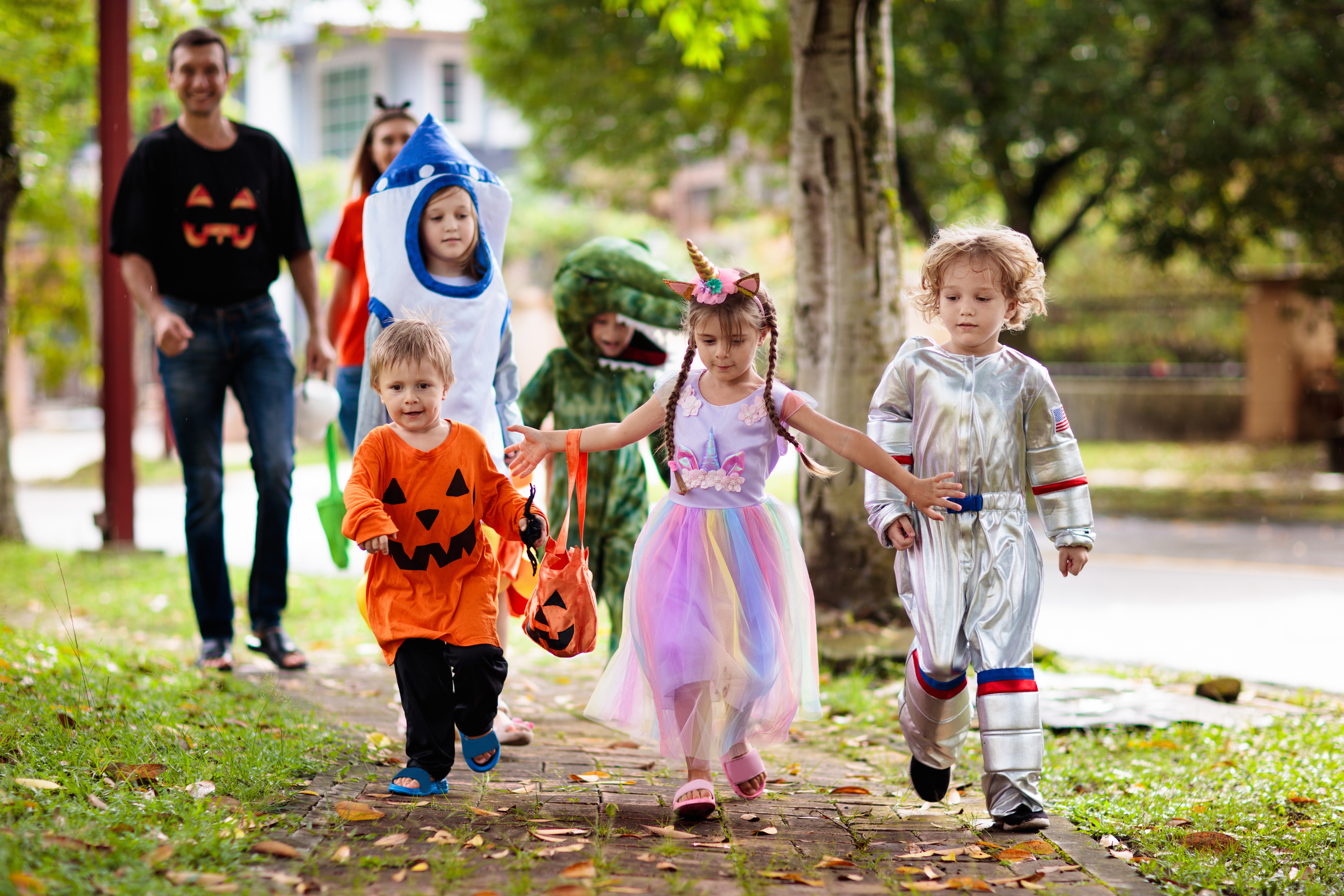
Whatever costume your child chooses, make sure it fits well and allows them to move safely. Costumes that drag on the ground, oversized shoes, and accessories that get in the way can lead to trips and falls. If their costume includes a mask, wig, or hat, make sure they can see clearly and can breathe comfortably.
3. Decorate with sensory sensitivities in mind.
Halloween can be difficult for children with sensory sensitivities. Lisa Latten M.S., E.d., explains, “There are lots of noises and flashing lights that can be overwhelming and difficult to process.”
To make sure your house decorations are fun for all trick-or-treaters, consider avoiding anything that jumps out or spontaneously makes loud noises. And, if possible, try to choose less scary decorations, like pumpkins rather than a goblin or spooky ghost.
You can make Halloween more comfortable for more children with a few small changes:
- Keep walkways clear and well lit.
- Offer a quiet, predictable way to approach your door, without sudden noises or flashing lights.
- Let children choose how close they want to get to decorations or displays.
- Consider offering candy or a non-food treat without requiring a child to speak, ring a doorbell, or participate in a particular way.
4. Get candy that’s right for your house.
If your trick-or-treater has braces or a permanent retainer, Dimitrios Michelogiannakis D.D.S., M.S., and Nadia Abou Kheir D.D.S., M.S., suggest skipping candies like:
- Nuts and popcorn
- Chewy candy like caramels, taffy, and Starburst
- Hard candy like lollipops and candy corn
- Bubblegum
- Jellybeans
- Sour candy
“These candies can damage the braces and set your orthodontic treatment back,” says Michelogiannakis.
Instead, the American Association of Orthodontists suggests softer candies that melt in your mouth, like:- Chocolate (without nuts)
- Peanut butter cups
- Marshmallows
- Cotton candy
- Kit Kat bars
- Cookies
- Three Musketeers
If your child does get something stuck in their braces, try washing it out with water, brushing, and flossing. If a bracket comes loose, call your orthodontist to make an appointment.
5. Keep Food Allergies and Choking Hazards in Mind
Before your child eats candy, check the package and ingredient label for known allergens. If you can’t confirm that a treat is safe for your child, don’t give it to them.
For young children, pay attention to choking hazards. Hard candies, gum, popcorn, whole nuts, and small treats can be unsafe for babies and toddlers. Choose age-appropriate treats and supervise young children while they eat.
Consider offering non-food treats such as stickers, bubbles, glow sticks, or small toys, as an option for children with food allergies and other dietary needs. If you offer both candy and non-food treats, keep them in separate bowls.
Have a Safe and Happy Halloween
For more advice on children’s health, explore related stories from University of Rochester Medicine experts.
Does Halloween Candy Really Cause a Sugar Rush?
What Parents Should Know