
Healthy Living
Summer Pregnancy Tips: Heat, Sun, and Swelling
Key Takeaways
- Pregnancy can make it harder for your body to regulate heat, increasing the risk of overheating and dehydration.
- Stay hydrated, seek shade, and avoid outdoor activities during the hottest parts of the day.
- Swelling and sun sensitivity are common during pregnancy and may worsen in hot weather.
- Severe swelling, headaches, or pain that doesn't improve with rest should be evaluated by a healthcare expert.
- Talk with your Ob/Gyn before starting a new exercise routine during pregnancy.
For many of us, extreme summer heat can be uncomfortable; for pregnant women, it can bring health issues that require attention.
URochester Medicine high-risk pregnancy expert Dr. Loralei Thornburg provides simple precautions to keep you more comfortable while protecting your baby’s health during the hottest summer days.
Why Does Pregnancy Make You Feel Hotter?
Summer sun and heat can be especially challenging during pregnancy because of several normal changes that occur in the body.
Elevated body temperature: The baby is producing a huge amount of heat as it grows, which can make you feel warmer and slightly raise your body temperature. Hot weather intensifies the effect.
Swelling: Fluid retention during pregnancy can cause swelling in your legs and feet, which may worsen in warm weather.
Sun sensitivity: Increased fetal heat production dilates blood vessels in the skin of the face, chest, and breasts to help dissipate the excess heat. This gives the “glow” of pregnancy but makes the skin burn more easily.
Plus, higher estrogen levels can stimulate excess melanin production, darkening existing freckles and moles and causing patches of hyperpigmentation called chloasma, or the "mask of pregnancy." Sun exposure can worsen these changes.
Can You Lie in the Sun While Pregnant?
Yes, pregnant women can safely spend time outdoors and in the sun, but it's important to avoid overheating and dehydration. Pregnancy naturally raises body temperature and increases your body's heat production. Prolonged exposure to heat can increase the risk of dizziness, fatigue, and heat-related illness.
There is no specific time limit for sun exposure during pregnancy, as tolerance varies by person and weather conditions. If you begin to feel overheated, dizzy, or unwell, move to a cool place, drink fluids, and rest.
When spending time outdoors:
- Drink water regularly.
- Wear sunscreen and protective clothing. Light-colored, loose clothing can also help. Consider a swim shirt or other coverage when swimming to protect the chest and belly.
- Seek shade when possible. Consider an umbrella (even on a cloudy day!) to bring the shade with you.
- Avoid being outside during the hottest part of the day, typically between 11 a.m. and 3 p.m.
Safer, Healthier Summers
Explore our Summer Health and Safety Guide for expert tips on heat, hydration, bug bites, sun protection, water safety, and when to seek care.
How to Stay Cool During Pregnancy
There are simple ways to stay prepared and avoid overheating:
- Prevent dehydration by carrying a water bottle and drinking small sips throughout the day.
- Stay indoors or in shady, well-ventilated areas, especially when the heat index is over 90.
- Take a lukewarm shower—not a cool one. Cold water can overchill your body, prompting it to generate more heat.
- Wear loose, breathable clothing such as cotton, linen, or moisture-wicking fabrics.
- Keep a spray bottle filled with water or a personal fan for quick relief.
- Check with your OB/GYN provider before beginning a new exercise routine. If you exercise outdoors, do it during cooler times of the day.
Quick ways to cool down:
- Place a wet, cool washcloth or ice wrap on your neck.
- Run cool tap water over your wrists and arms.
- If you have access to a swimming pool, take a dip—the water can also relieve pressure on your back and legs.
How to Manage Swelling During Pregnancy
Increased swelling during pregnancy is completely normal. During the summer, swelling can be more intense due to the sun and heat.
Tips to reduce swelling:
- Minimize your salt intake, as eating salt can worsen water retention.
- To reduce leg swelling, lie down with your feet up for half an hour or an hour during the day if you can. Prop your feet up with a pillow or towel while you're sleeping.
- Wear comfortable shoes and, if your feet are swollen, consider wearing shoes that are a half or full size bigger than your normal shoe size.
- If your rings are too tight on your fingers, don’t wear them.
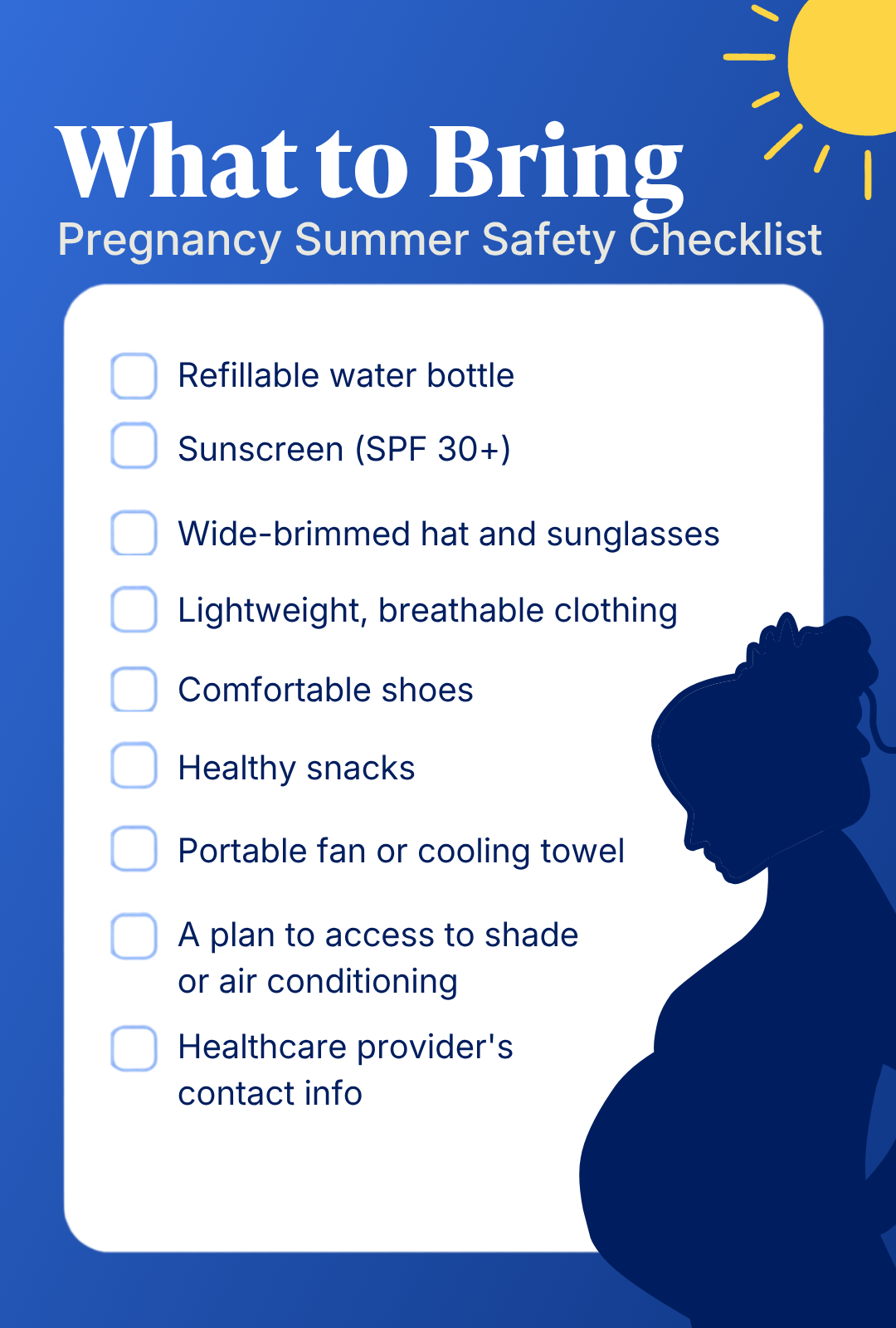
What to Bring: Pregnancy Summer Safety Checklist
Before heading outside this summer, make sure you have these essentials on hand:
- Refillable water bottle to stay hydrated
- Broad-spectrum sunscreen (SPF 30 or higher)
- Wide-brimmed hat and sunglasses
- Lightweight, breathable clothing
- Comfortable, supportive shoes or sandals
- Healthy snacks to maintain energy levels
- Portable fan or cooling towel
- Access to shade or air conditioning
- A plan to avoid outdoor activities during peak heat (11 a.m. to 3 p.m.)
- Your healthcare expert's contact information in case concerns arise
Connect with us!