
Pacemaker vs. Defibrillator: How We Choose What’s Right for Your Heart
Key Takeaways
- Pacemakers keep your heart from beating too slowly but can also help your heart beat more responsively to normal activity and exercise
- Defibrillators (ICDs) stop dangerously fast rhythms predominantly from the bottom of the heart (ventricles)
- The right device depends on your heart condition, symptoms, and risk factors
- Most people return to work, travel, and daily activities relatively soon after placement of a device
Your heartbeat keeps you alive, so when it's thrown off, you feel it. A rhythm that's too slow, too fast, or irregular can leave you dizzy, breathless, and worried about what comes next.
Pacemakers and defibrillators treat abnormal heart rhythms, but they work in different ways. At University of Rochester Medicine, our heart rhythm specialists combine advanced testing with personalized care to determine which device will help you thrive. URochester Medicine cardiac electrophysiologist Casey White, MD, explains the differences so you can feel confident in your care.
What Is a Pacemaker?
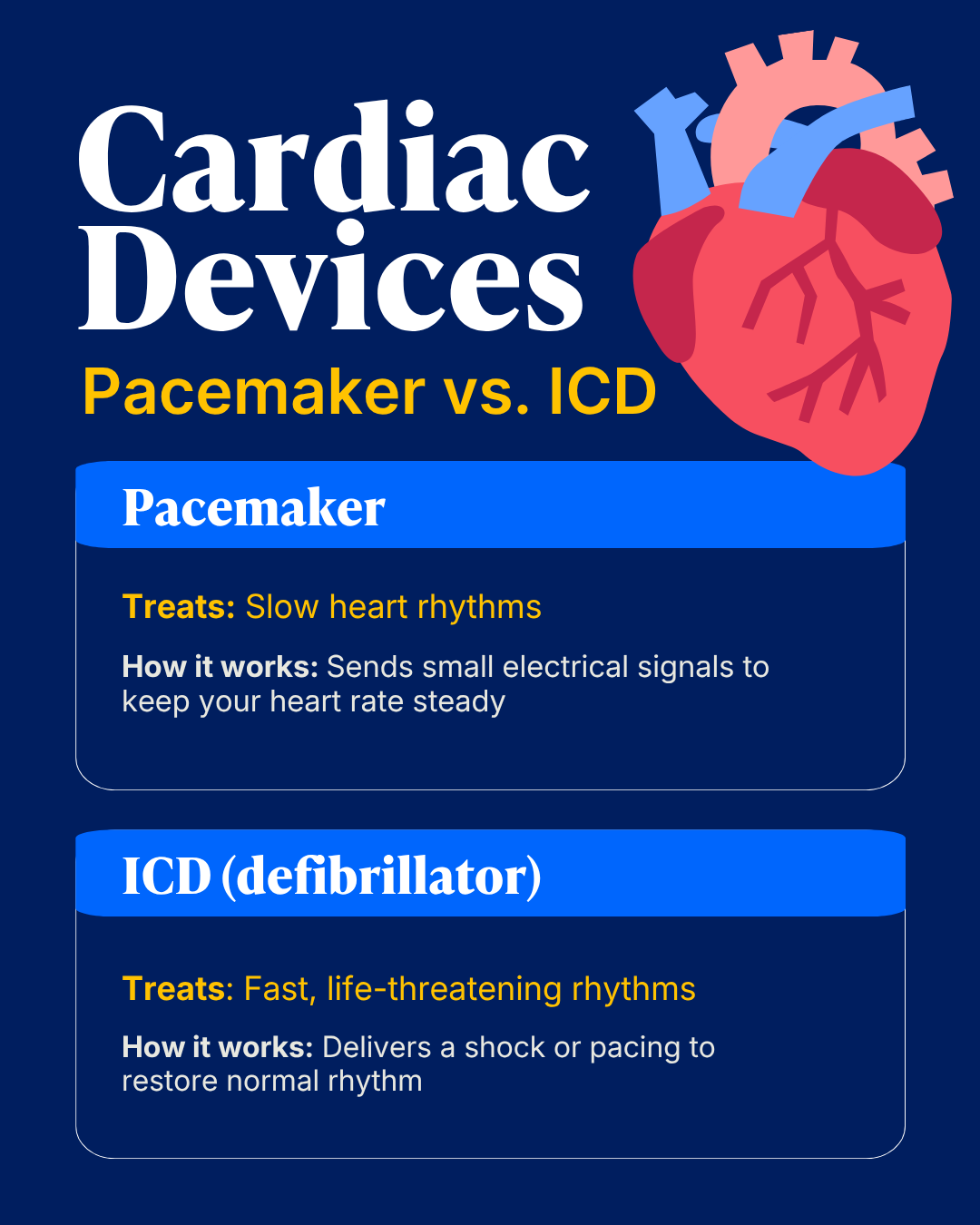
A pacemaker acts like a backup electrical generator system for your heart.
A transvenous pacemaker is a small device, placed under the skin of your chest, with electrical leads that are directly implanted into the heart-chamber tissue. The system monitors your heart’s rhythm and sends gentle electrical signals when your heart rate drops too low.
Leadless pacemakers are now available and are about the size of a quarter. They are directly implanted into the heart.

What Heart Conditions Require a Pacemaker?
You may need a pacemaker if you have:
- Symptomatic Bradycardia: Your heart beats too slowly, leading to symptoms
- Heart block: Electrical signals can’t move properly through your heart and do not communicate between the top and bottom chambers
What Is an ICD?
Like a pacemaker, an implantable cardioverter defibrillator (ICD) is a small device placed under the skin of your chest or side that monitors your heart’s rhythm. The major difference between the devices is that an ICD system can also deliver a shock when it detects a dangerously fast and potentially life-threatening heart arrhythmia.
Some ICD systems—similar to transvenous pacemakers—have leads that are directly implanted into the heart, while others (like subcutaneous defibrillators) are implanted under the skin in the chest.
What Heart Conditions Require an ICD?
You might need an ICD if you have:
- Ventricular tachycardia: A dangerously fast rhythm from your heart’s lower chambers
- Ventricular fibrillation: A chaotic rhythm that can cause your heart to stop
- High risk of sudden cardiac arrest: Based on your heart condition and/or family history
How We Determine Which Device You Need
At University of Rochester Medicine, your care team will determine which device is right for you based on your symptoms, heart condition, risk factors, and prior medical workup.
Our specialists evaluate:
- Your heart rhythm pattern
- Symptoms such as fainting, dizziness, or shortness of breath
- Your risk of dangerous arrhythmias
Tests may include:
- Electrocardiogram (ECG): Records your heart’s electrical activity
- Holter monitor: Tracks your heart rhythm over 24 to 48 hours
- Imaging or stress tests: Show how your heart functions during activity
What to Expect from an ICD or Pacemaker Implant
Conventional transvenous pacemakers and ICDs are placed under the skin near your collarbone during a minor surgical procedure, with leads placed in the nearby large vein that drains into the heart. The leads are implanted in the heart and connected to the pulse generator underneath the skin.
With a subcutaneous (under-the-skin) ICD, the generator is placed near the side or front of the ribcage. With a leadless cardiac pacemaker system, the system is generally implanted via the large femoral vein near the leg.
Most people go home within 24 hours and feel mild soreness for a few days. You’ll gradually return to normal activities over a few weeks to a month.
Your care team will walk you through every step—answering your questions, addressing your concerns, and tailoring your recovery plan to fit your life.
When to Talk to a Doctor About Heart Rhythm Symptoms
If something feels off with your heart rhythm, don't wait—reach out to a provider.
Talk with a doctor if you experience:
- Dizziness or fainting
- Irregular or racing heartbeat
- Shortness of breath
- Unexplained fatigue
Heart Rhythm Care Designed for You
Our heart rhythm specialists offer care tailored to your specific needs. Whether you need a pacemaker, ICD, or expert guidance, we're here for you.
Frequently Asked Questions (FAQs) About Life with a Pacemaker or Defibrillator
Can You Live a Normal Life with a Pacemaker?
Absolutely. Most people return to their usual work and stay active—often feeling better than they did before the procedure.
Can You Fly or Travel with a Pacemaker?
Yes, you can travel safely. Carry your device ID card and let airport security know you have a pacemaker—they'll guide you through screening.
Can You Be Alone After Pacemaker Surgery?
You may need help for the first few days after surgery. Your care team will let you know what support you will need based on your recovery.
When Can I Start Exercising Again?
Your care team will give you personalized guidance based on your recovery. Most people avoid heavy lifting for several weeks, then gradually return to their usual activities.
How Long Do Pacemakers and ICDs Last?
Most devices last 5 to 15 years, depending on how often they're used. Your care team will monitor your device regularly to make sure it's working correctly.
Connect with us!