A Cut Above: The Art and Heart of Histology
A blade glides across a block of tissue, shaving off sections just four microns thick, far thinner than a strand of human hair and nearly invisible to the naked eye. Steady hands guide each delicate slice onto a glass slide, where it will soon help reveal a life-changing diagnosis.
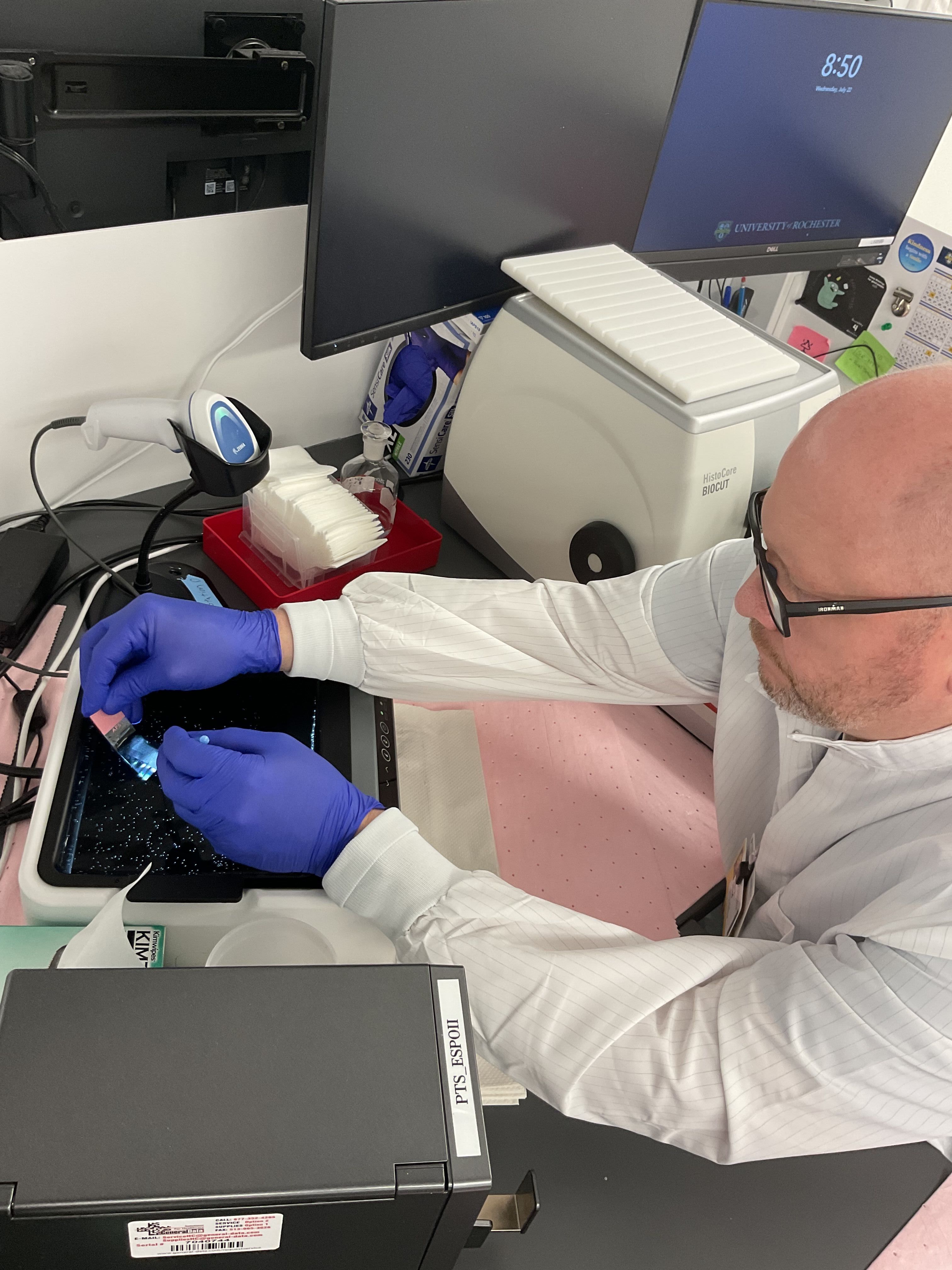
For Jason Toland, an histology technologist, it's never just tissue.
He sees the patient in every block.
Histology is one of healthcare's unseen professions. Patients don't see the histology lab, where tissue is carefully processed, embedded, sliced, and mounted onto glass slides before it reaches a pathologist's microscope. They may never know the names of the people who prepare the tissue that helps determine whether a diagnosis is benign or malignant, or what treatment comes next.
"People think biopsies magically turn into slides," he said. "There's a middle person, and we're the ones who make that happen."
This work requires unwavering precision. But Toland isn't just thinking about the tissue beneath his microscope. “Every piece of tissue is somebody's husband, wife, child, or loved one,” he said.
Someone hoping for good news or bracing for difficult answers.
Toland doesn't have to imagine what patients and their families are feeling because he has lived it.

When the Diagnosis Becomes Personal
Toland has spent his life answering calls for help.
Inspired by his grandfather, an Army medic who served during the Korean War, he began his career as an EMT before becoming a certified nursing assistant, patient care technician and, eventually, a licensed practical nurse. For more than 16 years at URochester Medicine, he cared for patients at the bedside, even volunteering for a six-month deployment to the COVID-19 unit, 6-4800, when additional staff were urgently needed.
Helping people wasn't just his career. It was his calling.
Then, the person who needed him most was waiting at home.
His wife, Hilary, was diagnosed with Stage IV colon cancer.
For the next four and a half years, Toland's medical training became deeply personal. He cared for her not only as a husband, but as a nurse—researching treatments, managing medications, and helping her navigate every difficult decision while waiting for each pathology report that would determine what came next.
Even amid the uncertainty, he continued looking toward the future. Toland, who had his bachelor’s degree in biology at the time, enrolled in SUNY Broome's online histology program while continuing to work full-time and care for Hilary. The days were long, often balancing coursework with hospital shifts and evenings at home, but he never lost sight of why he was doing it.
Those pathology reports became more than medical documents—they were roadmaps.
Each one shaped the next step in Hilary's care, determining whether a treatment would continue, change, or come to an end. Through that experience, Toland gained a profound appreciation for pathology’s role in every cancer journey—and for the histology professionals whose precision makes those life-changing decisions possible.

One of Hillary's liver core biopsies had been processed in the very department where he now works. As part of the evaluation for a possible partial hepatectomy—a surgery to remove part of the liver—surgeons first performed a laparoscopic procedure to determine whether the cancer had spread beyond what could be safely removed. During the procedure, an enlarged lymph node was biopsied and sent to the pathology lab, where microscopic cancer cells were identified.
The findings changed the course of Hillary's care. Doctors explained that because cancer had spread to a nearby lymph node that could not be surgically removed, the risks of surgery outweighed the potential benefit. Recovering from the procedure would have required her to stop chemotherapy, allowing the remaining cancer to progress rapidly. Instead, she continued treatment, giving the couple four and a half more years together before she passed away on Feb. 1, 2026—the couple's 22nd wedding anniversary.
That experience forever changed the way Toland views the work of a histology technologist.
"I've seen both sides of things. I've been the patient waiting for the tissue, and that's how I come to work every day. I think, 'This is making a difference in someone's diagnosis.'"
For years, Toland cared for patients face-to-face. Today, most of the people he helps will never know his name.
"I still wanted to help people," he said.
Toland also knows that every movement of the blade matters because once tissue is gone, it can't be replaced.
“If we miss a piece, it might be the piece with cancer,” Toland said.

Part of the Story
"Everybody's working as a team. One can't function without the other," said Toland.
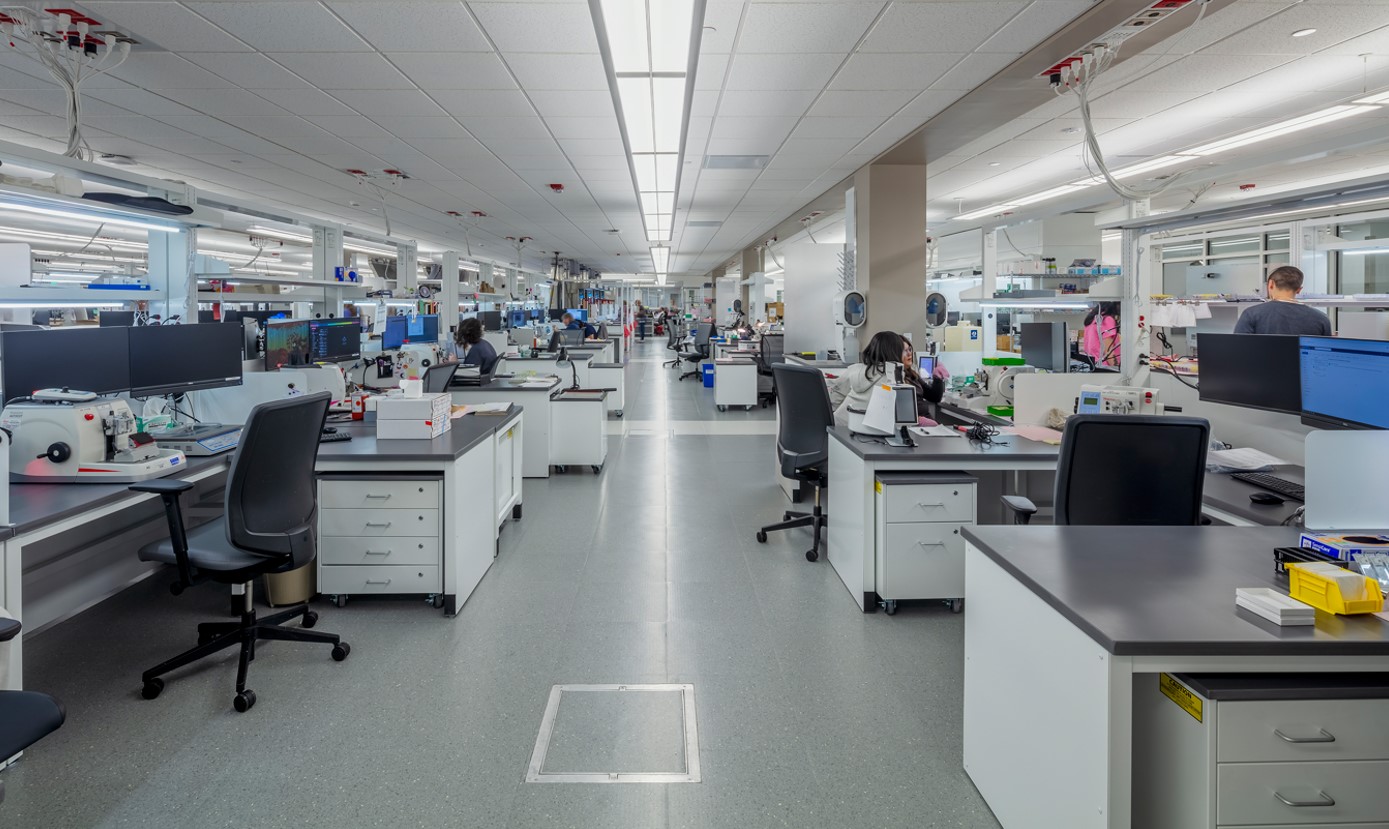
Since moving to its 10,000-square-foot Bailey Road facility, the URochester Medicine histology laboratory has more than doubled its staff, brought all slide processing in-house, and now prepares a remarkable number of slides.
“The average slide number per month varies over the year and we cut close to one million slides yearly on average,” he said.
The volume is staggering. The responsibility is even greater.
"We're just the middle person who touches that sample for a little while—but we're part of that patient's story," said Toland.
Today, Toland hopes his story reminds others that every role matters in healthcare.
"No matter how small you think your role is, it makes a difference," he said.
Every Slide Has a Story. So Can Your Career.
Whether you're beginning your career or considering a new path in healthcare, pathology and laboratory medicine offers the opportunity to make a lasting impact—often behind the scenes, but always at the heart of patient care.