
More than $3 Million in Grants Help EIOH Remove Barriers to Dental Care
More than $3 million in grant funding is strengthening Eastman Institute for Oral Health’s (EIOH) Community Dentistry programs, expanding access to preventive and comprehensive dental care for underserved children and vulnerable populations across the Greater Rochester region and New York State.
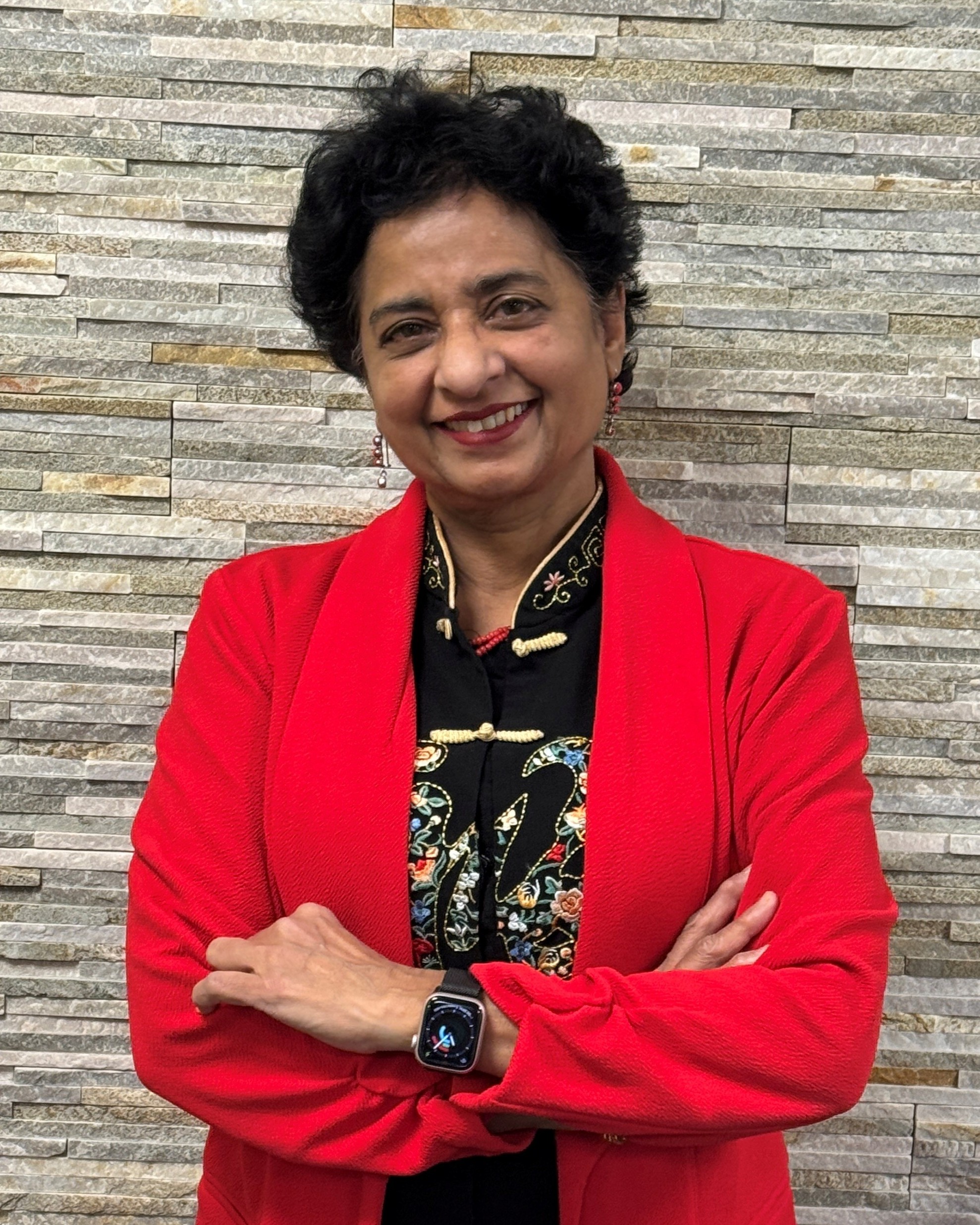
“These grants allow us to meet people where they are and remove barriers that prevent them from accessing essential oral health care,” said Sangeeta Gajendra, DDS, MPH, MS, chair of Community Dentistry and Oral Disease Prevention. “Our goal is to create sustainable systems that support lifelong oral health, whether that’s in schools, clinics, or community settings.”
Excellence in Clinical Education and Leadership
EIOH was recently awarded $2.1 million to develop a community-based training model that addresses two critical areas: significantly increase the dental care in underserved communities and effectively train and expand the dental workforce to care for people with medically complex conditions and intellectual and developmental disabilities.
The Health Resources and Services Administration (HRSA) funds will allow EIOH to launch a two-year Dental MPH /Dental Public Health Residency program, a Golisano Specialty Care Clinic rotation, and an Oral Health Resource Center.
School-Based Dental Programs
Access to consistent dental care remains a challenge for many families, particularly those relying on Medicaid or living in under-resourced communities. According to recent statistics from the Centers for Disease Control and Prevention (CDC), 18% of children ages 2–5 and 26% of children ages 6–8 in limited-income households have untreated dental decay.
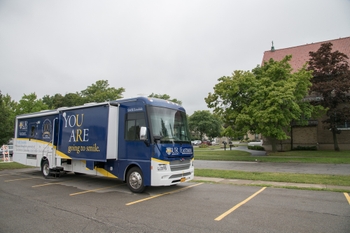
For more than five decades, EIOH’s SMILEmobile program has brought dentists directly to inner-city schools, providing care to students with minimal disruption to their learning. To date, the SMILEmobile program has treated more than 50,000 children, with participating schools reporting improved attendance and academic performance among students
Under Dr. Gajendra’s leadership, EIOH has expanded its school-based model to suburban and rural communities through the Building Dental Homes for Schoolchildren (BUDHS) project, thanks to the generous support from the New York State Department of Health, the Avantor Foundation, and the RCIPA Foundation.
BUDHS establishes small dental clinics within participating schools, where children receive exams, x-rays, cleanings, fluoride varnish, and dental sealants to focus on prevention. Students requiring more complex treatment are referred to local dentists who accept their insurance.
“By connecting families to a dental home and addressing insurance and referral barriers, we’re building a foundation for better oral health well beyond the school years,” Dr. Gajendra said.
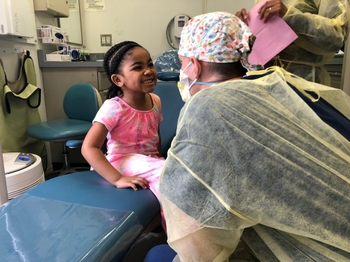
A grant from Bank of America supported the hiring of a care coordinator to manage referrals, assist families with obtaining dental insurance, and help children access restorative care, including treatment under sedation or in the operating room when necessary. The coordinator also delivers school-based presentations on oral disease prevention, dental hygiene, and the importance of routine dental visits.
Additional funding from the American Association of Dental Public Health supported the development of SMART-DENT, a web-based portal designed to improve communication among school personnel, parents, and the dental care team. The portal streamlines referrals, provides oral health education resources, and uses automated reminders to improve appointment adherence.
In its first two years, the BUDHS program provided care to 457 children across eight schools, of which 60% were referred successfully to a dental home using care coordination. The initiative will continue through 2031 and expand to several more schools.
Addressing the Dental Needs of People with HIV/AIDS
People with HIV/AIDS often experience complex health challenges that affect oral health, mental health, and access to care. Despite the importance of early diagnosis and coordinated treatment, this population remains understudied and underserved.
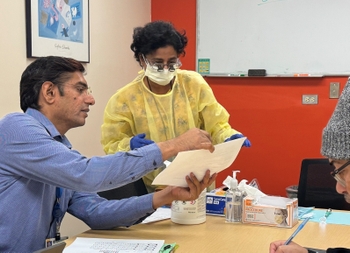
To address these gaps, Dr. Gajendra and Dr. Scott McIntosh from the URMC Department of Psychiatry are leading a multidisciplinary research team to examine barriers to dental and mental health referral and treatment for patients living with HIV/AIDS. The work is supported by a grant from the National Institute of Dental and Craniofacial Research.
The study assesses patients’ needs and experiences through screenings, clinical examinations, surveys, interviews, and focus groups, along with input from HIV clinic program directors and administrators. Findings will inform strategies to improve access to coordinated care.
Complementing this effort, Dr. Gajendra and Bedant Chakraborty, BDS, PhD are conducting a related study funded by a grant from the FDI World Dental Federation’s Dental Development Fund. The project uses survey data to inform the development of a mobile app tailored to people living with HIV/AIDS. The app will facilitate referral for dental care and provide educational resources on oral disease prevention and HIV-related oral conditions, as well as how tobacco use affects oral and overall health and resources to help people quit.
Statewide Oral Health Promotion
EIOH’s Community Dentistry Department is also contributing to statewide oral health improvement through a grant from the Centers for Disease Control, in collaboration with the New York State Department of Health. Dr. Gajendra serves as principal investigator on the project, which focuses on data-informed improvements to water fluoridation, access to care and outcomes among New Yorkers with Type 2 diabetes, infection prevention and control, and school-based preventive dental programs.
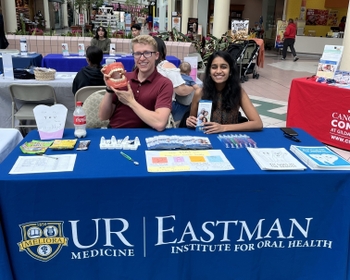
“Much of the data we need already exists,” Dr. Gajendra said. “By analyzing it thoughtfully, we can learn from it and use those insights to guide effective oral health policies and programs in communities statewide.”
As part of the initiative, a Water Fluoridation Advisory Group will be established and meet regularly. Dr. Gajendra will serve as the public health dentistry subject matter expert, supporting the development of reporting guidelines and checklists, data quality and sharing strategies, and a statewide fluoridation map.
The team will also analyze publicly available datasets, including the Behavioral Risk Factor Surveillance System (BRFSS), to examine oral health indicators among adults with Type 2 diabetes. The results of this analysis will be shared statewide and used to inform future programs and policies.
In anticipation of New York State’s planned expansion of school-based preventive dental programs and school-based health centers, EIOH will provide guidance on school reporting systems such as SEALS and analyze community-level data on the use of dental sealants and fluoride varnish across grades and regions.
The project will also produce infection prevention and control resources for dental and school-based providers, including a list of CDC-aligned trainings, toolkits with checklists and workflows, and standardized templates for tracking compliance and training completion.
“Serving the community has always been central to EIOH’s mission,” said Eli Eliav, DMD, PhD, MBA, director of Eastman Institute for Oral Health. “For more than 100 years, we’ve been the area’s safety net provider, and these initiatives demonstrate how education, research, and clinical care come together to remove barriers and create lasting change.”
Author
