Wellbeing Symposium Celebrates Ongoing Work and Collaboration
- Recognition from Lorna Breen and AMA Joy in Medicine programs
- Mini-Grants: 39 employee-led projects reaching 2,300 people a year. Applications for a new round are being accepted through Dec. 6, 2026
- Consults: 556 hours of support to 346 unique clients across URochester Medicine
- Fellows: Twenty fellows have completed impactful projects over two years, with a third class starting now
- Collaborative Problem Solving Framework now being piloted in Department of Medicine
- New Podcast and expanded social media presence
- Admittance into the Professional Wellbeing Academic Consortium (PWAC) and a new wellbeing survey platform coming in March
- Expanded research profile
Imagine two doctors. Or two nurses. Or two students. One goes through the day accumulating nothing. The other accumulates an increasingly weighty load of pebbles, one disrespectful interaction at a time.
They did the same work. But their lived experience of the day—their level of exhaustion, their stress, their enthusiasm for the job—will differ dramatically.
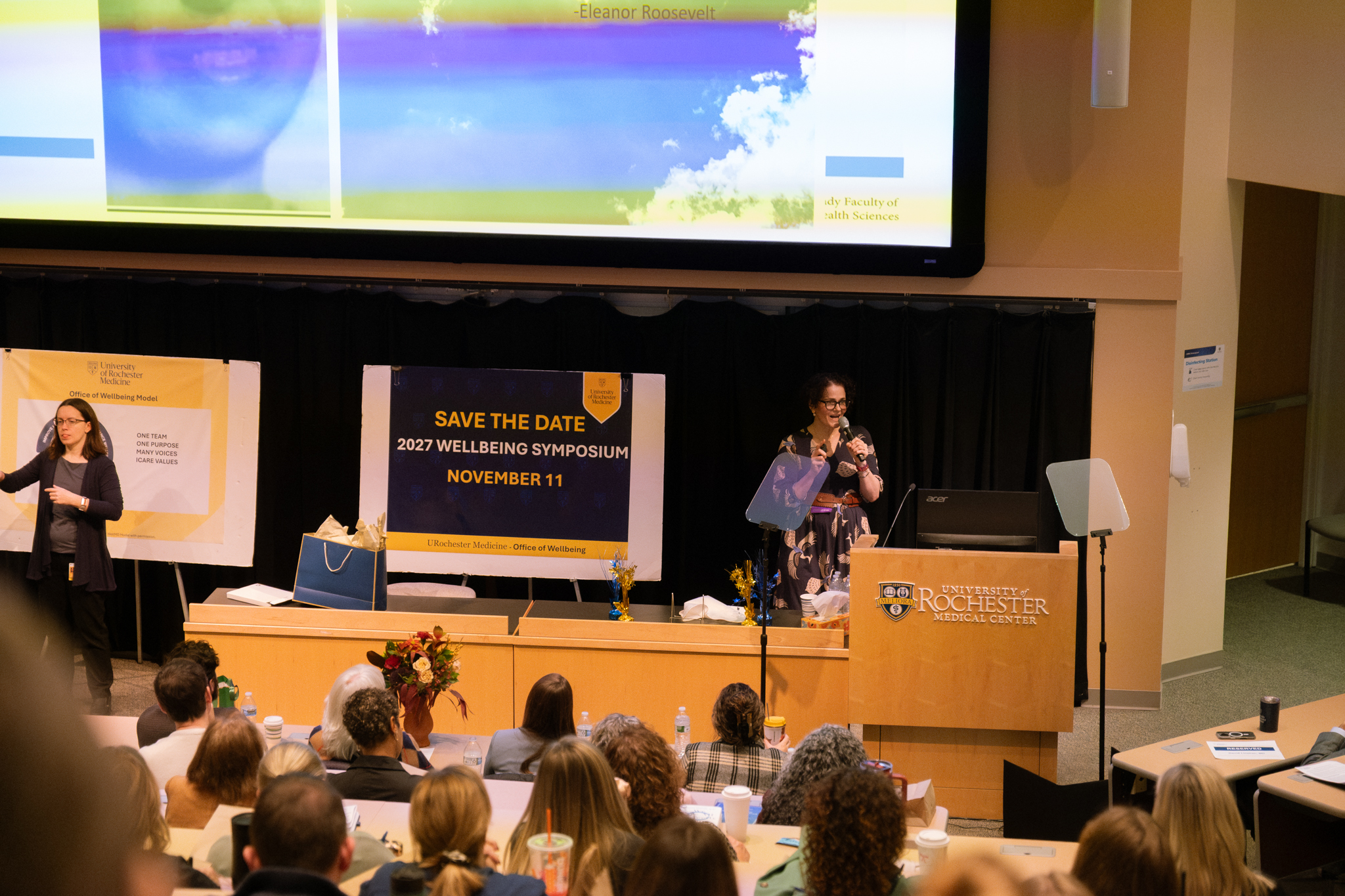
Bestselling author Jillian Horton, MD, the keynote speaker at Thursday’s Office of Wellbeing Symposium, offered that anecdote to illustrate the need to understand what it’s like for coworkers.
“Even though we work in the same place, we do not have the same experience of working in that place, and much of that comes from individual characteristics and how they can change how people treat us,” she said, referring to anything from gender to seniority.
Horton asked the capacity crowd in the Class of ’62 Auditorium to consider three things: What kind of culture they aspire to as a group of coworkers, what the system needs to do to foster that, and how they personally can foster that.
The half-day Symposium also included the announcement of a significant donation, the presentation of an award to the Informatics team (see separate story), breakout sessions, and a celebration of past and future Wellbeing Fellows.
“A lot of people have been saying it’s a really feel-good day, that they didn’t know they needed something, but they realized they needed this,” Chief Wellbeing Officer Craig Rooney, PhD, said. “It was a wonderful chance to celebrate the work of our Wellbeing Fellows and of so many people across URMedicine whom we are privileged to partner with. I thought Dr. Horton’s keynote aligned so nicely with the important work being done in the ICARE Forward initiative.”
URMC CEO and SMD Dean David Linehan, MD, who delivered introductory remarks, lauded that institution-wide approach and the resulting commitment to the idea that “wellbeing is an organizational metric that we have to pay attention to, not just a personal one.” As examples, he cited the Strong Expansion project, which is delivering a space that’s not just patient-centered but worker-centered, and the Office of Wellbeing’s Fellowship and Mini-Grants programs.
“To see standing-room-only support for this type of work from both our colleagues and health system leadership is deeply meaningful,” said Hospital Epidemiologist Brenda Tesini, MD, a 2026 Wellbeing Fellow. “It really is a total aha moment to see everyone coming together like this.”
Donor Support
Ahead of Horton’s remarks, Rooney announced the creation of The William Foresman ’98M (Res) Wellbeing Fund, which comes in the form of an immediate donation and a long-term endowment. Foresman, an Auburn urologist, was a man of faith, humility, kindness, and quick wit, Rooney said. He was known for his excellent bedside manner.
Foresman’s widow, Judy, and sons, Henry and Parker, attended the Symposium, and Rooney thanked them for their desire to support initiatives that would make a difference for health care workers.
“The office of Wellbeing is forever grateful to the Foresman family’s belief in our work and their trust,” he said.
A Life-Changing Visit to Rochester
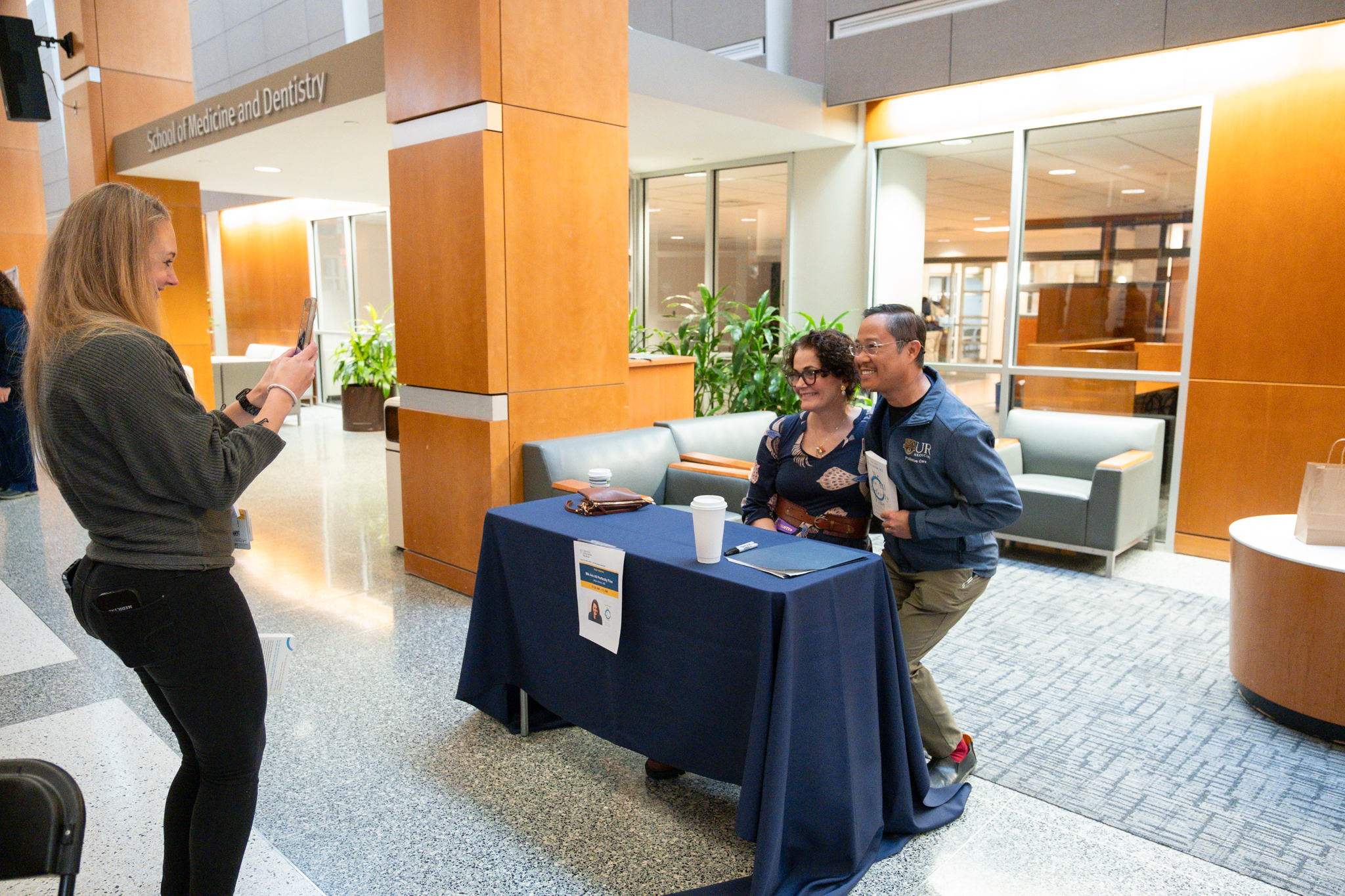
Horton, an award-winning medical educator, writer, musician and podcaster, is a general internist at the University of Manitoba’s Max Rady College of Medicine. Her first full-length book, “We Are All Perfectly Fine: A Memoir of Love, Medicine and Healing,” was released by HarperCollins Canada in February 2021, but, as she explained, its roots lie in Rochester, and specifically in her participation in URochester Medicine’s Mindful Practice in Medicine Program.
More From Jillian Horton, MD
View highlights from the recent Office of Wellbeing Podcast with the keynote speaker:
Or view view the full podcast here.
“The work that I came here to do changed my life,” she said. “It changed my life profoundly. It changed my personal life. It changed my clinical life.”
The key lessons? Mindfulness matters. How we treat each other matters. And any behavior that impairs the health care team’s ability to function creates risk—and thus creates a direct link between the wellbeing of the care team and patient outcomes.
Horton discussed three cognitive errors that can fuel workplace incivility:
- The curse of knowledge (when it’s hard to imagine that others don’t know something you do)
- The objectivity illusion (a failure to recognize that your own perceptions are biased and the assumption that your own values and knowledge are more widely shared than they are)
- The self-serving bias (attributing your own actions to situational demands while attributing other’s actions to personal dispositions).
She offered three useful exercises for combating those errors:
- Changing places (for example, asking members a team to discuss what’s hard about being someone else on that team)
- Rant and reframe (allowing someone to spend a minute ranting, and then having someone else reframe the rant compassionately)
- Asking, “What else could it be?” (which she applied not just to patient diagnosis but also to assumptions about why someone might be acting as they are).
Celebrating Fellows, Sharing Knowledge
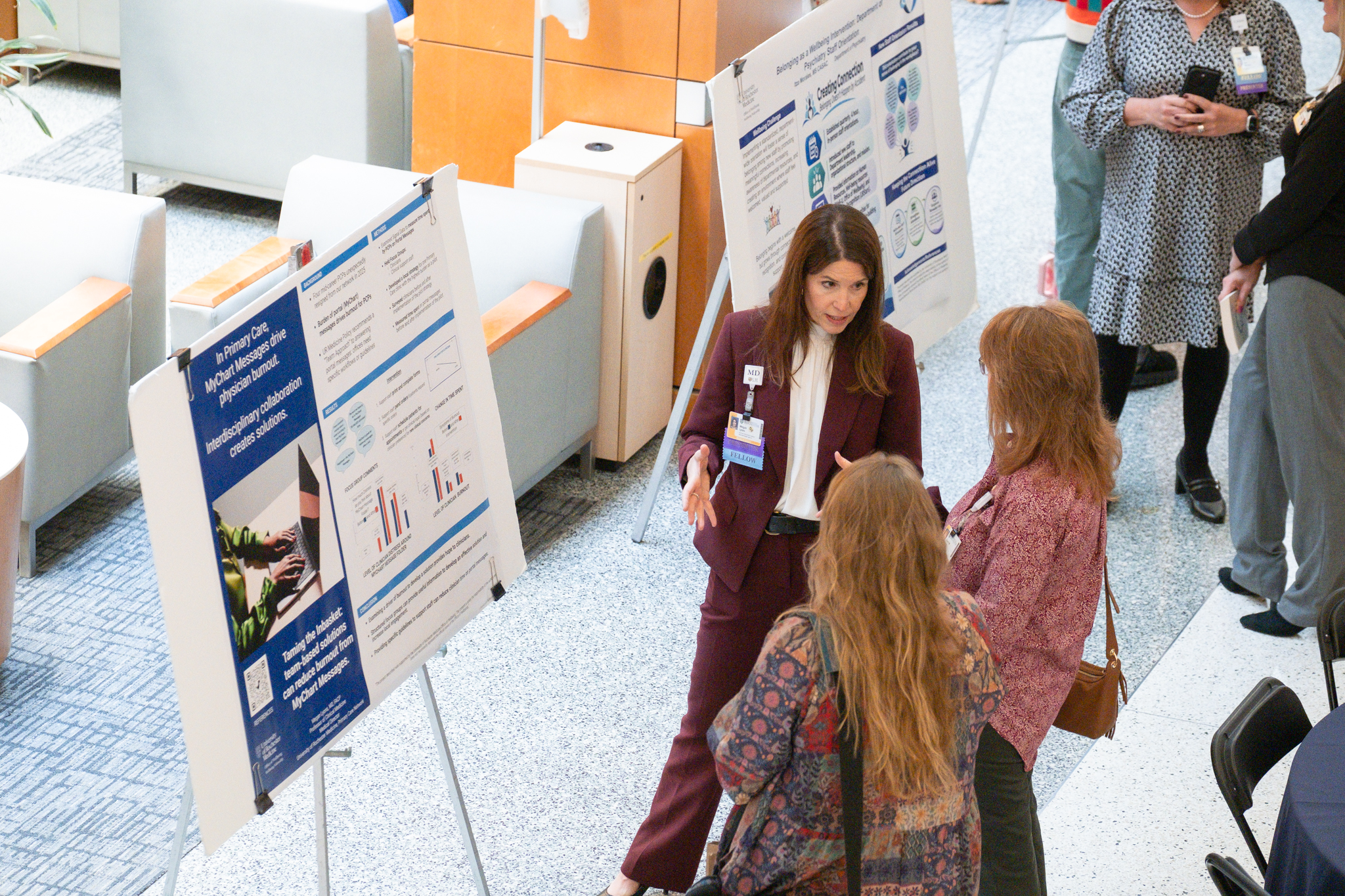
Horton’s keynote was followed by poster presentations from the 2026 Wellbeing Fellows and breakout sessions focused on telling stories that can change the culture; navigating challenging moments through the power of pauses; wellbeing for researchers; and the roles of the Office of Wellbeing’s new physician leads, Steve Artim, MD, Tom Osinski, MD, and Natalie Whaley, MD, MPH.
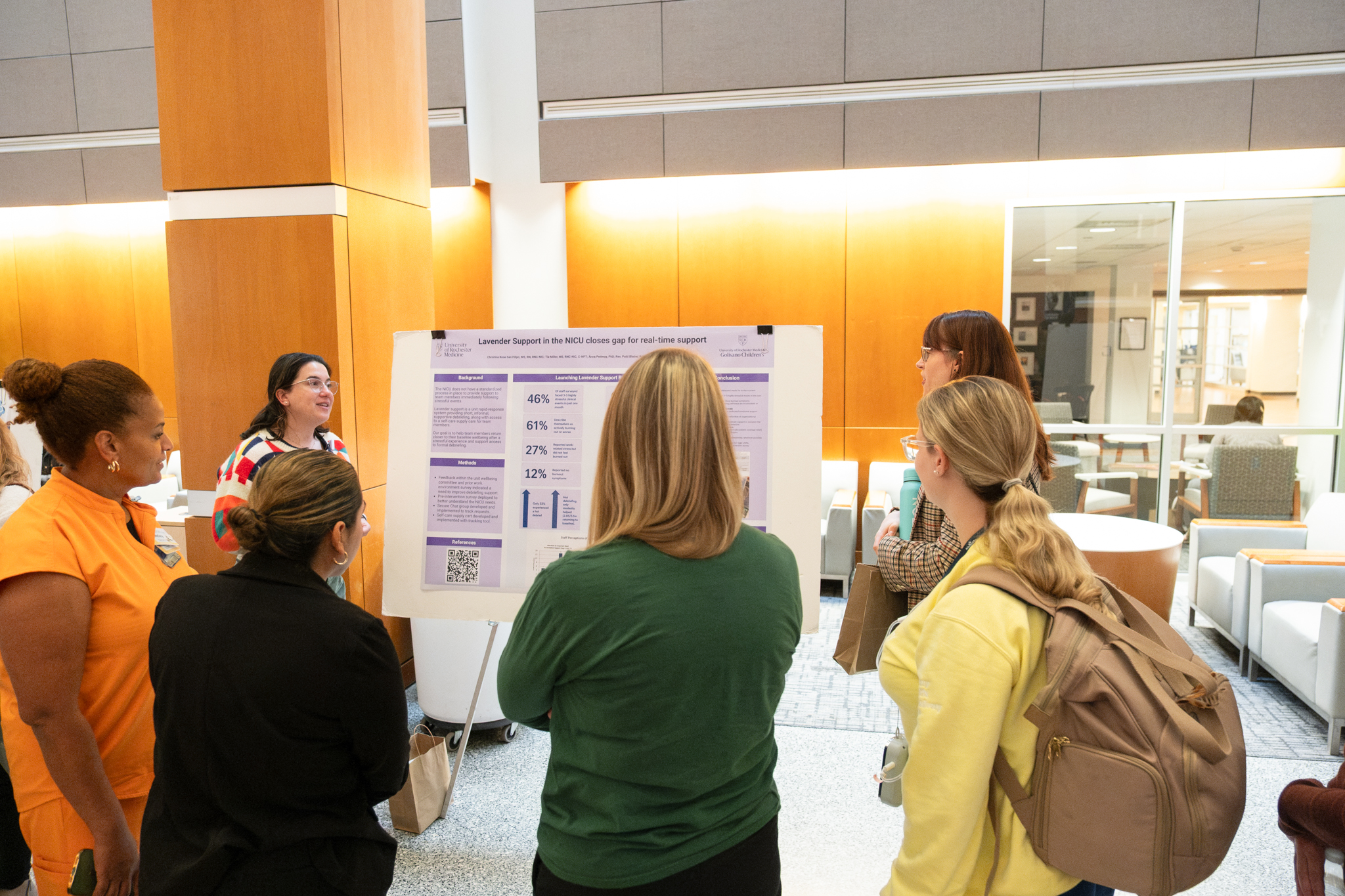
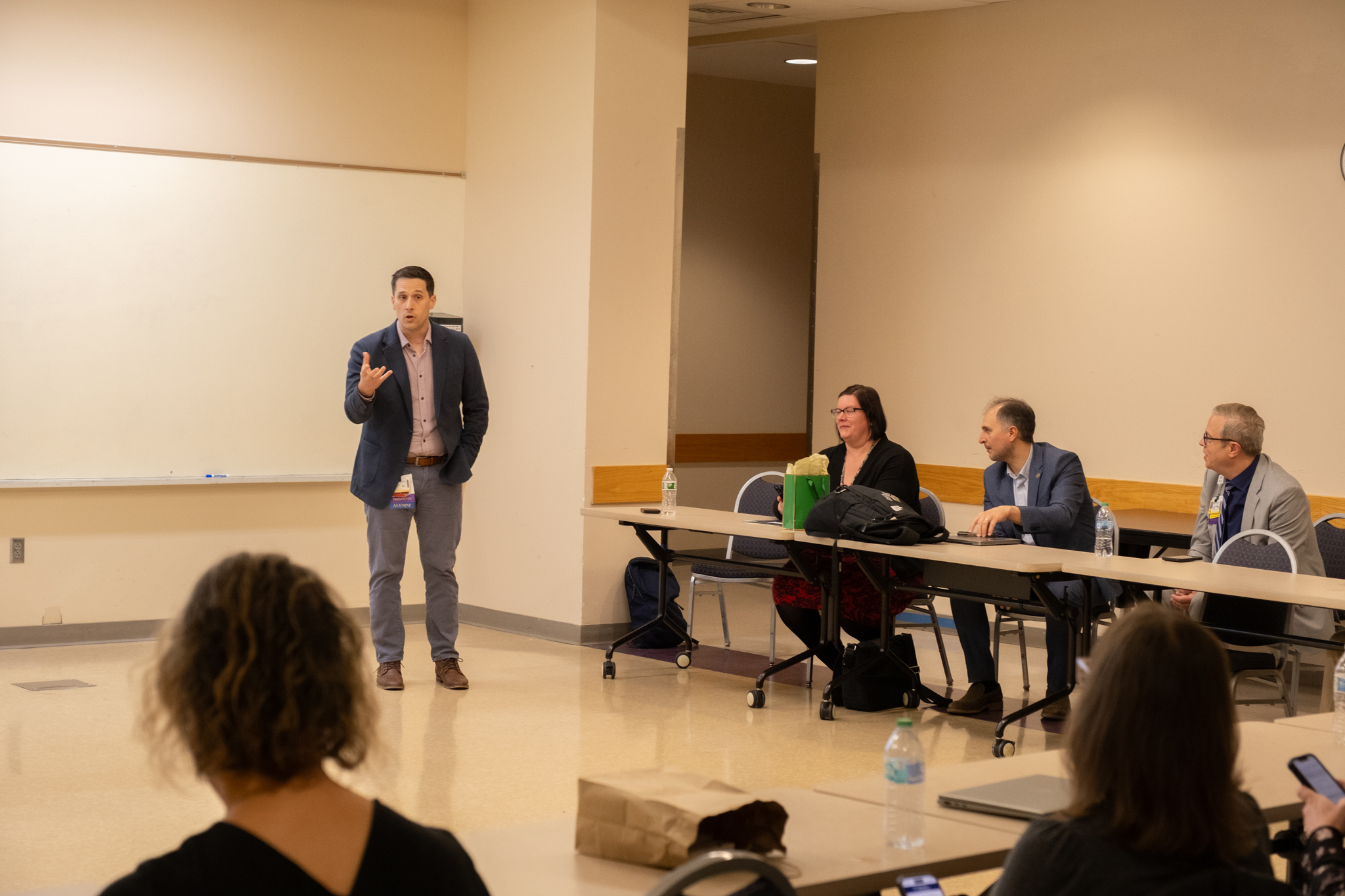
Wellbeing Fellow Kimberly Gergelis, MD, assistant professor of Radiation Oncology, drew a crowd around her poster about the social determinants of health.
“It’s a lot of fun to see what everyone has accomplished over the past year through their fellowship projects,” she said. “Talking to people here today who are viewing my poster shows something that I’m sure the other fellows are experiencing as well: The area I focused on is of interest to people across the institution. The next step for many of us will be looking at the scalability and adaptability of our work.”
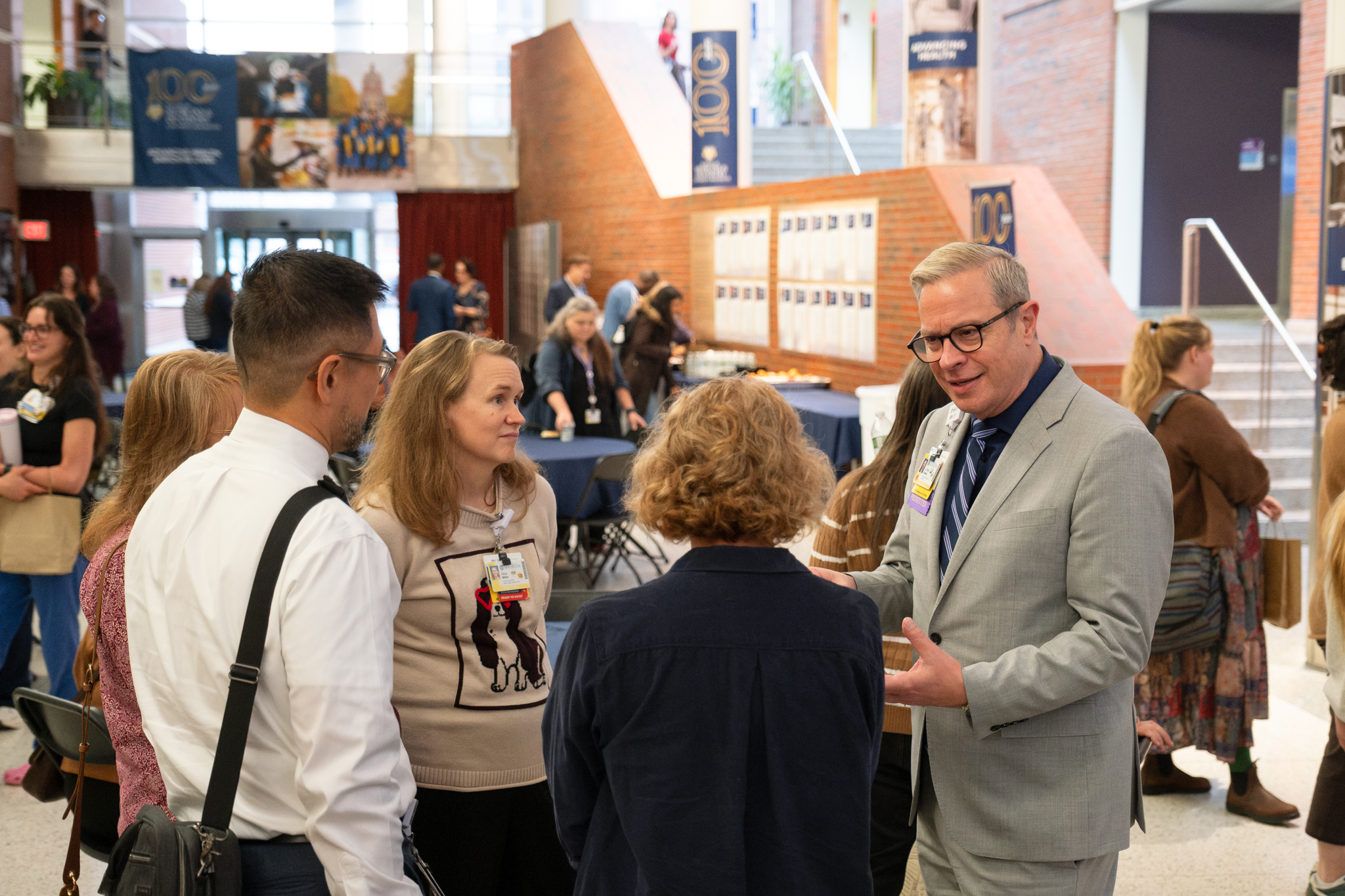
Post-symposium, Rooney and the past fellows joined the incoming class for a reception.
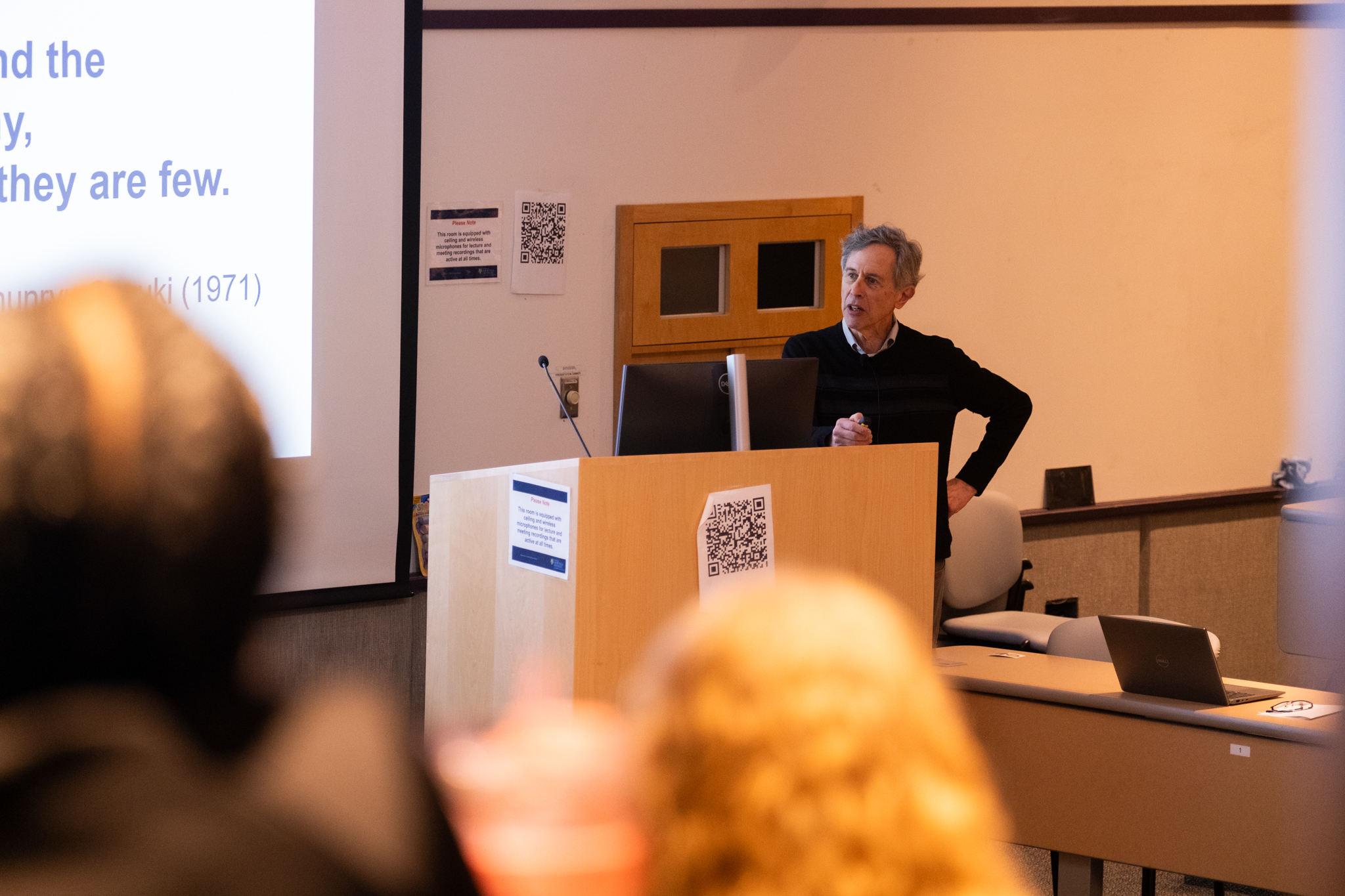
“It’s really exciting to be energized by people who are motivated to collaborate, and Dr. Horton’s keynote was especially inspiring,” said 2027 Fellow Natercia Rodrigues, MD, MS, associate professor of Clinical Family Medicine. “I feel like she should be required listening for anyone going into medicine because she imparts such a clear understanding of the need to understand people’s experiences and the different perspectives they bring.”