

Why Nutrition Counseling Is Vital with GLP-1 Medication
Key takeaways
- GLP-1 medications support weight loss, but nutrition counseling is essential for safe, sustainable results
- Higher protein intake, often 80–100 grams daily, helps protect muscle during GLP-1 treatment
- Strength training and physical activity support muscle preservation and metabolism
- Hydration is critical, as GLP-1s can reduce thirst and increase dehydration risk
- Balanced nutrition helps prevent deficiencies and minimize side effects like nausea and constipation
Injections, pills, and compounded medications—the expanding world of GLP-1 medications is not slowing down. These treatments help you feel full, slow digestion, and improve blood sugar control, leading to substantial weight loss and better health markers in patients with type 2 diabetes, hypertension, and other obesity-related conditions.
But where do healthy habits like nutrition and exercise fit in? April Ho, lead registered dietitian at Univeristy of Rochester Medicine’s Center for Community Health & Prevention, shares the importance of pairing GLP-1s with nutrition counseling for long-term success.

Weight Management Event
Join us in-person for expert advice and evidence-based insights on weight management.
Wednesday, Sept. 30, 5:30-7:30 p.m., Ferris Hills at West Lake
Should You Change Your Diet While Taking a GLP-1?
The short answer is yes. It is commonly understood that taking GLP-1s helps control your appetite, but your body still needs the right nutrients to function.
Starting nutrition counseling early can help develop the skills needed to maintain progress, whether you take GLP1s long term or eventually stop.
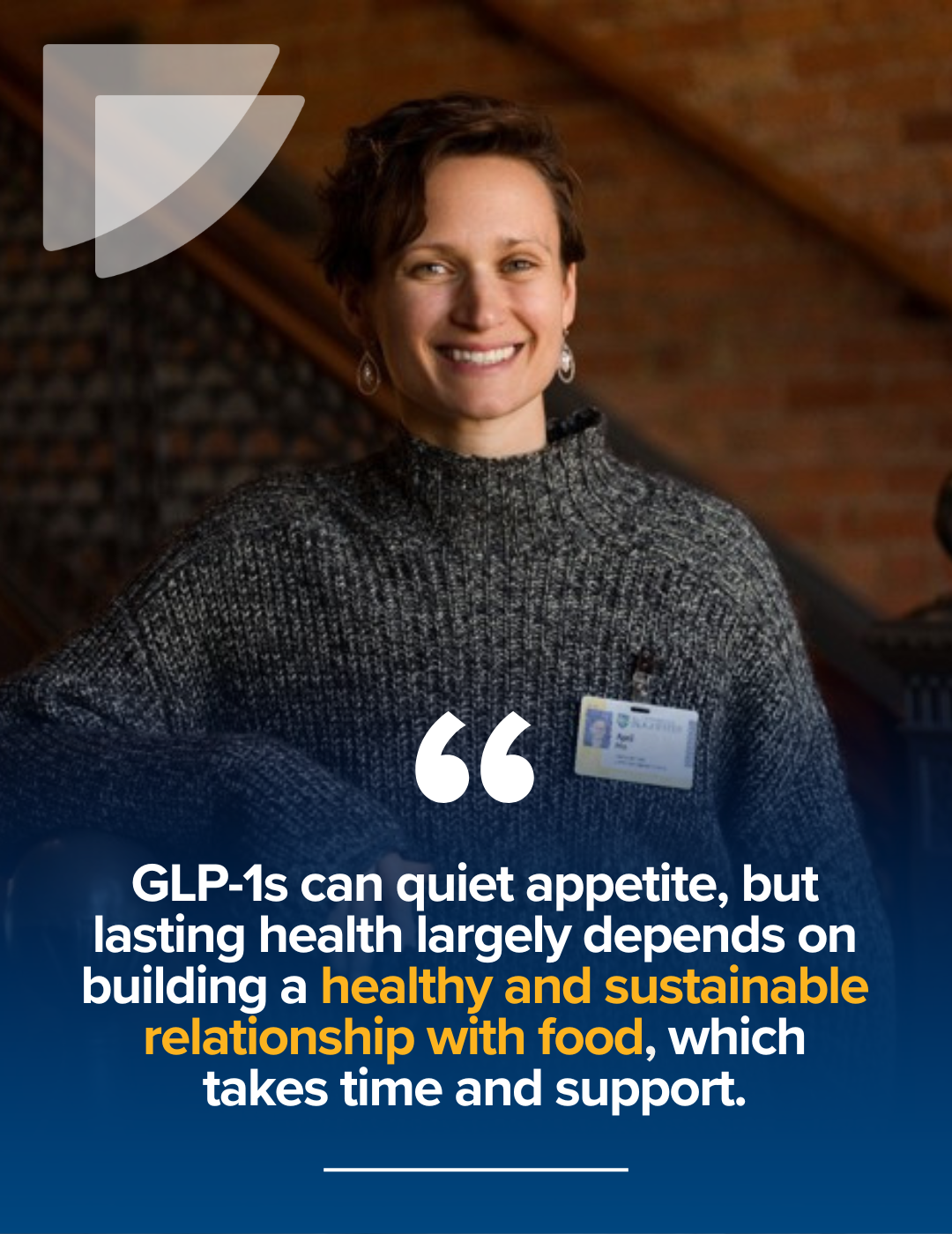
“GLP-1 medications can quiet appetite, but lasting health largely depends on building a healthy and sustainable relationship with food, and that takes time and support,” Ho says.A registered dietitian can help you meet nutritional needs while on a GLP-1 medication. This kind of support not only can prevent malnutrition and muscle loss, it can also help reduce side effects such as vomiting, nausea, and constipation.
How Nutrition Counseling Can Make GLP-1 Medications More Effective
What To Expect: RDs and GLP-1s
The dietitians at the Center for Community Health & Prevention will help you navigate the world of GLP-1s from start to finish in a supportive environment.
Many patients have complex motivations around GLP-1s, and many describe having mixed feelings about the idea of starting one. Our dietitians can help you explore the pros and cons of medication and lifestyle change while honoring your lived experiences.
Not eating enough will cause the body’s metabolism to shut down and switch to fat-storage mode, which is the last thing most GLP-1 patients want.
Nutrition counseling helps people strike a balance between supporting a healthy metabolism and meeting their body’s needs while creating the calorie deficit needed for weight loss.
Nutrition Reduces GLP-1 Side Effects, Too
The size, frequency, and content of meals can all play a role in managing GI side effects.
Smaller meals consisting of soft and/or liquid foods are often well tolerated. Soups, smoothies, and high-protein beverages are a great option.
Additionally, spacing fiber intake throughout the day can help prevent compounding the effects of the medication. Fiber slows the emptying of the stomach, almost acting as a natural GLP-1.
What to Eat and Drink on GLP-1 Medications
Protein Is Your Top Priority
Other nutrients like fiber are still important, but they come second. Most people benefit from 80–100 grams of protein per day to prevent muscle loss (common with rapid weight loss) and support recovery from physical activity.
Our experts recommend hitting your target with lean protein options like:
- poultry
- low-fat dairy
- soy foods
- beans
- nuts
Hydration is Key
While GLP-1s reduce appetite, they also reduce thirst, increasing the risk of dehydration. Proper hydration is key for the medication to be most effective, in addition to helping ease side effects, improving energy, and helping your body process waste.
Try proactively reaching for your water bottle. Sipping fluids throughout the day can help prevent feeling overly full.
Why Exercise Matters on GLP-1s
- Resistance bands
- Weights (like dumbbells)
- Resistance or cable machines
- Body weight, like push-ups or squats
If you're just getting started with exercise, our Fitness Science team offers plenty of classes and individual training sessions.
Pair GLP-1s with Expert Diet and Lifestyle Support
The Center for Community Health & Prevention offers nutrition counseling and lifestyle support for patients considering or currently using GLP-1 medications.
Connect with us!





Author
