

Researchers Discover Common Culprit in Worst Bone Infections
Key Findings
- Bone and joint infections are a serious health concern, but clinicians lack reliable tools to predict which patients will develop severe or persistent disease
- When antibiotics fail, there are no immunotherapies to help fight these infections
- Researchers have identified a T cell protein as a common factor in the most severe bone infections
- This could help physicians better predict who will suffer the worst cases, and may offer a new treatment option: drugs already shown to boost T cell performance in cancer patients
Bone and joint infections cause significant health problems for patients and lead to millions of dollars in added health costs per year, but clinicians lack reliable tools to predict which patients will develop severe or persistent disease. And, when standard-of-care antibiotics fall short, there are no immunotherapies available to help patients mount a stronger defense against infections.

In a study published in Nature Communications Medicine, University of Rochester Medicine researchers offer new answers: they have pinpointed a T cell protein, TIM-3, as a common component in the most severe bone infections. Their discovery not only identifies a potential biomarker that could inform physicians’ care plans, but also a possible new treatment option—drugs already shown to boost T cell performance in cancer patients.
Center for Musculoskeletal Research scientist Gowrishankar Muthukrishnan, PhD, studies the body’s immune response to bone infections, which are most commonly caused by Staphylococcus aureus (S. aureus) and can occur following surgery to repair bone or implant an artificial joint.
When T Cells Get Tired
Muthukrishnan and colleagues studied humanized mice and patient bone samples and found that in chronic S. aureus infection, T cells become dysfunctional and express high levels of immune checkpoint proteins, including TIM-3. These proteins act like brakes that hold the immune system back. They also found that high TIM-3 levels in patient serum were associated with poor clinical outcomes.
“T cells can be exhausted in cancer and viral infections, but our understanding of T cell exhaustion mechanisms during S. aureus infections has been limited,” said Muthukrishnan, assistant professor of Orthopaedics and Microbiology and Immunology. “Our research shows that T cells respond similarly in bone infection but also experience exhaustion due to constant antigenic stimulation from bacteria, which prevents them from performing their intended immune functions effectively.”
These findings suggest that immune checkpoint proteins could help identify high-risk patients and that blocking the proteins could be a new treatment strategy, lifting the brakes on the immune system and enabling them to better fight bone infections.
“We’ve shown that serum immune checkpoint protein levels could predict patient outcomes with 90 percent accuracy, which could help orthopedic surgeons determine whether patients should receive aggressive or conservative treatment for joint infections,” Muthukrishnan said. “A biomarker could signal the severity of infection and shed light on why some patients’ bodies fight the infection successfully while others suffer devastating complications.”
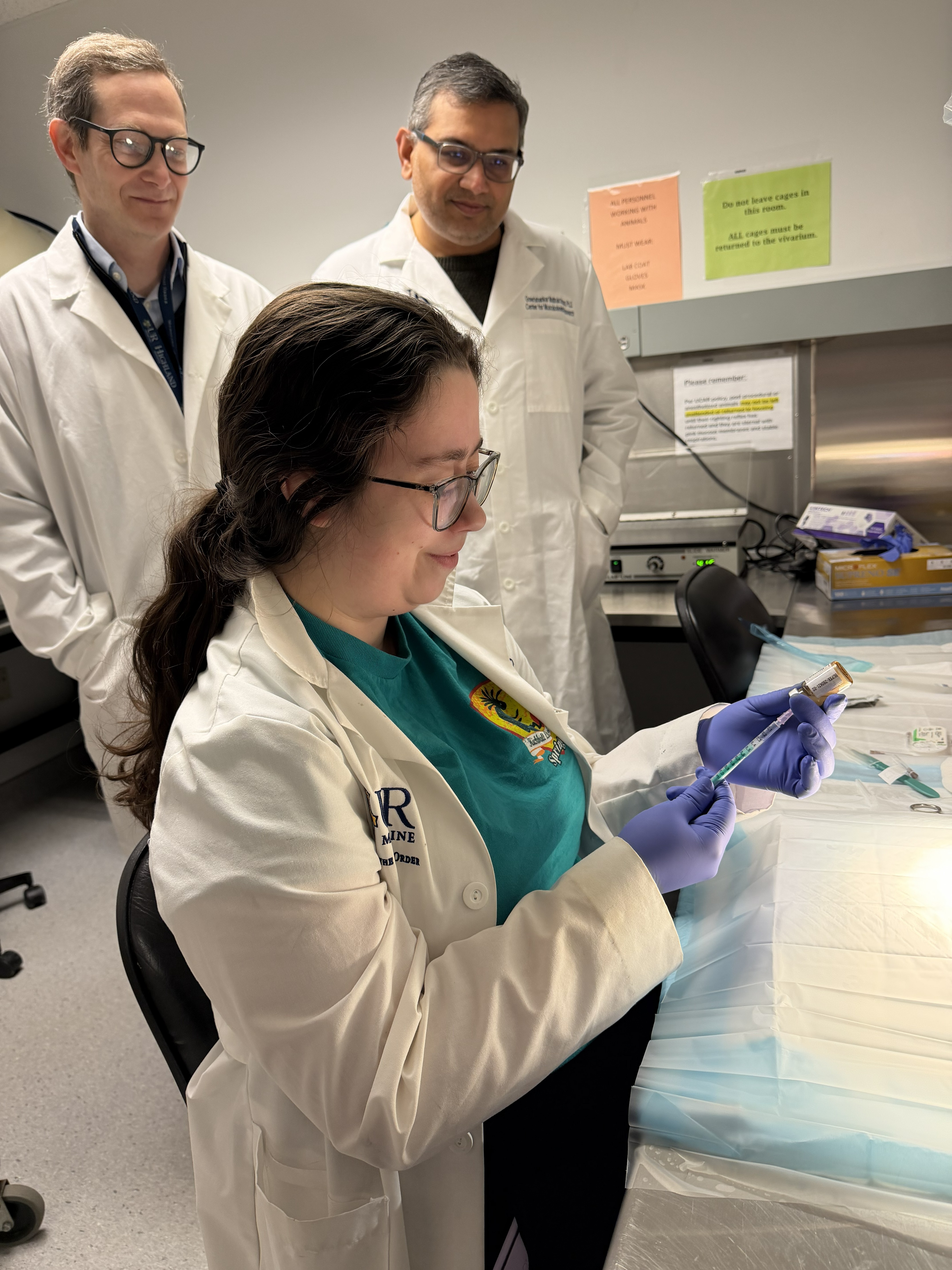
Katya McDonald, a PhD candidate, and Motoo Saito, a postdoctoral associate in the Muthukrishnan lab, are co-first authors of the study. McDonald noted the potential benefit of repurposing cancer treatments for bone infection; T cell drugs fight cancer by reprogramming or boosting the body's white blood cells’ ability to find and kill tumor cells.
“These drugs have been effective in treating non-solid tumors,” she said. “If we know TIM-3 is on T cells in bone infection, we may be able to leverage these drugs to suppress it. While physicians will continue to use antibiotics, these cancer drugs could be used in conjunction to help boost the immune system response to the infection.”
Bone Infections: A Big and Vexing Problem
Orthopaedic surgeons perform approximately two million joint replacements worldwide each year. Infection of the implant and surrounding bone is a disastrous complication for patients; although the frequency of cases following elective orthopaedic surgery is low (1-5%), reinfection or relapse rates are very high (up to 30%) and cost up to $150,000 per patient.
Early detection could stop S. aureus cells from multiplying and spreading, but without a diagnostic tool, physicians grapple with how aggressively to fight it once it is embedded in bone. Antibiotics may resolve S. aureus in some patients; others may need more aggressive approaches, including removal of the infected implant or amputation to protect the patient from a life-threatening infection.
Approximately 13% of patients infected with S. aureus become septic and die from multiorgan failure. Some patients develop chronic S. aureus osteomyelitis, which can be extremely difficult to eradicate and may require repeated revision surgeries and prolonged antibiotic treatment. The unpredictability of S. aureus outcomes continues to vex physicians.
Scientists and Surgeons Partner on Next Steps
Muthukrishnan has earned a $2.7 million grant from NIH to study potential diagnostic and treatment options for implant-associated bone infection. As part of the project, his lab will assess patients based on their T cell exhaustion profiles, and test immune checkpoint blockade drugs’ effectiveness in reprogramming exhausted T cells in chronic infections.
“There are more than 2,600 ongoing clinical trials for cancer drugs, but very limited research to date on their use for bacterial infection,” Muthukrishnan said.
As part of the project, Muthukrishnan will collaborate with orthopedic surgeons to collect bone marrow samples during revision surgeries to analyze T cell exhaustion phenotypes.
“We hypothesize that persistent S. aureus infections cause impairment of T cells and can be leveraged as a functional biomarker of S. aureus implant-associated osteomyelitis disease outcome,” Muthukrishnan said.
Ultimately, Muthukrishnan aims to develop a serum test to help determine whether patients should receive aggressive or conservative treatment, and whether the FDA-approved checkpoint blockade drugs could become a standard of care for bone infections.
The research was funded by the National Institutes of Health with additional funding from AOTrauma Clinical Priority Program, AAI Careers in Immunology Fellowship Program, and internal grants (University Research Award) from the University of Rochester.
Muthukrishnan’s co-authors are Javier Rangel-Moreno, Himanshu Meghwani, H. Mark Kenney, Jennifer Bruno, Christopher A. Beck, Edward M. Schwarz of the University of Rochester; Alex K. Grier, Cornell University; Enrique Becerril-Villanueva, Instituto Nacional de Psiquiatría; Armando Gamboa-Dominguez, Instituto Nacional de Ciencias Médicas Y Nutrición; Richard A. Proctor, University of Wisconsin; and Stephen L. Kates, Virginia Commonwealth University.
Author
