
A Centennial Snapshot As We Look Forward
As the University of Rochester Medical Center celebrates a century of progress, the Department of Pathology & Laboratory Medicine stands out as one of the institution’s most dynamic and quietly
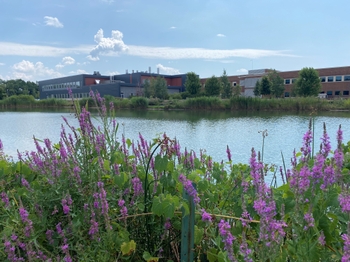
indispensable engines. From its earliest days supporting Strong Memorial Hospital to its modern role as the region’s largest diagnostic powerhouse, the department’s story spans innovation, expansion, and a commitment to education that has shaped generations of clinicians, scientists, and laboratory staff.
Planting Seeds of Growth
Pathology and Laboratory Medicine is actually older–by five years–than SMH and SMD, established in 1921 as UR President Rush Rhees and philanthropists like George Eastman made moves to create an academic medical center.
Labs and offices were originally located in a nearby building referred to as the Animal House.
In 1926, the main medical school building was opened and Pathology relocated to the new structure built where the Medical Center still stands. It was home then to the medical school and a 250-bed community hospital.
It housed basic science departments, including Pathology, in close proximity to clinical departments and hospitalized patients. Much of the space Pathology occupied then remains part of our current footprint.
Education held an importance from the start. The established department taught the discipline of pathology to its first group of medical students in 1926. Initial students paid a tuition of $300 per year and were required to own personal microscopes with two oculars and three objectives, including an oil immersion objective.
Post-WWII, much of the educational effort was devoted to training veterans from the war who returned to the field of medicine and chose to spend a period of time in the department. In the latter years of the 1940s, this group represented the largest number of trainees within the department, with up to 20 veterans per year spending up to six months training in the department.
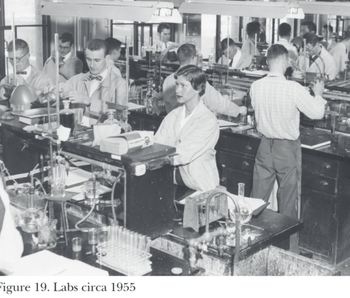
Like education, research was a major focus of the department. Areas of research included amino acid and body proteinuria metabolism, shock, the renal thresholds for proteins, the development of experimental ascites, and work with radioisotopes. Through the 1950s, residents were required to take a full year out from clinical work to develop a research program.
One of the highlights of our research history is the award in 1934 of the Nobel Prize in Medicine to inaugural department chair George Hoyt Whipple for studies of diet in the treatment of anemia. His long-time research assistant, Frieda S. Robscheit-Robbins, although not formally recognized with the honor, is credited with co-authoring 21 papers with Whipple prior to the Nobel award.
Her undeniable accomplishments as a female scientist during the early 20th Century paved the way for women who later chose a similar path. Robscheit-Robbins authored more than 100 publications on liver and blood diseases and blood regeneration, as well as several chapters of medical textbooks. She was named the first female president of the American Society of Experimental Pathology and included in a 2002 Discover magazine article as one of "The 50 Most Important Women in Science."
Current Pathology Chair Christa L. Whitney-Miller, MD, the first woman to lead the department, was given the title of The Frieda S. Robscheit-Robbins Professor as an homage to Robscheit-Robbins' historical impact on science and medicine.
Strengths to Build On
Our department has flourished with each decade as a result of all that came before. Here are some current strengths that highlight the successes to be used as stepping stones as we continue to move forward.
UR Medicine Labs now performs more than 12 million tests annually. The scale of today’s operations would have been unimaginable to the earliest faculty. UR Medicine Labs is now the largest medical laboratory in Western New York, supporting patients locally, regionally, and nationally.
Anatomic Pathology handles an extraordinary—and diverse—specimen volume. With a full suite of subspecialties, the division supports both routine and highly complex surgical cases every day. It sees more than 180,000 cases per year.
The department’s reach extends well beyond Strong Memorial. Over the past several decades, UR Medicine Labs has expanded into community and regional sites, including outpatient collection centers and partnerships with 7 UR Medicine regional affiliate hospitals.
URMC Pathology has long invested in training the next generation. In addition to the AP/CP residency and fellowships, the department has developed workforce-critical programs—including medical technology and laboratory science training—to address national shortages and meet the region’s needs.
The department was an early adopter of advanced diagnostic technologies. As early as the mid-1990s, it had implemented molecular assays (including T-cell gene rearrangement and bcr/abl testing), flow cytometry, automated coagulation platforms, and broad immunohistochemistry services—placing Rochester ahead of many peer institutions at the time.
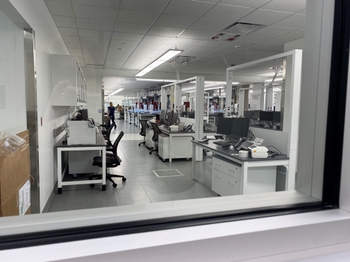
Outpatient and reference lab services are now a major part of the department’s footprint. Thousands of outpatient samples are processed daily, supporting physicians across UR Medicine and independent practices. This work has become essential to delivering accessible care throughout the region.
Modernization continues. In recent years the department has invested in recruitment, renovation, and infrastructure improvements like the Central Lab expansion. As URMC enters its second century, Pathology & Laboratory Medicine continues to evolve—equipped for growth and committed to excellence.
A Century Built on Quiet Excellence
Pathology and Laboratory Medicine may not always be the most visible part of patient care, but it remains one of the most vital. Every diagnosis, every treatment plan, and every scientific advancement depends on the work that begins in the laboratory.
As we mark 105 years of progress, we honor not just the milestones but the people—our alumni, faculty, trainees, technologists, and staff—whose dedication has shaped this department into what it is today.
Your work is woven into the legacy of URMC Pathology, and into the lives of countless patients who have benefited from it.
Here’s to the next century of discovery, service, and impact.