
Should You Get a Mammogram Before 40? What to Know if You’re at Higher Risk
Key Takeaways
- You may need a mammogram before age 40 if you're at higher risk for breast cancer.
- Family history can affect when you should start mammograms, such as having a close relative with breast cancer, especially one diagnosed at a young age.
- High-risk breast cancer screening may include mammograms and breast MRI. People with a lifetime breast cancer risk of 20% or greater may qualify for additional imaging to help detect breast cancer early.
- A breast cancer risk assessment can help determine when to start screening. Women should discuss their breast cancer risk with a healthcare expert by age 25, even without a family history.
“My aunt had breast cancer. Does that mean I need a mammogram before 40?”
Many patients come to our experts with questions like this. The answer depends on more than whether breast cancer appears in your family tree.
For many women, routine mammograms begin at age 40, but some people have a higher risk of developing breast cancer and may benefit from screening earlier or from additional testing.
Anna Weiss, MD, director of the Pluta Comprehensive Breast Program at Wilmot, explains what might increase risk and how to find the best screening plan for you.
Can You Get a Mammogram Before 40?

Yes. Forty is the starting age for routine mammograms for many, but breast cancer screening is not one-size-fits-all. For people with certain risk factors, a care team may recommend earlier screening or additional imaging, such as an MRI.
“Some people at higher risk for breast cancer may need breast MRI as young as age 25 or 30 and mammograms starting at age 30,” said Dr. Weiss.
"For those with a strong family history, screening may begin up to 10 years before the age at which their youngest affected close relative was diagnosed.”
Everyone’s risk is individual and can require different screening plans. Your care team can help determine the best plan for you.
Who Should Ask About Breast Screening Before 40?
Consider talking to your doctor about your breast cancer risk if you:
- Have a family history of breast cancer, especially a parent, sibling, or child who was diagnosed
- Have several relatives on the same side of your family with breast or ovarian cancer
- Have a relative who developed breast cancer at a young age
- Have a family history of male breast cancer
- Know that a family member carries a genetic variant associated with breast cancer, such as BRCA1 or BRCA2
- Have previously had certain high-risk breast biopsy results
- Received radiation to the chest at a young age
- Have other personal or family history that concerns you
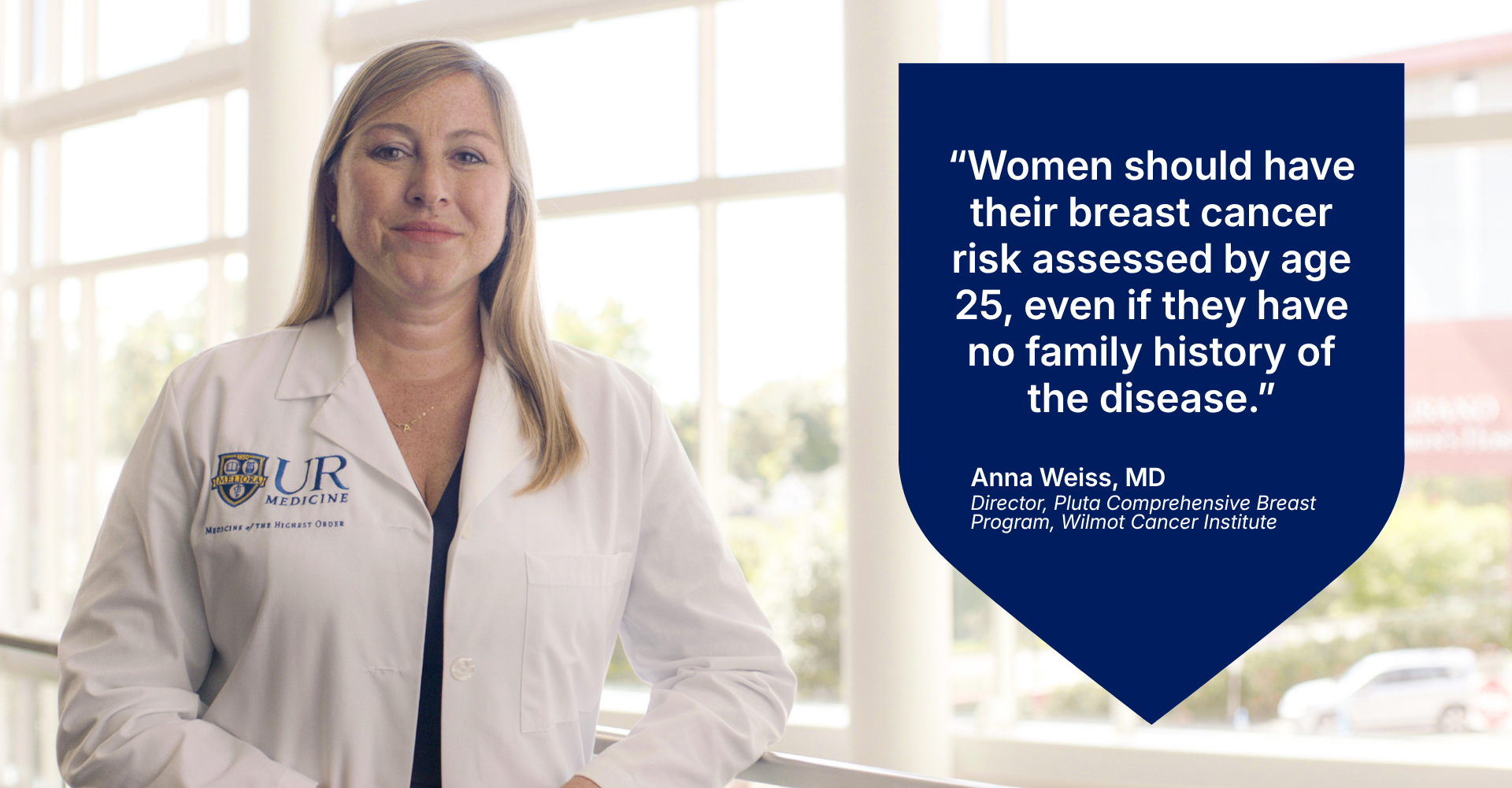
Women should have their breast cancer risk assessed by age 25, even if they have no family history of the disease.
A single relative with breast cancer history, such as a maternal aunt, does not necessarily mean you need early screening. Additional information, such as their age when diagnosed, the number of affected relatives, and the types of cancer in your family, can all change the recommendation.
“Women should have their breast cancer risk assessed by age 25, even if they have no family history of the disease,” said Dr. Weiss.
Your primary care physician, OB/GYN, or breast health specialist can help you understand your risk.
How Do You Find Out If You’re at High Risk for Breast Cancer?
Your doctor, breast specialist, or genetic counselor can help determine which type of evaluation is appropriate and what the results mean for your screening plan.
Breast cancer risk assessment
A breast cancer risk assessment uses information about your personal health, family history, and other factors to estimate your likelihood of developing breast cancer. Care teams may use different assessment tools depending on your age, medical history, and other risk factors.
Our teams use the Tyrer-Cuzick Risk Assessment Calculator.
Genetic risk evaluation
What Might Earlier Breast Cancer Screening Include?
Individual screening plans depend on what is contributing to risk. Your plan could include:
Mammogram: Some people at increased risk begin mammograms before age 40.
Breast MRI: In addition to mammography, breast MRI may be used for some at higher risk. The American Cancer Society recommends annual MRI and mammography, typically beginning at age 30, for those with a lifetime breast cancer risk of about 20%–25% or greater, based primarily on family history.
Referral to a specialist or genetic counseling: Your doctor may recommend seeing a breast specialist or genetic counselor. Genetic counseling can help determine whether genetic testing may be useful and what the results could indicate.
What to Ask Your Doctor
If you’re concerned about your breast cancer risk, you definitely don’t have to wait until age 40 to bring it up to your doctor. Consider asking:
- Does my personal or family history mean I should have a breast cancer risk assessment?
- What information about my relatives’ cancer diagnoses would be helpful?
- When should I start breast cancer screening?
- Should I see a breast specialist or a genetic counselor?
Before your appointment, gather as much family history as you can. Knowing which relatives had cancer, what type they had, and how old they were when diagnosed can help your care team better understand your risk.
Not sure when you should start screening?
Your breast cancer screening plan may look different depending on your family history and personal risk factors. Talk with your doctor about whether a breast cancer risk assessment, earlier screening, or a referral to a breast specialist may be right for you.
Connect with us!