

Your Baby’s Gut Health: What Matters Most in the First Weeks of Life
Key Takeaways
- A baby’s gut microbiome begins developing at birth, and the first days and weeks of life are a critical window that helps shape long-term health.
- Birth method and feeding play major roles in early microbiome development, with vaginal delivery and breast milk both helping seed and support beneficial gut bacteria.
- Research on probiotics in infants is still evolving, with the strongest evidence for use in specific medical settings like preventing necrotizing enterocolitis in preterm infants.
- Early gut health may influence immune development and future risks of conditions like allergies and asthma, making early-life exposures especially important.
From the moment a baby is born, something remarkable begins to take shape: their gut microbiome. This collection of microorganisms in the gut plays a powerful role in how a child grows, develops, and stays healthy. While adults have complex, well-established microbiomes, a baby’s gut is just getting started. Those first days and weeks of life are a critical window when that foundation is laid.
How Is a Baby’s Gut Health Shaped?
The very first layer of gut microbes is introduced by birth method.
“During a vaginal birth, babies are exposed to bacteria from the mother’s birth canal, which helps seed the gut microbiome,” explains Hitesh Deshmukh, MD, PhD, chief of Neonatology at University of Rochester Medicine Golisano Children’s Hospital and professor of Pediatrics at the School of Medicine & Dentistry. “With C-section birth, that exposure is different, and we see differences in how the microbiome develops early on.”

Breastfeeding also plays a major role. Breast milk contains live microbes as well as special nutrients that act like natural fertilizer, helping healthy bacteria grow and thrive.
Even the simple act of breastfeeding introduces microbes from a mother’s skin, adding to this early microbial community.
Are Probiotics Beneficial and Safe for Babies?
Probiotics are often marketed as a way to support gut health, but the science in infants is still evolving.
“Research shows that probiotics can be beneficial in very specific situations, particularly for preterm infants at risk of necrotizing enterocolitis, a life-threatening intestinal disease,” says Deshmukh. “This is where we have the strongest clinical evidence for probiotic benefits.”
Outside of that setting, the evidence is mixed. Not all probiotics are the same, and their effects depend on the specific strain, the dose, the timing, and the population being studied. Many commercially available probiotics have not been tested in the rigorous way that would be needed for routine use in infants.
How Early Gut Health May Influence Long-Term Outcomes
Researchers are increasingly studying how early gut health shapes a child’s future. The strongest evidence points to a connection to the immune system. The first few months of life are a critical window when the microbiome helps “train” the immune system. Differences in early gut bacteria have been linked to the development of allergies and asthma.
There is also growing research into the “gut-lung connection,” suggesting that early gut bacteria may influence lung development and immune responses later in life.
What Parents Can Do to Support a Healthy Microbiome
While not everything is within a parent’s control, there are meaningful ways to support a baby’s gut health early on.
Breastfeeding is one of the most powerful. It provides beneficial bacteria, supports their growth, and helps strengthen the immune system. It can even help offset some of the microbiome differences seen with C-section birth or early antibiotic use (see below).
Skin-to-skin contact, sometimes called kangaroo care, is another simple, impactful practice. Holding a baby against your skin supports bonding, reduces stress, and helps transfer beneficial microbes. In premature or low-birth-weight infants, it has even been associated with lower infection rates and improved survival.
Maternal health during pregnancy also matters. A mother’s nutrition and overall well-being can influence the microbes a baby is first exposed to.
Finally, being thoughtful about antibiotic use is important. “Studies have shown that antibiotic use can hurt microbiome development,” says Deshmukh. While antibiotics are sometimes necessary and lifesaving, avoiding unnecessary use can help protect the developing microbiome.
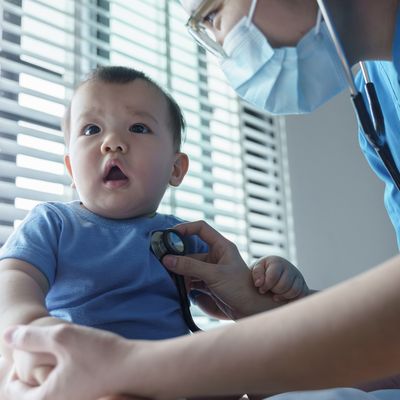
University of Rochester Medicine scientists found that early antibiotic exposure disrupts babies’ natural gut bacterial balance. The disruption also “travels” to the lungs, fundamentally rewiring how lung immune cells are programmed and influencing lung repair and the ability to fight infections.
The Big Transition: Starting Solid Foods
Around 6 to 12 months of age, a baby’s microbiome goes through another major shift.
As solid foods are introduced, the diversity of the gut microbiome begins to expand. Offering a variety of foods, especially fiber-rich ones, supports this process and encourages beneficial bacteria.
This stage is also an opportunity to introduce common allergens, such as peanuts, in age-appropriate ways. When done alongside breastfeeding, early introduction has been shown to reduce the risk of certain food allergies.
A baby’s gut microbiome is built step by step, beginning at birth, continuing through the first year of life and beyond. While research is still unfolding, one thing is clear: Early moments matter.