
Integrative Oncology Brings a New Approach to Cancer Treatment
When Julia Schlossman entered medical school, she thought she might want to specialize in oncology. What she didn’t expect was that practicing yoga alongside patients, developing nutrition resources, and helping launch a culinary medicine course would shape her path.
In her third year at the University of Rochester School of Medicine & Dentistry, Schlossman attended a talk by Alissa Huston, MD, co-medical director of the URochester Medicine Pluta Integrative Oncology & Wellness Center.
Huston described a model of cancer care that goes beyond standard treatment—one that integrates evidence-based wellness strategies into each patient’s personalized care plan.
“I found everything Huston spoke about to be so interesting, especially the ways in which integrative wellness empowers patients to have a sense of controI during a time when there is so much uncertainty. I thought it would be amazing to shadow her in my fourth year of medical school.”
A cancer diagnosis can be overwhelming—physically, emotionally, and mentally. Complex treatment plans, major changes to daily life, and uncertainty about the future can leave patients feeling a loss of control. This is where integrative oncology can play a critical role.
For Huston and her colleagues, integrative oncology begins—and ends—with science. Its foundation in research is what separates integrative wellness from some other approaches. It’s an important distinction, especially as more patients come in with questions about information they’ve heard from friends and family, social media, or other sources that may or may not help—and may even hurt.
Patients and medical students are discovering the benefits of integrative oncology therapies. And more and more research is demonstrating the importance of this innovative approach in cancer treatment.
A Different Approach to Cancer Care
Huston is triple board-certified in oncology, hematology, and integrative medicine. She is the first integrative oncology specialist at URochester Medicine.
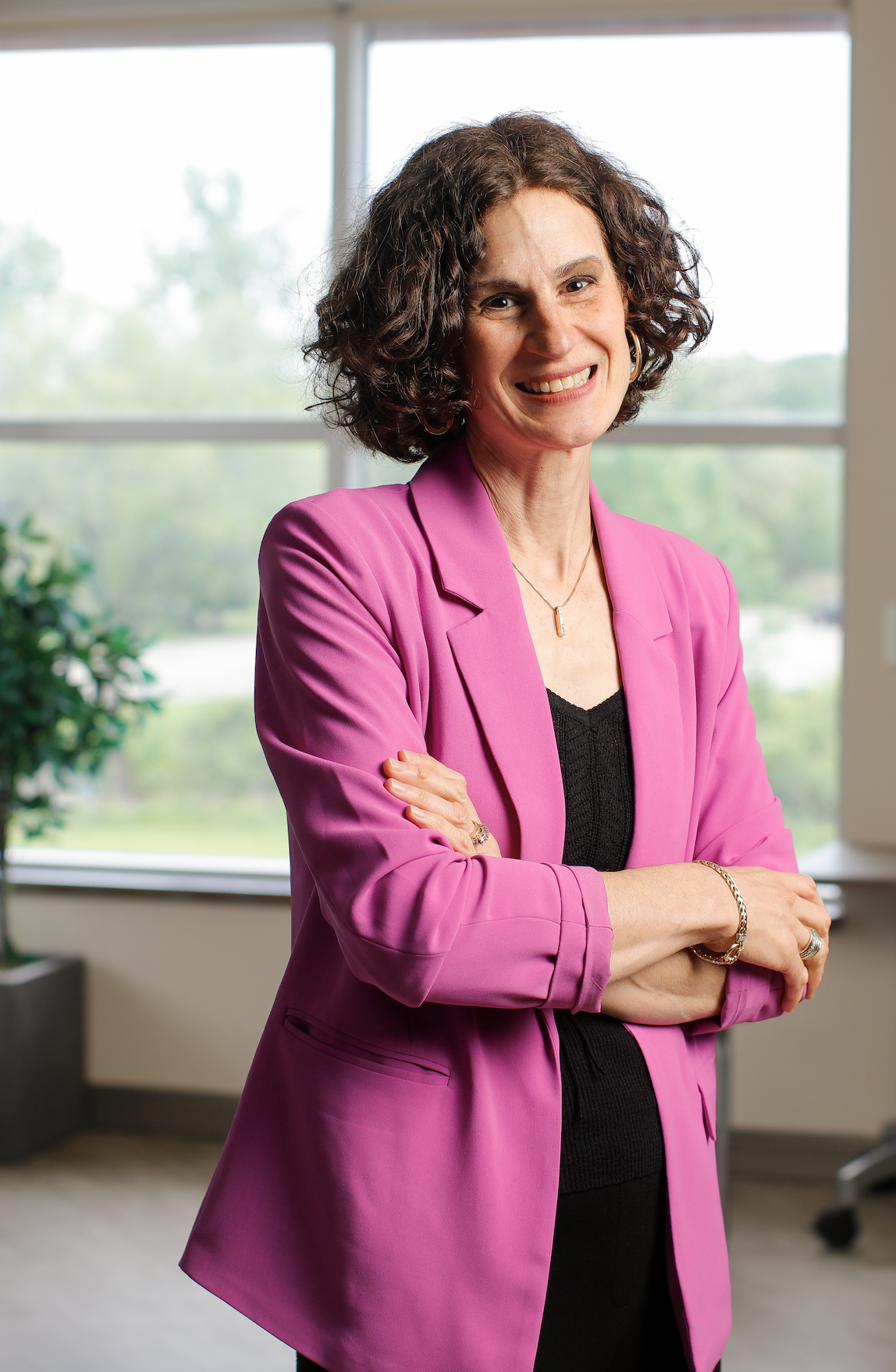
Huston’s first experience in oncology began with a customized elective at URochester Medicine. During her residency here, Huston was drawn to caring for oncology patients. An attending physician, seeing her interest, created a breast-cancer elective for Huston that allowed her to work with different providers and aspects of oncologic care that otherwise would not have been part of her studies.
“I think that’s also what we created in the Center—that touchpoint of creating something where students from all the disciplines we train here have the opportunity to experience and work in a space that might be different than what they initially envisioned their career trajectory to be,” she said.
For Huston, a career in oncology was the next step. Her interest in integrative oncology evolved as she consistently met questions from patients about what they could be doing during treatment to help with healing.
Huston had found immense value in the mentorship of faculty during her time in residency. After a fellowship at the University of Pittsburgh School of Medicine, she returned to Rochester with hopes of providing similar support for the next generation of providers.
When Schlossman inquired about studying at the Integrative Oncology Center, which was created by the Wilmot Cancer Institute in partnership with the Pluta Cancer Foundation, Huston realized there was a need and an opportunity to expand learning.
Ahead of Schlossman’s final year at SMD, Huston developed an elective that allows medical students to work alongside her and a multidisciplinary team.
Students gain experience not only in oncology care, but also with certified clinical exercise oncology physiologists, registered oncology dietitians, art and music therapists, and mind-body and meditation instructors.
“It gave me a better understanding of the patient experience. I think about it every day,” Schlossman said. “The integrative center gives patients the tools to make lifestyle modifications to feel better, connect with each other, and cope with their disease.”
Whole Person Not Patient
At the Integrative Oncology & Wellness Center, evidence-based therapies work in tandem with traditional cancer treatments such as surgery, chemotherapy, and radiation.
Patients receive oncology care through the URochester Medicine Wilmot Cancer Institute, while the Integrative Oncology Center supports symptom management through offerings such as:
• Nutrition counseling and cooking programs run by registered oncology dietitians
• Mindfulness, meditation, and stress-reduction classes
• Art and music therapy
• URochester’s ReNEW exercise oncology clinic (Recharge,
Revive, Relax, Nutrition, Exercise, and Wellness), which is run by certified clinical exercise oncology physiologists
• Mindfulness-based therapies, including yoga, qigong, and tai chi chuan
• Touch therapies, including acupuncture and oncology massage
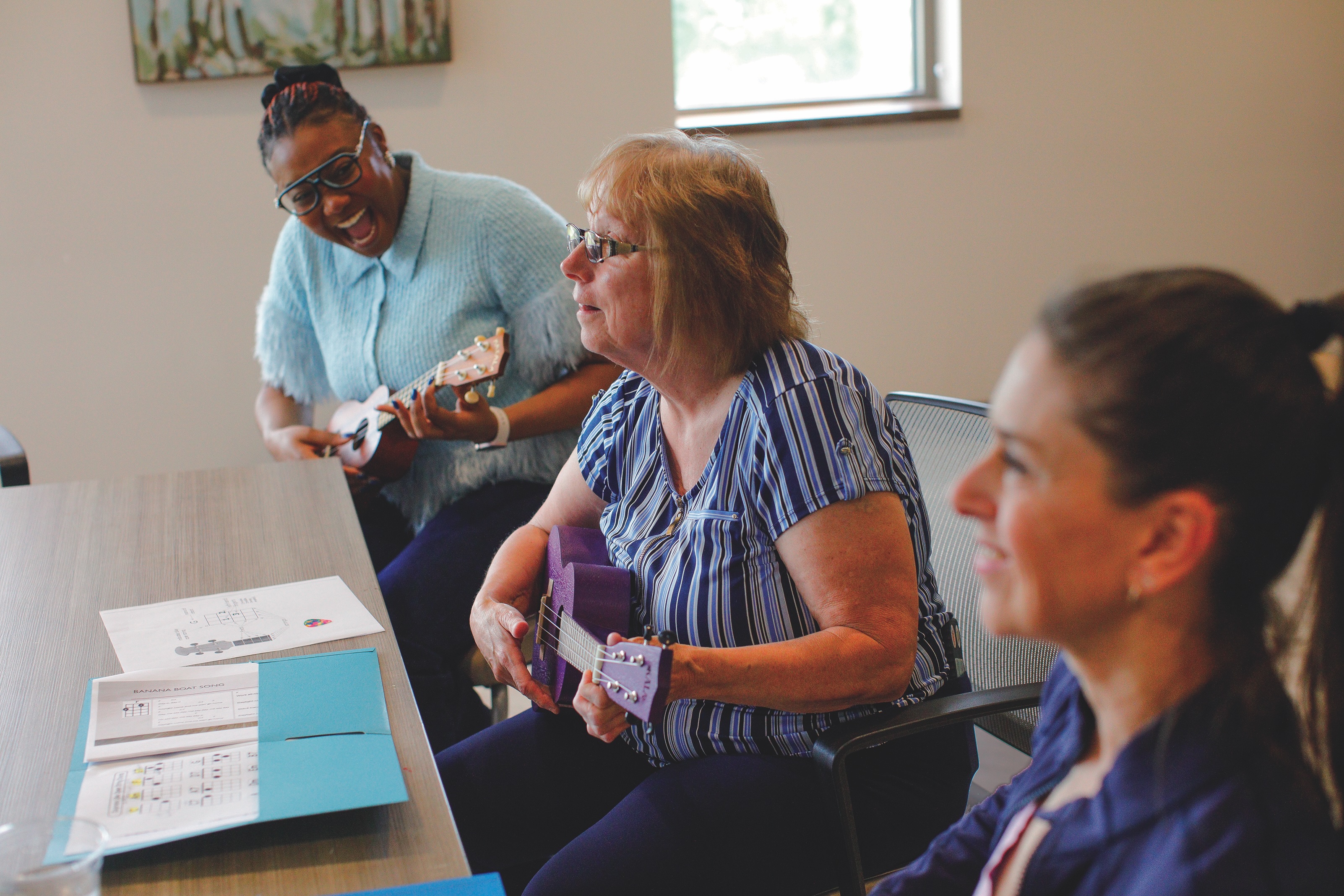
These programs, led by specialists in their fields, help patients stay connected to their bodies and maintain a sense of agency throughout treatment. Individual and group sessions are available, allowing patients to choose the resource that’s best for them.
This patient-centered philosophy shapes everything at the Center.
Jane Beck, who attends the Center’s qigong classes regularly, said the offering gave her a supportive space during a difficult time. “I really needed emotional support, and the classes gave it to me,” she said. “The people there are so encouraging. You feel more like a whole person and not just a patient, not just a sick person.”
Beck has found immense value in the Center’s holistic approaches as well as in the sense of community that comes from taking class alongside others who may share similar experiences.
She appreciated not only the faculty and staff but also the inclusion of medical students in the classes.
“I really enjoyed having them there, and I was impressed they were participating,” Beck said. “I want more doctors out there who understand what it’s like to be a patient. It gives them the perspective of being able to recommend this to people.”
Research That Drives Care
There was a time when medicine had fewer distinctions: Care was care. The fact that integrative oncology care is being accepted into the standard course of treatment is recognition of how many factors go into a person’s health.
“It isn’t alternative care,” Huston said. “It’s evidence-based, cancer-directed treatment. Integrative oncology therapies help manage symptoms alongside standard care.”
Karen Mustian, PhD, MPH, associate director of Population Science at Wilmot Cancer Institute, works closely with Huston to advance this field.
“Huston ensures her patients have access to clinical trials and emerging therapies,” Mustian said. “She brings integrative medicine into the context of cancer treatment in a way that truly sets us apart at Wilmot.”
Recent nationwide research led by Mustian and URochester Medicine colleague Po-Ju Lin, PhD, examined how exercise affects fatigue and cognitive symptoms during chemotherapy.
The study, a nationwide phase III randomized clinical trial funded by NCI, showed that patients who followed a six-week, structured, home-based exercise prescription maintained their usual activity levels while receiving their chemotherapy, leading to less fatigue and cognitive impairment.
This research, featured in the March 2026 issue of the Journal of the National Comprehensive Cancer Network, has the potential to greatly improve the experiences of patients in chemotherapy, who frequently experience extreme fatigue and are unable to continue their normal daily activities.
The American Society of Clinical Oncology (ASCO) chose another study conducted by Mustian, alongside faculty member Yuri Choi, PhD, to showcase at their 2026 annual meeting.
The nationwide study discovered that gentle, restorative yoga improves insomnia among cancer survivors. Improving sleep is especially important for cancer survivors because severe fatigue can increase their risk of developing other health conditions.
Huston and Mustian have worked with the Society for Integrative Oncology and ASCO to create evidence-based guidelines for the use of integrative oncology therapies. Their research supports using integrative oncology treatments to help with pain, anxiety, depression, and fatigue that are caused by cancer treatments.
The work reflects a long-standing commitment at URochester Medicine to study and develop therapies that reduce the side effects of cancer treatment.
Since the 1970s, Wilmot Cancer Institute faculty have participated in extensive research that has led to radical improvements in care, including the establishment of anti-emetic drug protocols for managing chemo-induced nausea and vomiting.
When such protocols involve patients who would otherwise be too nauseous to continue their treatment, they save lives.
Little Things, Big Impact
The student experience at the Integrative Oncology Center goes beyond clinical learning.
“You’re with patients throughout their entire cancer journey,” Schlossman said. “Huston forms deep, meaningful relationships. It’s the little things—she knows how to connect.”
Huston’s approach centers on creating manageable, personalized care plans that include follow-up touch points.
“We start with one or two services,” she said. “We’re here to support, not overwhelm.”
The services are incorporated into the patient’s treatment plan, showing up in scheduling in the MyChart patient portal.
Accessibility is central to Huston’s care and the mission of the Integrative Oncology Center. Because of the support of the Pluta Cancer Foundation, all classes and programs are offered at no cost to patients. Patients can have in-person or virtual individual appointments, participate in in-person or virtual classes, access recorded sessions, and use educational resources developed by the care team.
One example is a patient-education guide, recently developed by Huston and Schlossman, on using nutrition to help manage side effects such as nausea and insomnia.
In a digital world filled with conflicting health information, Huston helps patients navigate what’s credible.
“Patients come in with questions from social media and podcasts,” she said. “We help them understand what’s safe and effective—while making sure they feel heard.”
The Challenging Conversations
One of the most common conversations Huston has with patients is about what they could be doing outside of the standard care to help themselves. Frequent questions revolve around supplements.
Rather than dismissing well-intentioned ideas, Huston takes the time to understand why the person is interested in a particular supplement. She then tries to suggest evidence-based, integrative oncology approaches that don’t pose potential risk.
If, for example, patients are looking to take something to help with fatigue, there are five or six integrative oncology options with strong scientific support that they can consider.
“That becomes an opportunity to share,” she said. “It’s important to have an open place to ask those questions, to help the individual navigate. A lot of times, their explanation leads to options that we can suggest that have the best scientific evidence.”
For students, these challenging conversations are essential to witness. It’s a chance to observe how best to navigate such discussions with compassion, all while presenting factual data and recommendations.
“It’s difficult counseling patients because you want to gain trust,” Schlossman said of observing Huston with her patients. “And as their physician, your goal is to guide them and help them make decisions that they feel good about. Huston does a great job of doing research on certain supplements and works hard on the language you use.”
Beyond Rochester
Interest in integrative oncology is growing nationwide, and Huston is helping shape its future beyond the Rochester region.
Huston learned much of her integrative wellness training from the integrative medicine fellowship at the University of Michigan. While integrative oncology for patients has been available for years, no formalized, fellowship training programs existed until more recently. Huston was the first fellow at Michigan to focus on integrative oncology.
Suzie Zick, ND, MPH, co-director of the fellowship, describes Huston as a “trailblazer.”
She and Huston continued to work closely together on numerous committees for the Society for Integrative Oncology after Huston graduated.
Outside of their institutions, both are working to advance research, clinical guidelines, and medical education for integrative medicine.
“In my ideal world, integrative medicine and integrative oncology are medicine,” she said. “We should be blending them in, and it should be a consistent part of what students learn.”
Threading integrative medicine into existing medical education is part of Huston’s vision. She recently co-authored a chapter in a textbook, Comprehensive Integrative Oncology, one of the first clinical textbooks in the field, with Susan Dent, MD, a colleague at URochester Medicine.
Their work explores an integrative approach to cardio-oncology, an emerging area focused on protecting heart health during cancer treatment.
Many cancer treatments carry cardiovascular risk on their own, and often patients have personal risk factors for heart conditions. Dent and Huston examined where these risks merge and how to navigate symptoms of different cancer treatments.
In their chapter, they focus on the importance of lifestyle interventions, such as exercise and nutrition, while managing standard-of-care treatment recommendations.
Zick, co-editor of the textbook, sees Huston as a stand-out not only in her academic approach but also as a mentor and physician.
“Patient care and educating are very different, and she can do both seamlessly, transferring and giving her full effort,” she said. “She’s driven to be excellent and to reach the goals she puts in front of her.”
At URochester Medicine, Huston’s goals include continuing to expand educational opportunities for learners at every stage— from medical students to residents—including an IO (integrative oncology) Ambassador Training program, which teaches bedside integrative skills to nurses and Advanced Practice Partners.
She is developing a formal integrative care elective to bring this approach more fully into medical training.
Her work also focuses on improving the patient experience. In collaboration with the Integrative Oncology Center, Huston is helping to develop new digital tools, including an interactive mobile app, while continuing to refine resources that support patients throughout treatment.
As the research evidence mounts, integrative medicine continues to support oncology patients as well as those with other chronic conditions—all while improving overall well-being and helping physicians understand what their patients need.
Now a resident at Boston Medical Center, Schlossman continues to apply to her work each day what she learned from Huston.
“As physicians, we can recommend interventions, but understanding what patients are going through is what makes the difference,” she said. “Stepping outside the medicine and being able to meet your patients where they’re at—that’s what being a doctor is about.”