

Pediatric Ambulatory Elective
Pediatric Ambulatory Elective
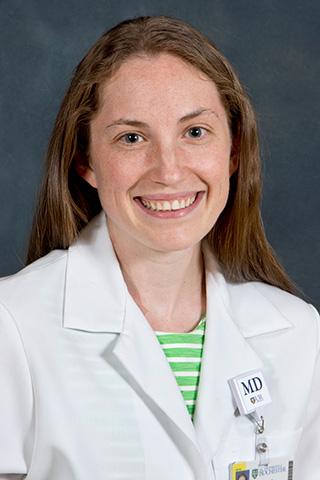
Catherine Krafft, M.D.
Course Details
Course Number: PED602
Duration: 2 weeks
Course Director: Catherine Krafft, M.D.
Course Location: Golisano Children's Hospital Pediatric Practice
Course Offered: Year-Round
Open to the Following Students: 3rd Year, 4th Year, Visiting
Course Overview
The goal of this elective is to develop skills and experience in the diagnosis and management of common pediatric illnesses and congenital disorders. Students typically participate in resident teaching conferences and spend time working with residents to provide patient care.
Learning Objectives
- Practice and demonstrate increasing confidence in their evaluation of children and adolescents with acute illnesses and injuries.
- Perform the initial assessment of newborn babies and recognize common newborn conditions.
- Practice counseling new parents on the care of their child including the psychosocial adjustment of the family.
- Describe the impact of cultural and environmental factors on children's health and pediatric health care delivery and apply this understanding to the development of individualized care management plans.
- Demonstrate concise and complete oral and written patient evaluations.
- Apply the biopsychosocial model to pediatric practice.
- Practice problem solving strategies and devise treatment plans under guidance of the supervising pediatrician.
- For common outpatient pediatric concerns, discuss appropriate clinical reasoning (i.e., evaluation of the febrile newborn), and patient management plans (i.e., determining antibiotic choices for the management of otitis media, pneumonia, and urinary tract infections).
Schedule of Activities
Students should email the course director at least 2 weeks before their elective to assist in designing their own schedule to meet personal learning objectives. Students will receive their final schedule no later than noon on the Friday prior to their elective rotation, and usually approximately one week in advance.
Students will typically spend clinic sessions rotating as a part of the acute illness clinic team or with faculty members providing routine well child care, though upon request, students may have opportunity to rotate with partnering subspecialty clinics. In some cases, community pediatrician office settings can be included if sites are available and advanced arrangements are made.
Student Expectations
Students are expected to attend a minimum of 5 half-day clinic sessions on at least 3 weekdays, and typically will receive a schedule that includes 7-9 half-day clinic sessions (One half-day = 9:00 a.m.–12:00 p.m., 1:00 p.m.–end of day, or Afterhours clinic: 5:30–8:00 p.m.). On Monday and Wednesday evenings, our faculty see patients during an "afterhours" clinic, and elective students are typically scheduled during at least one of these evening session(s). As the only learners rotating during these afterhours sessions, elective students have a unique opportunity to provide routine and illness care to patients, and receive feedback from faculty members. On other days of the week, patients can be registered to be seen in the clinic each day until 4:30 p.m. Members on our care team will typically finish work by 5:30 p.m., though at times, patients may have ongoing care needs or patient documentation may need to be completed later than this time.
Patient schedules and patient volume may change reasonable expectations each day. On average, an elective student will see 2-5 patients per half-day clinic session. Clarify your role on the team and patient care responsibilities with each new faculty preceptor at the beginning of a clinic session. Students are responsible for reviewing individual goals for the rotation and requesting specific feedback from preceptors.
Students are expected to follow pediatric resident teaching schedules, attending 8:00 a.m. morning report and Grand Rounds sessions, and report to the clinic for patient care responsibilities after these conclude (9:00 a.m.). The end of a morning session is often the busiest time of day. You are expected to monitor the time and leave a clinic session on time to attend noon conference activities.
How Illness Clinic Works
- The illness clinic team will include 2-3 residents, 1-2 attending preceptors (which may include a fellow or a chief resident), and 1-2 students.
- Visits to Illness Clinic are typically scheduled 24-48 hours in advance, and are problem-focused/acute visits.
- Patients are checked in by the nurses, weighed, vitals taken and put in a room. The nurses write the room number, patient name, age and chief complaint on the illness board in the conference room.
- A red folder with patient identification stickers and an encounter form are placed in a rack outside every patient room. You can review information on the encounter form (it will also be entered in E-Record), and give this information to the resident or attending preceptor.
- Students should discuss each patient with an upper level or chief resident, or a fellow or attending who will also see the patient. Each morning, you can discuss the best approach to workflow with the team. Try to see any patient with interesting physical findings.
- When seeing a patient on your own, record the history and physical in a chart note, focusing on the relevant problem(s). Usually you will use a progress note (not a provider student note) that your preceptor will edit/addend and which will become a part of the permanent medical record for the patient. Clarify these expectations for written documentation with your preceptor each day.
- Each patient is presented to the preceptor and together you will formulate a working diagnosis and plan of action. Be sure all required paper work is complete the same day as the patient visit.
- Encourage patients/families to receive any overdue immunizations, and to schedule a WCC if they are not up to date with routine care.
- The preceptor will order any needed labs, procedures, immunizations or prescriptions.
Didactic Activities
A typical didactic schedule for the week includes the following activities listed below. Pediatric residents rotating with you can update you about each day's teaching topics and any anticipated adjustments to the schedule. Many teaching activities are hosted in virtual/hybrid format. See Blackboard for teaching schedules and more information during your rotation.
Monday: No Morning Teaching. Report to your first scheduled clinic session on your individual elective schedule.
Tuesday: Kaplan Room (1-1140)
8:00–8:30 a.m. (Morning Report)
8:30–9:00 a.m. (Outpatient Conference)
Wednesday: ZOOM ONLY
8:00–9:00 a.m. (Pediatric Grand Rounds)
Thursday: Kaplan Room (1-1140)
8:00–8:30 a.m. (Intern Report)
8:30–9:00 a.m. (Outpatient Conference)
Friday: Kaplan Room (1-1140)
8:00–8:30 a.m. (Morning Report)
Every day: Kaplan Room (1-1140)
12:00–1:00 p.m. (Noon Conference)
Recommended Reading
Students may review reference materials in the AC-6 Conference Room. Pediatrics in Review is accessible on the Miner Library website, and is a good source for review articles relevant to common pediatric concerns.
Student Evaluations
A summative narrative evaluation will be completed by the elective director based on input from various preceptors, highlighting key strengths and areas for improvement demonstrated during the elective rotation.
To receive a grade of Pass, students must demonstrate professionalism, and actively participate in the conferences and clinical sessions. Students are expected to attend a minimum of 5 half-day clinic sessions on at least 3 different days during each scheduled week. Students are asked to communicate with the elective director in case of illness or any last-minute schedule adjustments. See Schedule of Activities section for more information regarding daily expectations.