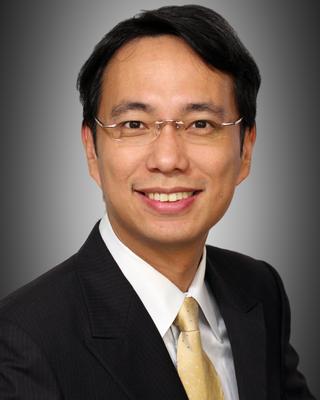
Kai-Lieh Huang, Ph.D.
Contact
Kai-Lieh Huang, Ph.D.
About Me
Faculty Appointments
Research Assistant Professor - Department of Biochemistry and Biophysics (SMD)
Credentials
Post-doctoral Training & Residency
University of Texas Medical Branch | Galveston, Texas | Mentor: Dr. Eric Wagner 2017 - 2021
Education
PhD | University of Texas Health Science Center - Houston. Biochemistry and Molecular Biology. 2016
M.Sc. | National Sun Yat-sen University. Molecular Biology. 2003
B.Sc. | National Sun Yat-sen University. Biological Sciences. 2001
Research
Promoter-proximal pausing represents a critical checkpoint in transcription, at which RNAPII must either transition into productive elongation or be terminated. While pausing has long been appreciated as a regulatory step, the mechanisms enforcing termination at paused polymerases—and the consequences of failure at this checkpoint—were largely unknown. Using a rapid protein depletion system (auxin-degron) and genome-wide nascent transcription profiling (RNA-seq, TT-seq, and PRO-seq), we demonstrated that Integrator’s catalytic endonuclease subunit, INTS11, is responsible for promoter-proximal termination across essentially the entire RNAPII transcriptome. Loss of Integrator-mediated cleavage leads to widespread failure of early termination, resulting in increased RNAPII escape from promoters but inefficient productive elongation, particularly at long genes.
We further uncovered how Integrator integrates two enzymatic activities to control transcriptional outcomes. In addition to its RNA endonuclease activity mediated by INTS11, Integrator recruits Protein Phosphatase 2A (PP2A) to paused RNAPII complexes. This interaction, mediated by specific Integrator subunits including INTS8, counteracts kinase-driven pause release by dephosphorylating the RNAPII C-terminal domain and the elongation factor SPT5. By antagonizing P-TEFb–dependent phosphorylation, Integrator-associated PP2A stabilizes the paused state and creates a permissive window for RNA cleavage and termination. Together, these studies highlight Integrator as a multifunctional regulatory hub at early transcriptional checkpoints.
More recently, my research has expanded to explore the downstream consequences of defective Integrator function. We found that loss of Integrator does not simply alter transcriptional output, but fundamentally compromises RNA quality control. In the absence of proper promoter-proximal termination, aberrant transcripts enriched for retained introns and repetitive elements accumulate. These RNAs form double-stranded RNA structures that are recognized by innate immune sensors, leading to activation of PKR and the integrated stress response (ISR). This work uncovered a direct mechanistic link between transcription termination defects and cellular stress signaling, demonstrating that Integrator suppresses endogenous dsRNA formation and prevents inappropriate activation of antiviral-like pathways. Importantly, these effects are observed not only in experimental systems but also in cells harboring disease-associated Integrator mutations, suggesting that chronic ISR activation may contribute to Integrator-related human pathologies.
Looking forward, my research aims to further define how Integrator activity is modulated across cellular states and how its dysfunction contributes to disease. Key open questions include how Integrator distinguishes productive from nonproductive transcription complexes, how termination outcomes intersect with RNA processing and nuclear surveillance pathways, and whether stress-response signaling downstream of transcriptional defects can be therapeutically targeted. By continuing to integrate mechanistic biochemistry with genome-scale approaches, my goal is to understand how early transcriptional decisions shape cellular homeostasis.
Publications
Journal Articles
Baluapuri A, Zhao NC, Marina RJ, Huang KL, Kuzkina A, Amodeo ME, Stein CB, Ahn LY, Farr JS, Schaffer AE, Khurana V, Wagner EJ, Adelman K
Cell.. 2025 June 12188 (12):3184-3201.e21. Epub 04/14/2025.
Connacher RP, Roden RT, Huang KL, Korte AJ, Yeruva S, Dittbenner N, DesMarais AJ, Weidmann CA, Randall TA, Williams J, Hall TMT, Wagner EJ, Goldstrohm AC
Nucleic acids research.. 2024 November 1152 (20):12669-12688. Epub 1900 01 01.
Lin MH, Jensen MK, Elrod ND, Chu HF, Haseley M, Beam AC, Huang KL, Chiang W, Russell WK, Williams K, Pröschel C, Wagner EJ, Tong L
Molecular cell.. 2024 August 884 (15):2900-2917.e10. Epub 07/19/2024.
Ciesla J, Huang KL, Wagner EJ, Munger J
PLoS pathogens.. 2024 May 20 (5):e1012058. Epub 05/20/2024.
Jonnakuti VS, Ji P, Gao Y, Lin A, Chu Y, Elrod N, Huang KL, Li W, Yalamanchili HK, Wagner EJ
Journal of neuro-oncology.. 2023 July 163 (3):623-634. Epub 06/30/2023.
de Prisco N, Ford C, Elrod ND, Lee W, Tang LC, Huang KL, Lin A, Ji P, Jonnakuti VS, Boyle L, Cabaj M, Botta S, Õunap K, Reinson K, Wojcik MH, Rosenfeld JA, Bi W, Tveten K, Prescott T, Gerstner T, Schroeder A, Fong CT, George-Abraham JK, Buchanan CA, Hanson-Khan A, Bernstein JA, Nella AA, Chung WK, Brandt V, Jovanovic M, Targoff KL, Yalamanchili HK, Wagner EJ, Gennarino VA
Science advances.. 2023 February 179 (7):eade4814. Epub 02/17/2023.
Stein CB, Field AR, Mimoso CA, Zhao C, Huang KL, Wagner EJ, Adelman K
Molecular cell.. 2022 November 1782 (22):4232-4245.e11. Epub 10/28/2022.
Mascibroda LG, Shboul M, Elrod ND, Colleaux L, Hamamy H, Huang KL, Peart N, Singh MK, Lee H, Merriman B, Jodoin JN, Sitaram P, Lee LA, Fathalla R, Al-Rawashdeh B, Ababneh O, El-Khateeb M, Escande-Beillard N, Nelson SF, Wu Y, Tong L, Kenney LJ, Roy S, Russell WK, Amiel J, Reversade B, Wagner EJ
Nature communications.. 2022 October 1313 (1):6054. Epub 10/13/2022.
Lin MH, Jensen MK, Elrod ND, Huang KL, Welle KA, Wagner EJ, Tong L
Nature communications.. 2022 September 3013 (1):5742. Epub 09/30/2022.
Li L, Huang KL, Gao Y, Cui Y, Wang G, Elrod ND, Li Y, Chen YE, Ji P, Peng F, Russell WK, Wagner EJ, Li W
Nature genetics.. 2021 July 53 (7):994-1005. Epub 05/13/2021.
Huang KL, Jee D, Stein CB, Elrod ND, Henriques T, Mascibroda LG, Baillat D, Russell WK, Adelman K, Wagner EJ
Molecular cell.. 2020 October 1580 (2):345-358.e9. Epub 09/22/2020.
Chen CA, Strouz K, Huang KL, Shyu AB
RNA.. 2020 September 26 (9):1143-1159. Epub 05/13/2020.
Elrod ND, Henriques T, Huang KL, Tatomer DC, Wilusz JE, Wagner EJ, Adelman K
Molecular cell.. 2019 December 576 (5):738-752.e7. Epub 1900 01 01.
Tatomer DC, Elrod ND, Liang D, Xiao MS, Jiang JZ, Jonathan M, Huang KL, Wagner EJ, Cherry S, Wilusz JE
Genes & development.. 2019 November 133 (21-22):1525-1538. Epub 09/17/2019.
Albrecht TR, Shevtsov SP, Wu Y, Mascibroda LG, Peart NJ, Huang KL, Sawyer IA, Tong L, Dundr M, Wagner EJ
Nucleic acids research.. 2018 May 446 (8):4241-4255. Epub 1900 01 01.
Kivlin CM, Watson KL, Al Sannaa GA, Belousov R, Ingram DR, Huang KL, May CD, Bolshakov S, Landers SM, Kalam AA, Slopis JM, McCutcheon IE, Pollock RE, Lev D, Lazar AJ, Torres KE
Cancer biology & therapy.. 2016 17 (2):129-38. Epub 12/09/2015.
Huang KL, Chadee AB, Chen CY, Zhang Y, Shyu AB
RNA.. 2013 March 19 (3):295-305. Epub 01/22/2013.
Brewer Savannah KJ, Demicco EG, Lusby K, Ghadimi MP, Belousov R, Young E, Zhang Y, Huang KL, Lazar AJ, Hunt KK, Pollock RE, Creighton CJ, Anderson ML, Lev D
Clinical cancer research : an official journal of the American Association for Cancer Research.. 2012 September 118 (17):4633-45. Epub 07/20/2012.
Torres KE, Liu J, Young E, Huang KL, Ghadimi M, Lusby K, Lazar AJ, Lev D
Histopathology.. 2011 July 59 (1):156-9. Epub 1900 01 01.
Zhu QS, Rosenblatt K, Huang KL, Lahat G, Brobey R, Bolshakov S, Nguyen T, Ding Z, Belousov R, Bill K, Luo X, Lazar A, Dicker A, Mills GB, Hung MC, Lev D
Oncogene.. 2011 January 2730 (4):457-70. Epub 09/20/2010.
Lahat G, Zhu QS, Huang KL, Wang S, Bolshakov S, Liu J, Torres K, Langley RR, Lazar AJ, Hung MC, Lev D
PloS one.. 2010 April 165 (4):e10105. Epub 04/16/2010.
Chen JY, Hung CC, Huang KL, Chen YT, Liu SY, Chiang WF, Chen HR, Yen CY, Wu YJ, Ko JY, Jou YS
Neoplasia : an international journal for oncology research.. 2008 December 10 (12):1393-401. Epub 1900 01 01.
Kang HY, Cho CL, Huang KL, Wang JC, Hu YC, Lin HK, Chang C, Huang KE
Journal of bone and mineral research : the official journal of the American Society for Bone and Mineral Research.. 2004 July 19 (7):1181-90. Epub 03/08/2004.