
When Minutes Matter: URochester Medicine Doubles Down on Mobile Stroke Care
University of Rochester Medicine has acquired a second Mobile Stroke Unit (MSU), reinforcing a program that has become a signature part of the region’s emergency stroke response since the first unit launched in 2018 in partnership with American Medical Response (AMR).
“Every minute matters in stroke care, and this second unit helps us bring advanced imaging, expert decision-making, and treatment even closer to the patient,” said neurosurgeon Tarun Bhalla, MD, PhD, with the URochester Medicine Comprehensive Stroke Center. “It builds on what we have learned over years of field experience and strengthens our ability to act fast when time is the difference between recovery and disability.”
“This investment reflects our long-term commitment to stroke care, innovation, and community health,” said David Linehan, MD, CEO of the University of Rochester Medical Center. “We are proud to support a model that improves access, speeds treatment, and gives more patients the best possible chance at recovery.”
Expanding a proven model of rapid, life-saving stroke care
The original MSU was the first—and remains the only—unit of its kind in Upstate New York. Described as an “emergency room on wheels,” it is staffed by specialized personnel and equipped with a CT scanner and laboratory capabilities, all connected in real time to stroke experts at URochester Medicine. This allows teams to diagnose and begin treating stroke in the field.
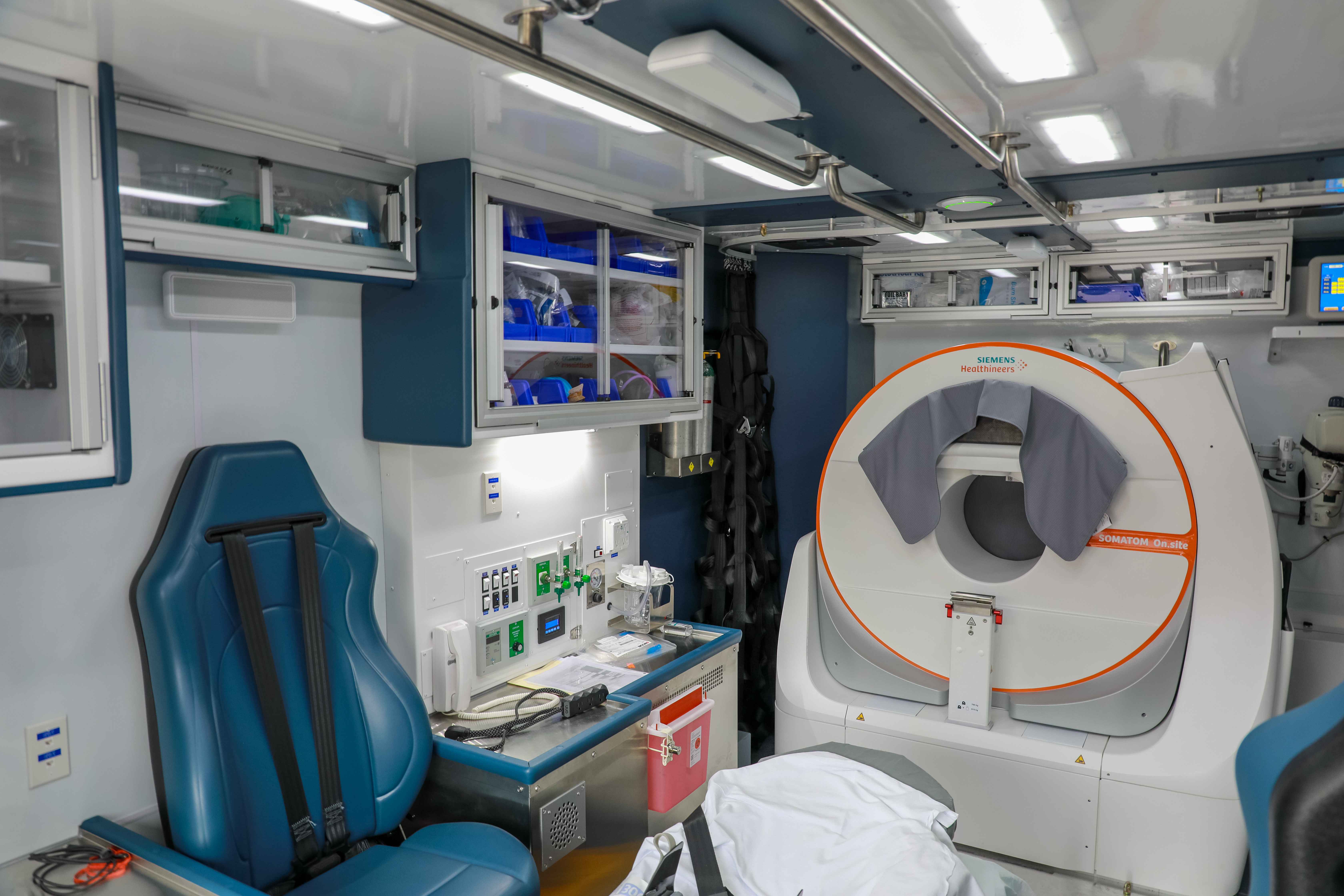
Over more than five years of operation, the MSU has had a measurable impact. The unit has responded to 7,304 calls since 2019, accounting for about 10 percent of the region’s stroke patients. It has helped deliver treatment faster, including a 60-minute time savings for patients who receive clot-busting medication in the MSU compared with those transported to the hospital for treatment. Earlier intervention is associated with better outcomes, including higher rates of independence and discharge home.
URochester Medicine and AMR will continue to staff and operate one unit, with the original MSU serving as a backup to ensure uninterrupted service during maintenance or downtime.
Support from and partnership with the community
The new MSU is possible because of philanthropic support from the Leenhouts Family, the Del Monte Family, the Mother Cabrini Health Foundation, and other generous donors. “We are deeply grateful for their generosity and belief in this mission,” said Webster Pilcher, MD, PhD, chair of the Department of Neurosurgery. “Their gift will save lives and improve outcomes for thousands of families in our region.”
The MSU has also been central to outreach in communities at higher risk for stroke. Through partnerships with Action for a Better Community, Ibero American Action League, and Lifespan of Greater Rochester, the team has worked to reduce barriers to rapid treatment and improve stroke literacy. Since its inception in 2018, patients from at-risk communities have represented a disproportionately higher share of those treated by the MSU.
Stroke prevention and the importance of acting fast
Stroke is a medical emergency, and every second counts. Recognizing the signs using the acronym B.E.F.A.S.T.—balance loss, eyesight changes, face drooping, arm weakness, speech difficulty, and time to call 911—can save lives.
Individuals can reduce their stroke risk by controlling blood pressure, staying physically active, lowering cholesterol, eating a healthy diet, quitting smoking, drinking in moderation, maintaining a healthy weight, managing diabetes, and reducing stress.
“Stroke is unforgiving, so recognizing the warning signs and calling 911 immediately can change the outcome in a matter of minutes,” said neurologist Curtis Benesch, MD, MPH, with the Comprehensive Stroke Center. “The faster people act, the faster we can diagnose, treat, and protect brain function.”
World-class Stroke Treatment & Prevention Programs
Understanding how stress influences stroke risk is one piece of your overall health strategy. Learn more about stroke prevention, diagnosis, and treatment—including the region’s only Comprehensive Stroke Center—and read recovery stories from real patients.
Connect with us!





Author
