

Panic Attacks vs. Heart Attacks: Understanding the Differences
Key Takeaways
- Panic attacks and heart attacks can share symptoms like chest pain, rapid heartbeat, and shortness of breath; but their causes are different.
- Panic attack symptoms come on suddenly and often improve with calming techniques while heart attack symptoms tend to persist or worsen over time.
- Heart attacks may also include arm, back, stomach, or jaw pain.
- If chest pain lasts more than a few minutes or worsens, or doesn’t improve with rest, call 9-1-1 right away. When in doubt, seek care.
Can a panic attack feel like a heart attack? Oftentimes, yes. Panic attacks are alarming because the symptoms can mirror a life-threatening heart attack.
“It can be frightening because both conditions can bring chest pain, rapid heartbeat, and shortness of breath, and you can’t be sure what is happening,” said Andrew Mathias, MD, of University of Rochester Medicine Cardiac Care.
That’s why it’s important to understand the differences between the two and when to seek appropriate medical care.
What does a panic attack feel like?
Panic attacks are sudden, intense episodes of fear or overwhelming anxiety that can peak within minutes. Although some call them anxiety attacks, panic attacks are different from generalized anxiety.
They occur in response to stress, fear, or a specific trigger, but they can also come unexpectedly. They are more common in individuals with anxiety disorders but can happen to anyone.How to calm down from a panic attack
Ranging from grounding methods to breathing techniques, there are many ways to respond to a panic attack to help reduce symptoms and calm your body down.
During a panic attack, you may feel:
- Chest pain or discomfort
- Rapid heartbeat
- Shortness of breath
- Sweating
- Trembling or shaking
- Feeling of choking
- Nausea or abdominal distress
- Dizziness or lightheadedness
What does a heart attack feel like?
A heart attack (myocardial infarction) occurs when blood flow to a part of the heart muscle is blocked, usually by a blood clot. This blockage prevents oxygen from reaching the heart. Symptoms can vary, but commonly include:
- Chest pain or pressure
- Ache in jaw or jaw pain
- Arm, back, or neck pain or discomfort
- Stomach pain or discomfort
- Shortness of breath
- Cold sweats
- Nausea
- Light-headedness or dizziness
Heart attacks are medical emergencies and require immediate treatment. If you suspect a heart attack, call 9-1-1 immediately.
How to tell the difference
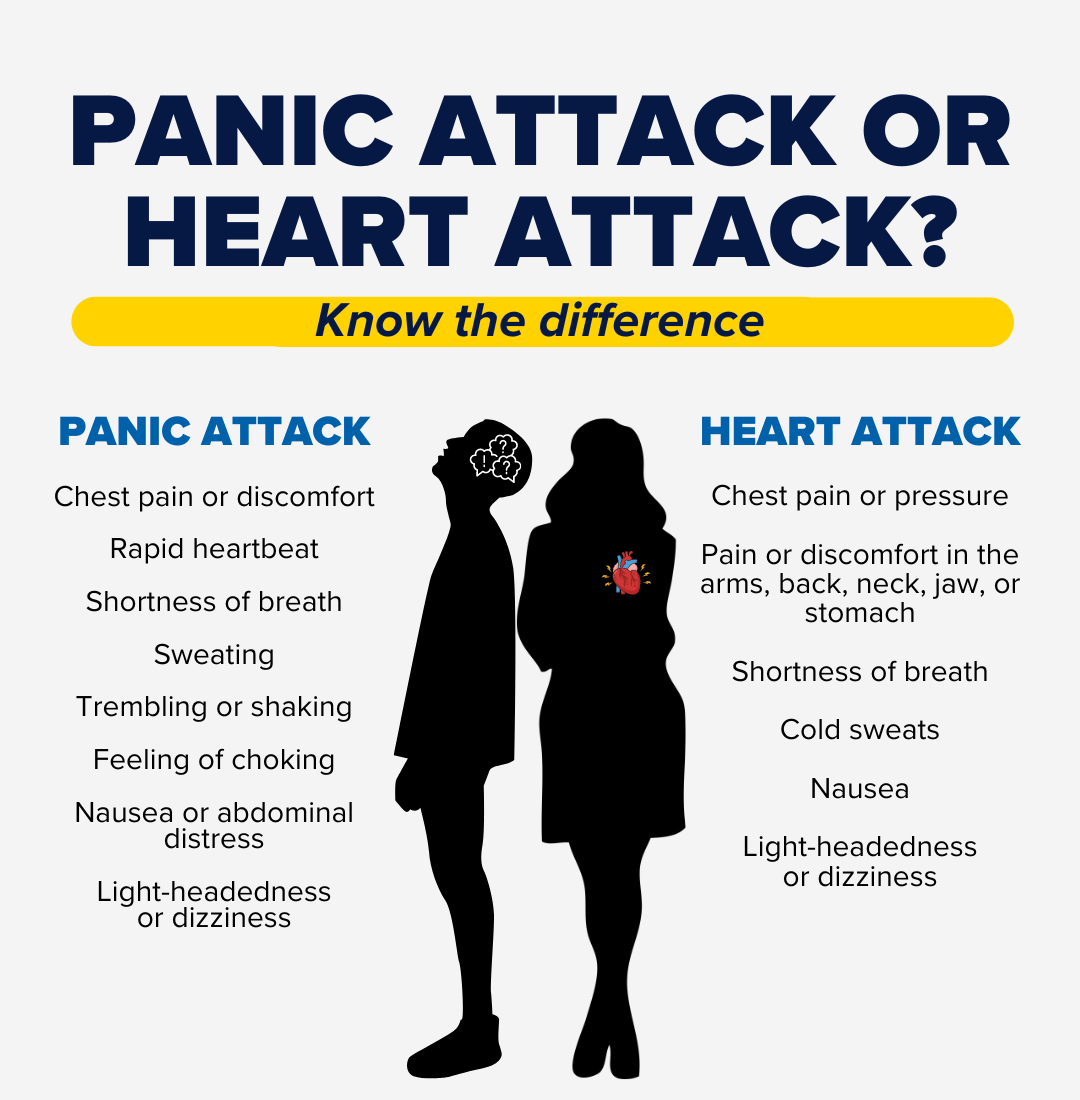
Onset: Panic attacks start suddenly and peak within minutes. Heart attack symptoms often begin gradually and intensify.
Duration: Panic attack symptoms typically fade within 20–30 minutes. Heart attack symptoms last longer and do not go away without medical treatment.
Triggers: Panic attacks can be triggered by specific situations or thoughts, while external factors do not lead to heart attacks.
- Response to Medication: Panic attacks may subside after anti-anxiety medications, whereas heart attacks require immediate medical care, such as clot-busting drugs or procedures to restore blood flow to the heart.
Get Heart Care in Rochester
University of Rochester Medicine leads the region in the number and scope of specialized services we offer. Our heart failure, heart transplant, and cardio-oncology programs are unique in this region. We are here to ensure that you get the very latest treatment for a wide range of cardiac care issues.
Connect with us!





Author
