Stroke Prevention
Suspect a Stroke? Call 911 immediately.
A stroke is a medical emergency where every second counts. A stroke results from the blockage (ischemic stroke) or bursting (hemorrhagic stroke) of blood vessels to the brain. This means not enough oxygen reaches brain tissue, so brain cells begin to die. As this happens, patients experience loss of function/malfunction of that region of the brain.
Each year in the United States, there are close to 800,000 strokes. Stroke is the fifth leading cause of death in the country. And stroke causes more serious long-term disabilities than any other disease. Nearly three-quarters of all strokes occur in people over the age of 65 and the risk of having a stroke more than doubles each decade after the age of 55.
For African Americans, stroke is more common and more deadly — even in young and middle-aged adults — than for any ethnic or other racial group in the United States. Learning about stroke can help you act in time to save a co-worker, friend, or relative. And making changes in your lifestyle can help you prevent stroke.
Stroke in Our Community
Rochester’s urban population is 37.5% Black and 19.9% Hispanic. Approximately 33% of Rochester residents live below the poverty line, associated with increased stroke severity at presentation. The county population over age 65 increased from 14% to 18.9% from 2010-2022.
By the Numbers
2x
Stroke kills twice as many African Americans as Caucasians, with more severe and disabling effects
5th
Leading cause of death in the United States, affecting more people and communities of color
55+
Age at which stroke risk doubles each decade after age 55
Every Second Counts
Don't Wait: Learn the Signs and Act F.A.S.T.
Hear Carlos Santana speak about stroke being the fourth leading cause of death for Hispanic men living in the United States and how to act quick with the UR Medicine Mobile Stroke Unit.
Know the Signs
Recognizing stroke symptoms early can save a life. Use the F.A.S.T. method:
- Face drooping – One side of the face may droop or feel numb.
- Arm weakness – Inability to lift one arm or sudden numbness.
- Speech difficulty – Slurred or garbled speech.
- Time to call 911 – Seek emergency help immediately.
Reduce Your Risk
While family history of stroke plays a role in your risk, there are many risk factors you can control. Here are steps you can take today to reduce your risk of stroke:
- Reduce high blood pressure
- Exercise regularly
- Lower cholesterol
- Eat healthy food
- Quit smoking
- Drink in moderation
- Maintain a healthy weight
- Manage diabetes
- Avoid extreme stress
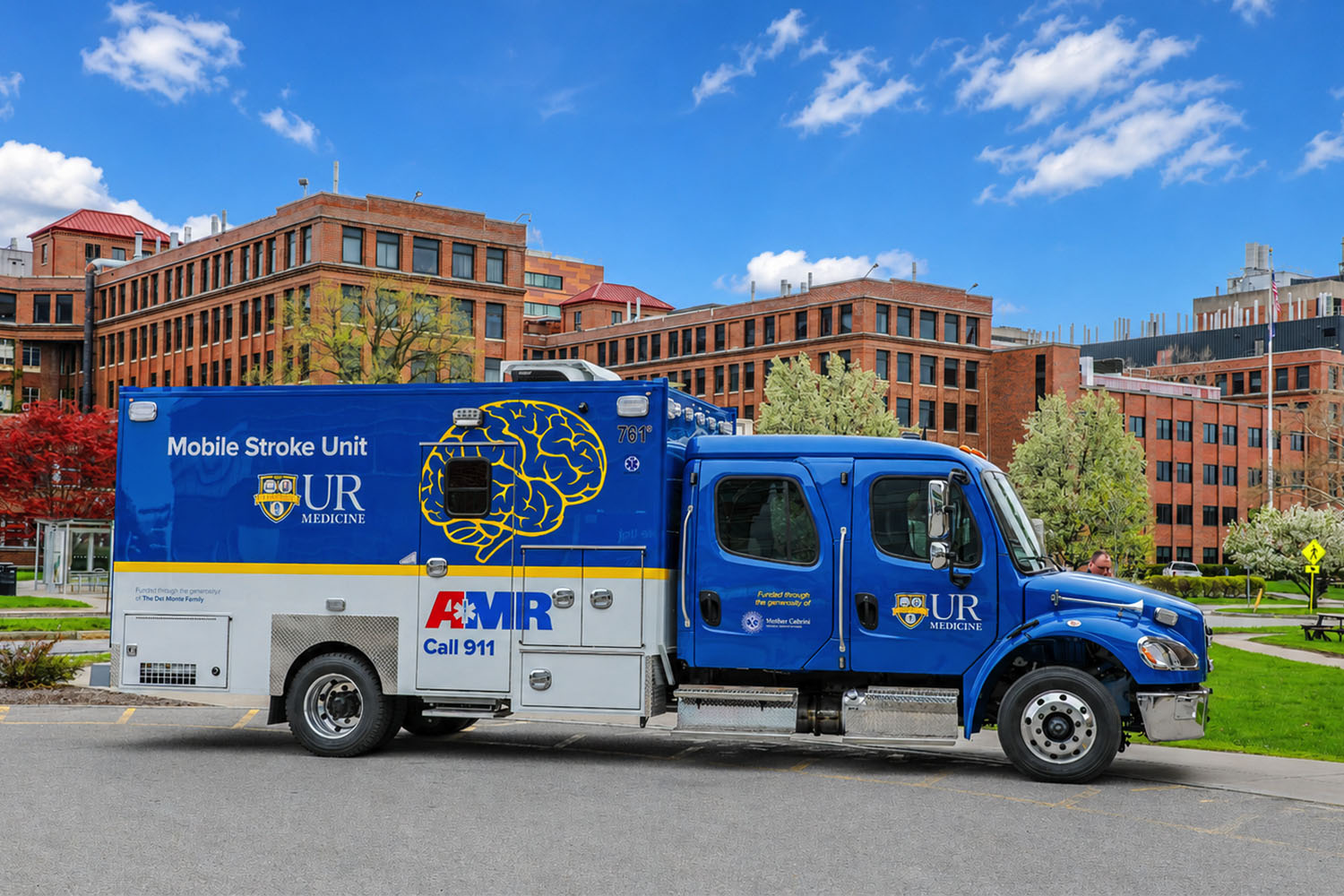
Life Saving Stroke Care in Minutes
The University of Rochester Medicine Mobile Stroke Unit (MSU) is the region’s only ambulance dedicated to stroke care. Unlike a traditional ambulance, it is equipped with a CT scanner to diagnose strokes and can provide specific treatments before reaching the hospital.