
Wilmot Cancer Institute Scientific Symposium
Join us for the 31st annual Wilmot Cancer Institute Scientific Symposium on Thursday, November 5, 2026, at the Class of ’62 Auditorium, University of Rochester Medical Center.
This annual event brings together investigators, clinicians, trainees, and staff to highlight advances in basic, translational, clinical, and community-engaged cancer research. The symposium provides a forum for scientific exchange, collaboration, and recognition of outstanding research across the Wilmot community. 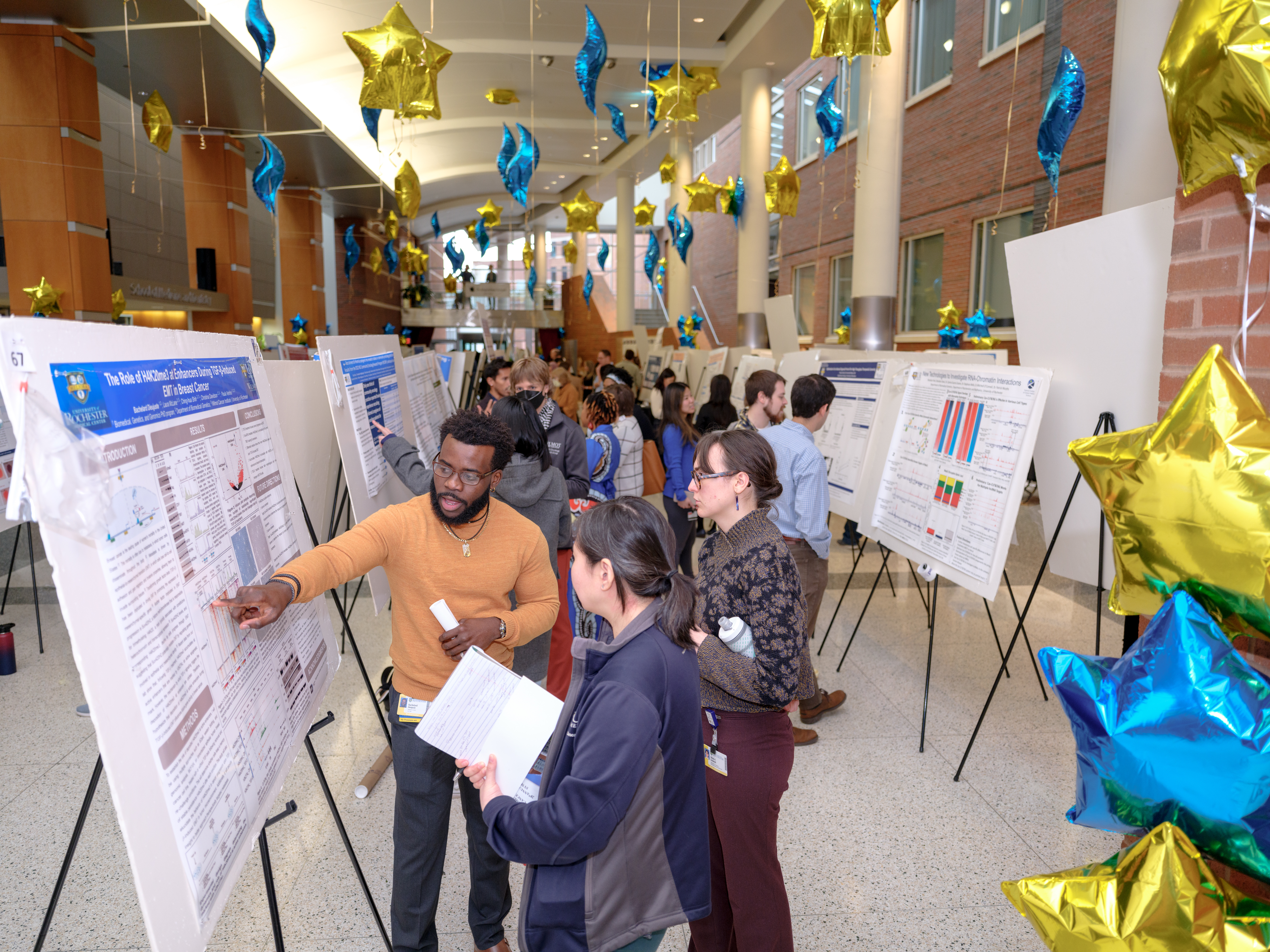
Register for the 2026 Wilmot Cancer Institute Scientific Symposium!
Event Details
- Date: Thursday, November 5, 2026
- Location: Class of ’62 Auditorium, University of Rochester Medical Center
- Audience: Faculty, trainees, students, and staff engaged in cancer research
For questions, please contact: Nicole O’Dell
2026 Keynote Speaker
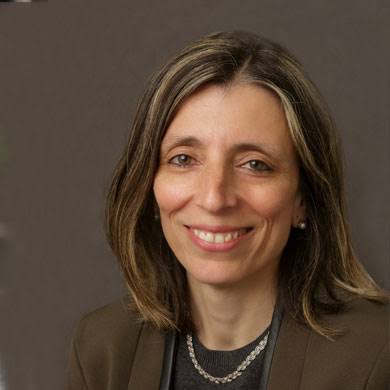
Stavroula Kousteni, PhD, is the Edward P. Evans Professor of Physiology and Cellular Biophysics and the Director of the Edward P. Evans Center for Myelodysplastic Syndromes at Columbia University. An internationally recognized expert in hematologic malignancies, Dr. Kousteni studies the complex interactions between blood-forming stem cells and the bone marrow microenvironment, focusing specifically on myelodysplastic syndromes (MDS) and acute myeloid leukemia (AML).
The Kousteni laboratory investigates how aging and changes within the bone marrow niche can promote the expansion of pre-malignant stem cells, contributing to the development, progression, and treatment resistance of MDS and AML. Her team employs genetic models, genomic and transcriptomic approaches, and single-cell technologies to understand the molecular signals exchanged between malignant cells and their surrounding environment. By identifying pathways within the bone marrow microenvironment that support cancer development and progression, her research aims to uncover new therapeutic strategies to prevent the transformation to AML and to address resistance to existing treatments.
2026 Scientific Abstract Competition
The Wilmot Cancer Institute invites students, trainees, fellows, faculty, and staff from the University of Rochester to submit abstracts for the 2026 Wilmot Cancer Institute Scientific Symposium Abstract Competition. We welcome abstracts that describe research in basic, translational, clinical, prevention and control, or community-engaged cancer research. In this context, cancer-related research can be interpreted broadly.
Research Categories
Please select the research category that best represents the primary focus of your abstract. Research that spans multiple disciplines is welcome; however, each abstract may only be submitted to one category.
- Genetics, Epigenetics, and Metabolism
- Cancer Microenvironment
- Cancer Prevention, Control, and Community Engagement
- Clinical Research
Abstract Submission Requirements
Submissions must include:
- All authors and their institutional affiliations
- Research category
- Abstract title
- Introduction
- Methods
- Results
- Conclusions
The combined Introduction, Methods, Results, and Conclusions may not exceed 2,600 characters, including spaces. The abstract title, author names, and institutional affiliations are not included in the character limit.
Selection Process
Following the submission deadline, abstracts will be reviewed by Wilmot Research Program Leaders. One abstract from each research category will be selected for an oral presentation during the symposium. All other accepted abstracts will be invited to participate in the scientific poster competition during the symposium.
Important Dates
Abstract Submission Deadline: Monday, September 14, 2026
Notification of Oral Presentations: Monday, September 28, 2026
Click here to submit your abstract. Questions about the abstract competition or submission process may be directed to Nicole O'Dell.
Agenda
The full symposium agenda, including session times and speakers, will be available closer to the event date.
About the Symposia
The Wilmot Cancer Institute Scientific Symposium is a cornerstone annual event that showcases the breadth and impact of cancer research across the University of Rochester. The symposium fosters collaboration across disciplines, supports trainee development, and highlights innovative approaches to cancer prevention, diagnosis, treatment, and survivorship.
Past Symposiums
2025 Symposium Highlights
- Keynote Speaker: Ashani Weeraratna, PhD, Bloomberg Distinguished Professor, E.V. McCollum Professor, and Chair of the Department of Biochemistry & Molecular Biology at Johns Hopkins School of Medicine.
- Davey Award Winner: Jonathan W. Friedberg, MD, MMSc, Samuel E. Durand Chair in Medicine - Department of Medicine (Hematology/ Oncology)
2024 Symposium Highlights
- Keynote Speaker: Jen Jen Yeh, MD, Professor of Surgery and Pharmacology at the University of North Carolina (UNC) at Chapel Hill.
- Davey Award Winner: Scott Gerber, PhD, Tumor Immunologist and Associate Professor in the Departments of Surgery, Microbiology and Immunology, and Radiation Oncology
2023 Symposium Highlights
- Keynote Speaker: Norman "Ned" Sharpless, MD, former director of the National Cancer Institute and professor of medicine, cancer policy, and innovation at UNC Lineberger Comprehensive Cancer Center in North Carolina
- Davey Award Winner: Karen Mustian, PhD, Associate Director for Population Science at Wilmot, leader of Wilmot’s Cancer Prevention and Control Research Program, and a Professor in the Department of Surgery
2022 Symposium Highlights
- Keynote Speaker: Jeffrey C. Rathmell, Ph.D., Cornelius Vanderbilt Professor of Immunobiology at Vanderbilt University Medical Center
- Davey Award Winner: Paula Vertino, Ph.D., Wilmot Distinguished Professor in Cancer Genomics
For more detailed information about past symposiums, including award recipients, please contact the CRTEC office.