
Educational Activities
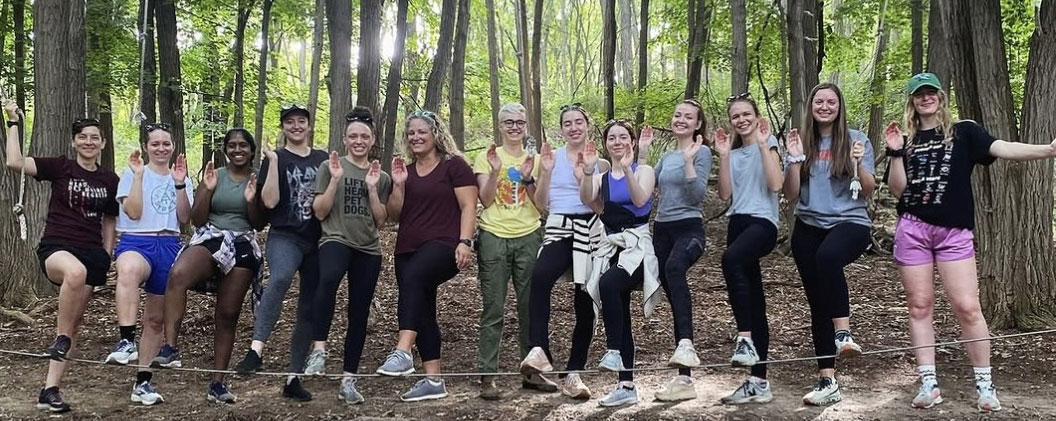
The curriculum is designed to help our residents progress successfully through the milestones of each core competency of residency training:
- Patient Care
- Medical Knowledge
- Practice-based Learning and Improvement
- Interpersonal and Communication Skills
- Professionalism
- Systems-based Practice
While you are in residency training, everything you experience is part of your education. In order to maximize your learning, we try to incorporate a variety of teaching modalities including lectures, group activities, clinical and sign-out rounds, problem-based learning, peer-to-peer teaching, simulation, multi- specialty conferences, tissue labs, and skills training.
Protected Didactic Time
Every Thursday morning is dedicated protected time for educational activities. Clinical work during this time is covered by attendings and advanced practice providers. The core curriculum of basic topics is derived from CREOG learning objectives with additional sessions based on identified needs from faculty and resident reports and group performance on the annual CREOG exams. We encourage our faculty to be creative in their lecture styles, and we incorporate hands-on simulation training at least once per month.
Grand Rounds
Weekly departmental grand rounds are held throughout the fall, winter, and spring. A variety of educational, research, and quality improvement topics are presented by guest speakers and university faculty. Our grand rounds presentations are hybrid events that are recorded for viewing on the URMC website. Once per month, Morbidity & Mortality Conference is presented by the PGY-4s focused on cases involving systems-based challenges.
In the summer months, residents are invited to give departmental grand rounds on a topic of their choice with the mentorship of a faculty member. Recent topics have included Self-Managed Abortion, PMOS Misinformation in online media, Pelvic Organ Prolapse Evaluation and management, Management of Urinary Tract Infection and Asymptomatic Bacteriuria in Pregnancy, and Inherited Genetic Mutations for Ovarian Cancer.
Quality Improvement & Patient Safety
All physicians share responsibility for promoting patient safety and enhancing quality of patient care. We have created a curriculum that provides not only education in quality improvement and patient safety, but also allows residents to engage in quality improvement activities. These activities include our newly revamped Morbidity and Mortality Conference, Ob/Gyn QA workgroup meetings, OB Inpatient clinical Operations, Root Cause Analysis (RCA) events, and Unit Based Performance Programs (UPP).
Simulation
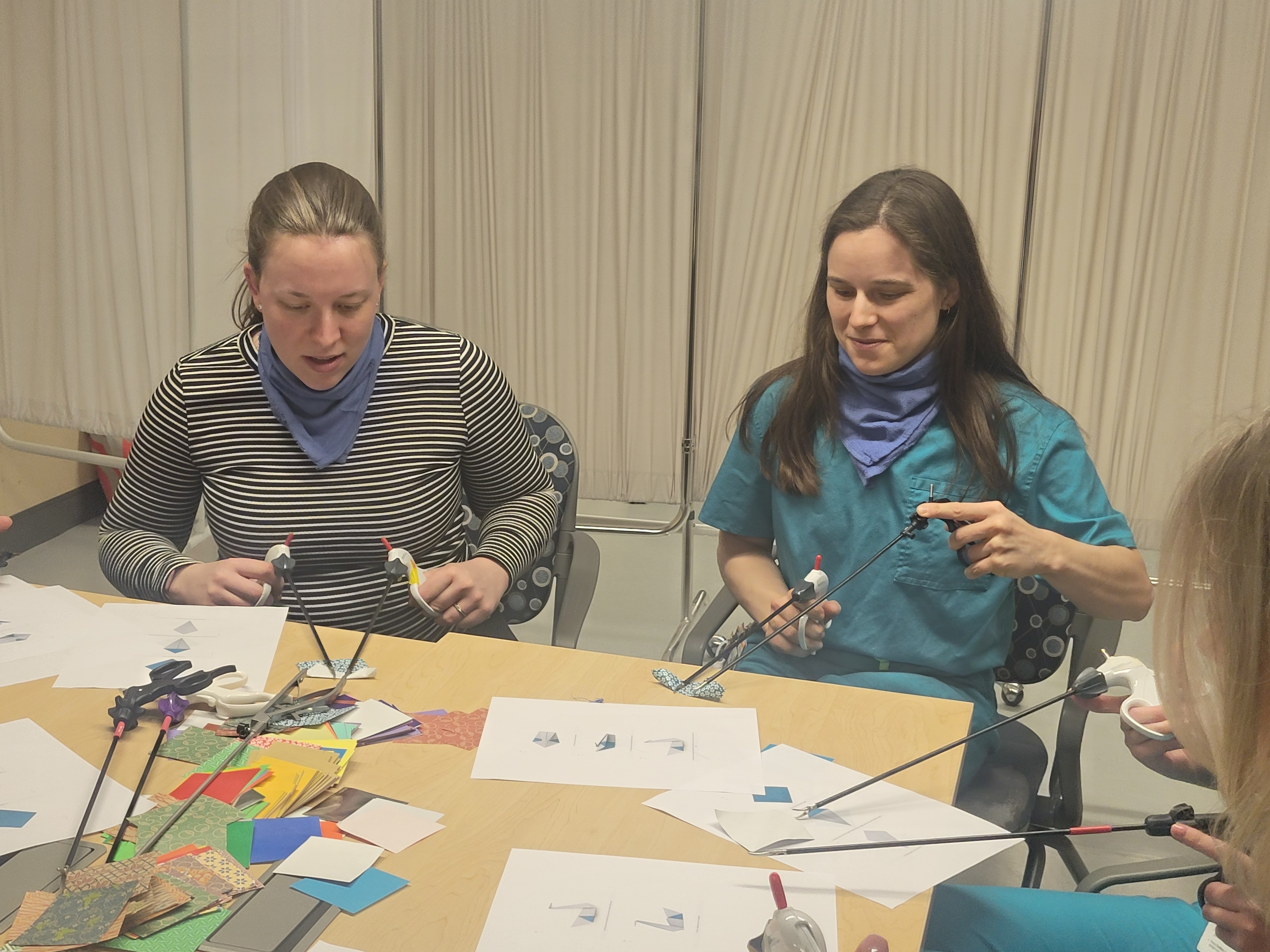
Residents participate in a variety of simulation activities over the course of their residency. These include intern boot camp, didactic simulation sessions, a yearly OB/GYN ultrasound day, and interdisciplinary simulation sessions like shoulder dystocia, postpartum hemorrhage and maternal codes. Dedicated time is built into the resident schedule for Vaginal Surgery Fundamentals, Essentials in Minimally Invasive Gynecologic Surgery, and our Robotic Simulation curriculum. The goal of these programs is to have every resident successfully pass their EMIGS exam in their second year and to have residents prepared to sit at the Robotic console and perform a complete hysterectomy at the beginning of their third year of residency.
 Resident Assembly
We encourage and require resident participation in the development and growth of our educational program. At quarterly Resident Assembly, all residents meet with program leadership to discuss these issues as a large group. (This provides an open forum to discuss what is working well and what isn’t and to brainstorm solutions together.) Two administrative residents are elected by their resident peers in each class, and their responsibilities include representing the residents at departmental and university meetings, making and monitoring the schedule, and assisting the program directors in the leadership of the program. The input and participation of our residents is key to the maintenance of an outstanding program.
Communication Coaching
Communication skills are fundamental to our medical skills and something that we work on over the course of our careers. Our department has a dedicated Communication Coach who all residents spend time with during their residency. The coaching includes observation of patient encounters, team rounding, and then one on one feedback.
 Resident Support Committee
Residency can be a challenging time. Our goal is to provide support to ensure you graduate well trained and healthy. We created a resident support committee (RSC) with the mission of employing a team-based strategy to provide residents with resources to achieve success as physicians and professionals. Taking a strengths-based, non-judgmental, and holistic approach to remediation, the RSC works to develop tailored plans in partnership with residents to foster accountability, personal growth, and professional success. Our vision is to create a learning environment in which all residents see a pathway to success, their role in that success, and their faculty's investment in and celebration of their success.
Wellness
Graduating healthy and balanced residents who are ready to take on the next step in their careers is a key feature of our program. We support our residents through a variety of activities and available resources that include GME efforts like discounted gym membership and social events, but also departmental driven events such as our resident retreats, faculty mentor program, and communication coaching. All residents have access to our Employee Assistance Program, and all residents and their families have access to our Behavioral Health Practice for any needed support during residency training.
Now I value my health and my overall wellbeing in addition to being a good resident. I think that's made me a happier person overall. I honestly would not have come to this conclusion if I didn't have faculty members and upper level residents who encouraged me to really take care of myself and sometimes put myself first. It makes a huge difference when you have a community of people who are invested in your health and happiness.