Pathways
The Department of Psychiatry encourages trainees to participate in supervised scholarly projects during their residency. All residents receive an annual professional stipend that can be used to fund their attendance at national meetings. Residents accepted to present at national meetings may apply for additional departmental funding.
For those who are committed to a career in academic psychiatry/medicine, the following pathways or options are also available.
Research Career Pathway
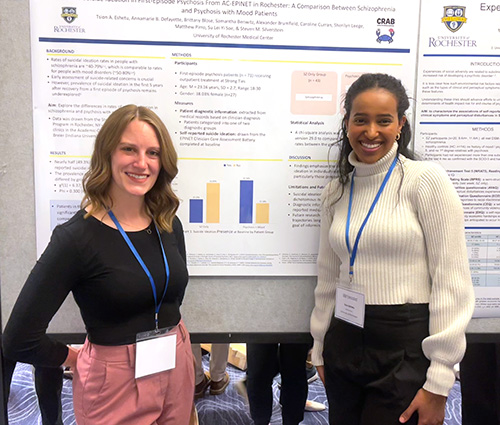
The University of Rochester Department of Psychiatry offers a structured Research Pathway for residents who are interested in pursuing scholarly work or building an independent research career alongside their clinical training. The pathway is open to any resident in the categorical program and can begin as early as PGY-1.
Residents in the pathway receive protected research time, named faculty mentorship, dedicated grant-writing seminars, and structured milestones from project conception through peer-reviewed publication and grant submission. Research interests span neuroscience, clinical trials, public health, implementation science, and more, supported by active, extramurally funded labs across URMC's Department of Psychiatry and affiliated departments.
Learn more about the pathway structure, mentorship model, funding opportunities, current residents, and how to get involved,Visit the Research Pathway page.
Questions? Contact the Associate Directors of Research Education:
Paulo Lizano, MD, PhD, and Meredith Gansner, MD

Clinician Educator Pathway
This Clinician Educator Pathway is designed to cultivate future leaders in medical education by providing psychiatry residents with structured training, mentorship, and practical teaching experience. Participants will develop advanced pedagogical skills, contribute to the educational mission of the department, and engage in scholarly work in medical education.
All pathway residents are invited to quarterly dinner meetings with pathway faculty and mentors featuring discussions on educational topics, as well as opportunities to foster collaboration and professional growth. These meetings bring together a community of like-minded educators, both residents and faculty, to share experiences and develop their skills as educators.
Clinician Educator Pathway Features:
PGY - I:
- Application: Residents interested in the pathway will submit an application during the winter of their PGY-I year.
- The application will include a CV, a personal statement outlining their interest in medical education, and a proposal for an educational project they would like to pursue during their residency. This project should demonstrate an understanding of educational principles and a clear objective. Examples include curriculum development, assessment design, innovative teaching methods, or educational research

PGY- II:
- Medical Education Didactic Series: Beginning in August of their PGY-II year, residents in the Psychiatry Clinician Educator Pathway will engage in an intensive two-week Medical Education Didactic Series. This program is led by expert clinician educators from the fields of medicine, neurology, pediatrics, and psychiatry, and includes participation alongside residents from these specialties.
- Psychopharmacology Teaching: Pathway residents will gain hands-on teaching experience by instructing Psychiatry Clerkship students on Psychopharmacology. This will provide a foundational opportunity to apply didactic learning in a practical setting.
- Peer Teaching Feedback: To enhance teaching skills, residents will receive constructive feedback on their teaching from peers and faculty using a standardized Peer Teaching Feedback assessment. They will also be expected to provide similar feedback to other residents participating in the pathway, fostering a supportive learning community.
PGY- II and III:
- Assigned Mentorship: Each pathway resident will be paired with an assigned faculty mentor. Mentors will be selected based on their expertise and alignment with the resident's proposed educational project and target learners (e.g., medical students, junior residents, interprofessional teams).
- Educational Project Development: Residents will work closely with their mentors to develop and implement their proposed educational project.
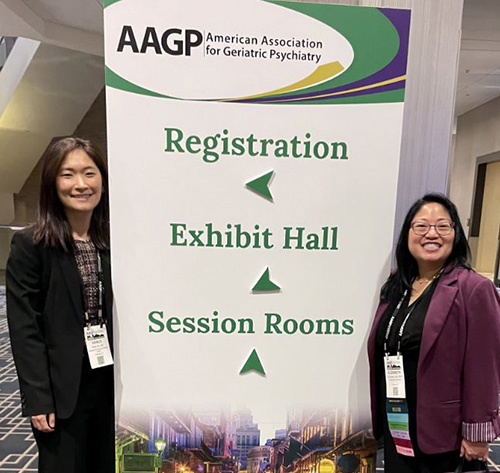
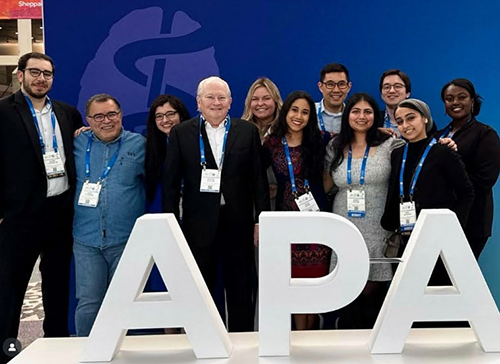
- Conference Presentation: Residents will be expected to submit an abstract based on their educational project to a national conference relevant to medical education or psychiatry and present before the end of their training.
PGY-IV:
- Problem Based Learning (PBL) Tutor: As with all PGY-IV residents, pathway participants will serve as PBL Tutors in the Mind, Brain, and Behavior (MBB) course for medical students.
- Additional Teaching Responsibilities: Beyond the standard PBL tutoring, pathway residents will take on additional teaching responsibilities tailored to their interests and the program's needs. This could include leading small group sessions, developing and facilitating lab exercises, or delivering lectures.
- Clinician Educator Mentorship: Pathway residents may also be paired with a more junior resident (e.g., a PGY-I applying to the pathway) to act as their Clinician Educator Mentor, guiding them through the initial stages of their own educational project and pathway participation.
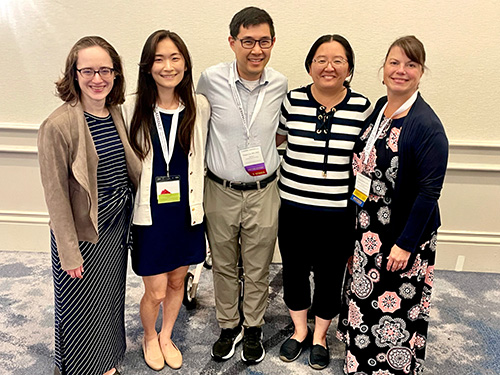
This pathway offers a comprehensive and progressive approach to developing skilled medical educators, providing residents with the tools, experience, and mentorship needed to excel in academic psychiatry.
Advanced Degree Opportunity
URMC residents have a unique opportunity to pursue advanced degrees through University of Rochester-affiliated programs, further enriching their educational experience. Despite the rigorous nature of our residency, many have successfully utilized the tuition benefit, which currently covers 95% of tuition costs (up to two courses per semester) and offers flexible timelines to fit the demands of training. In recent years, several psychiatry residents have completed master’s degrees in Education, Medical Management, Health Humanities & Bioethics, family therapy and systemic approaches.