
Thesis/Defense Presentations
Thesis/Defense Presentations
"Substance P as a neuromodulator in the mouse accessory olfactory bulb" - Thesis Proposal
Joanne Chiu - PhD Candidate
Oct 21, 2026 @ 9:30 a.m.
Medical Center | 2-6424 SMD Large Auditorium
Host: Advisor: Julian Meeks, PhD
"Translating a Rodent Paradigm to Virtual Reality to Understand Human Approach-Avoidance Conflict" - Thesis Proposal
Skylar DeWitt-Batt - PhD Candidate

Oct 08, 2026 @ 1:00 p.m.
Medical Center | 1-7619 Adolph (Lower) Auditorium
Zoom EventHost: Advisor: Benjamin Suarez-Jimenez, PhD
"From Absolute Time to Linguistic Structure: Mapping the Transition of Neural Integration in Speech" - Thesis Proposal
Pavel Rjabtsenkov - PhD Candidate
Oct 01, 2026 @ 12:40 p.m.
Medical Center | Lower Adolph Aud. (1-7619)
Zoom LinkHost: Advisor: Samuel V. Norman-Haignere, PhD
"Balancing the (Time) Scales of Feature-Based Attention An Examination of Biased Competition of Visual Features in Humans and Non-Human Primates" - Thesis Proposal
Alesandra Martin - PhD Candidate
Sep 30, 2026 @ 12:00 p.m.
Medical Center | Upper Auditorium (3-7619)
Host: Advisors: Farran Briggs, PhD and Ian Fiebelkorn, PhD
"Investigating Retinal and Cortical Contributions to Adult Primate Gaze Stabilization" - Thesis Proposal
Yunshan Cai - PhD Candidate
Sep 28, 2026 @ 9:30 a.m.
Medical Center | K307 (3-6408)
Host: Advisor: Sara Patterson, PhD
"Identifying biomarkers for early Parkinson’s disease with cognitive-motor interactions" - Thesis Proposal
Emma Bryson - PhD Candidate
Sep 25, 2026 @ 9:00 a.m.
School of Medicine and Dentistry | SMD Lg. Aud. (2-6424)
Hybrid EventHost: Advisors: John Foxe, PhD and Edward Freedman, PhD
"An acute exercise intervention to ameliorate behavioral and neurophysiological indices of inhibitory control deficits in schizophrenia: A Mobile Brain/Body Imaging (MoBI) study" - Thesis Defense
Victoria Popov, MS - PhD Candidate
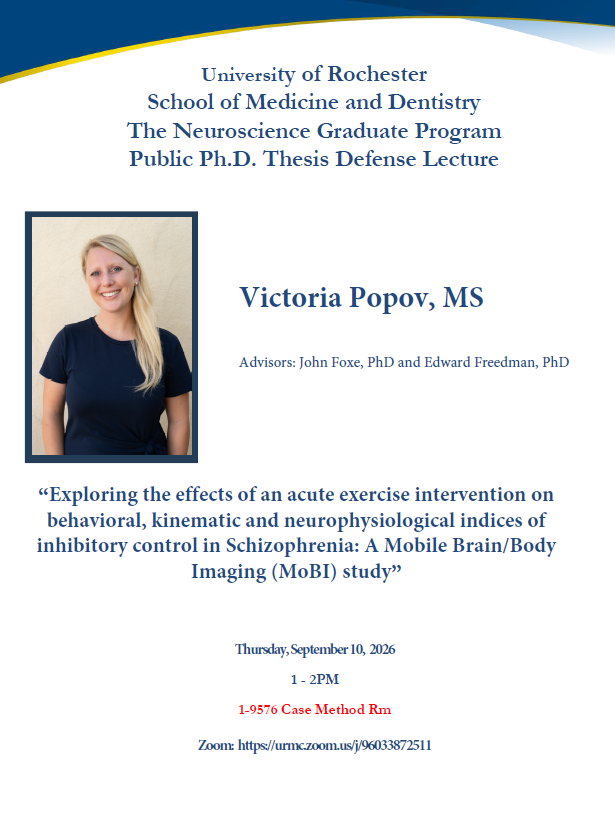
Sep 10, 2026 @ 1:00 p.m.
Medical Center | Case Method Room (1-9576)
Hybris Event"Neural Circuits in Painful Temporomandibular Joint Disorder (TMD)" - Thesis Proposal
Caleb Mahlen - PhD Candidate
Sep 03, 2026 @ 9:00 a.m.
Medical Center | Ryan Case Method Rm (1-9576)
Host: Advisor: Paul Geha, MD
"SEZ6L2 regulates synaptic connectivity by inhibiting complement-mediated pruning during neurodevelopment" - Thesis Defense
Julia Granato, MS - PhD Candidate
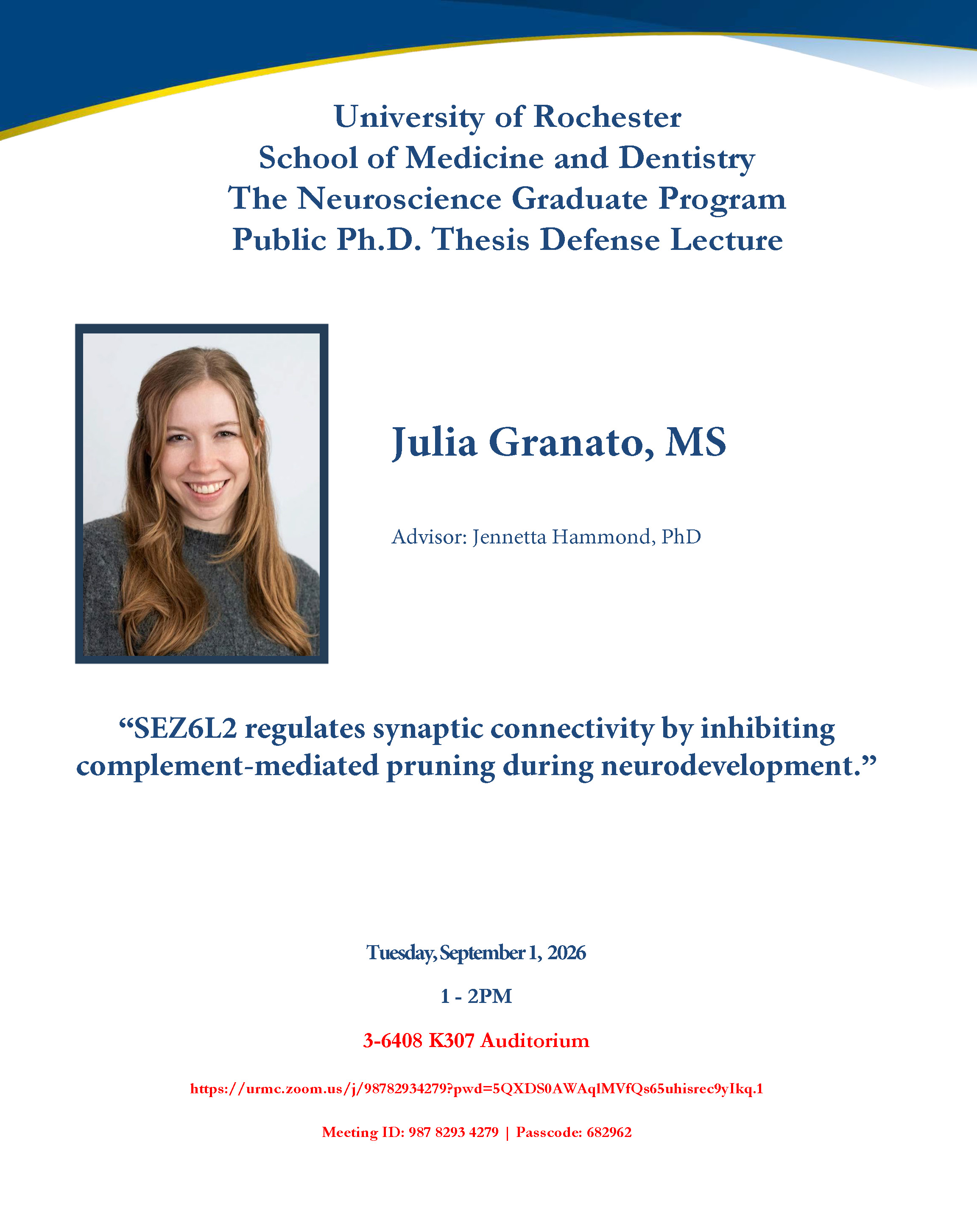
Sep 01, 2026 @ 1:00 p.m.
Medical Center | K307 (3-6408)
Hybrid Event"Transglutaminase 2 Deletion Attenuates Chronic Pathology Following Repetitive Mild Traumatic Brain Injury in Association with Enhanced Astrocyte-to-Neuron Metabolic Support" - Thesis Defense
Thomas Delgado, MS - PhD Candidate
Following injury, astrocytes take on reactive phenotypes that grade from neurotoxic to neuroprotective, which impact subsequent neuronal recovery processes, such as axonal regeneration. Little is known about the contextual requirements and molecular inflection points that underlie these graded responses. Accumulating data from our lab suggests that one of these inflection points is transglutaminase 2 (TG2). TG2 is a functionally versatile protein— a biological “swiss-army knife”— that has well-established roles across cellular compartments, including the nucleus where it can enzymatically modify and serve as a protein scaffold with chromatin-regulatory proteins. Previous findings by our lab show that TG2 regulates gene expression changes in astrocytes in in vitro and in vivo mouse models of CNS injury and influences overall pathological outcomes. Our lab has shown that deletion of TG2 improves astrocyte protection of neurons from oxygen-glucose deprivation (OGD) in a cell co-culture model and improves the ability of astrocytes to promote neurite outgrowth of co-cultured neurons on an injury-relevant, growth-inhibitory matrix. Further, astrocyte-specific TG2 deletion improves motor function recovery in a mouse spinal cord injury model consistent with attenuated astrocyte pathology around the injury site. Our recent data suggest that these functional differences in astrocytes are associated with proteomic and metabolomic signatures indicative of greater metabolic flexibility under stress.
We hypothesize that astrocytic TG2 acts as a transcriptional co-regulator that restricts stress-responsive metabolism, thereby limiting astrocyte-mediated support of axonal regeneration and resolution of pathological oxidative stress following CNS injury. To interrogate this hypothesis in vivo, we used a weight-drop model of repetitive, mild traumatic brain injury (rmTBI) for wild type and global TG2 knockout mice. mTBI is one of the most common forms of CNS injury and is characterized by diffuse axonal injury and persistent metabolic dysfunction and oxidative stress. This model allowed us to monitor pathological progression through multiparametric MRI as well as analyze and integrate proteomic, metabolomic, and epigenetic changes in isolated cortical astrocytes. Twenty-eight days post-injury, TG2 knockout mice show marked attenuation of TBI pathology through functional and diffusion MRI as well as reduced astrogliosis across TBI-vulnerable brain regions through immunohistochemistry. Consistent with our hypothesis, metabolomics and proteomics of astrocytes isolated from wild type mice show an injury-induced metabolic restriction, which is attenuated in isolated TG2 knockout astrocytes. Together, these studies identify TG2 as a key molecular brake on astrocyte metabolic adaptation following CNS injury and provide a foundation for future studies using astrocyte-specific TG2 deletion and pharmacological TG2 inhibition to evaluate therapeutic potential in TBI.
Jun 05, 2026 @ 9:00 a.m.
Medical Center | 1-9576 Ryan Case Method Rm.
Zoom LinkHost: Advisor: Gail Johnson, PhD
"Multimodal Markers of Visual Working Memory During an Upper Extremity Movement-Coupled Task in Parkinson's Disease With and Without Deep Brain Stimulation" - Thesis Defense
Jeehyun Kim, MS - PhD Candidate
Apr 29, 2026 @ 9:00 a.m.
Medical Center | K307 (3-6408)
Host: Advisors: John Foxe, PhD and Edward Freedman, PhD
The role of microglia in shaping neural development in the macaque amygdala - Thesis Defense
Dennisha P. King, MS - PhD Candidate
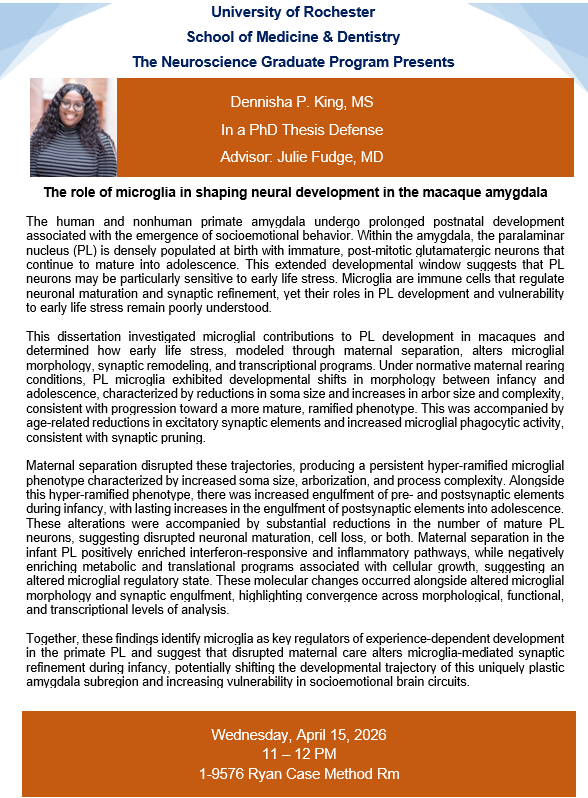
Apr 15, 2026 @ 11:00 a.m.
Medical Center | 1-9576 Ryan Case Method Rm.
Host: Advisor: Julie Fudge, MD
Movin’ & Groovin’: Characterizing Cognitive-Motor Interactions in Children and Young Adults with and without an Autism Spectrum Diagnosis using Mobile Brain-Body Imaging - Thesis Defense
Paige Nicklas, MS - PhD Candidate
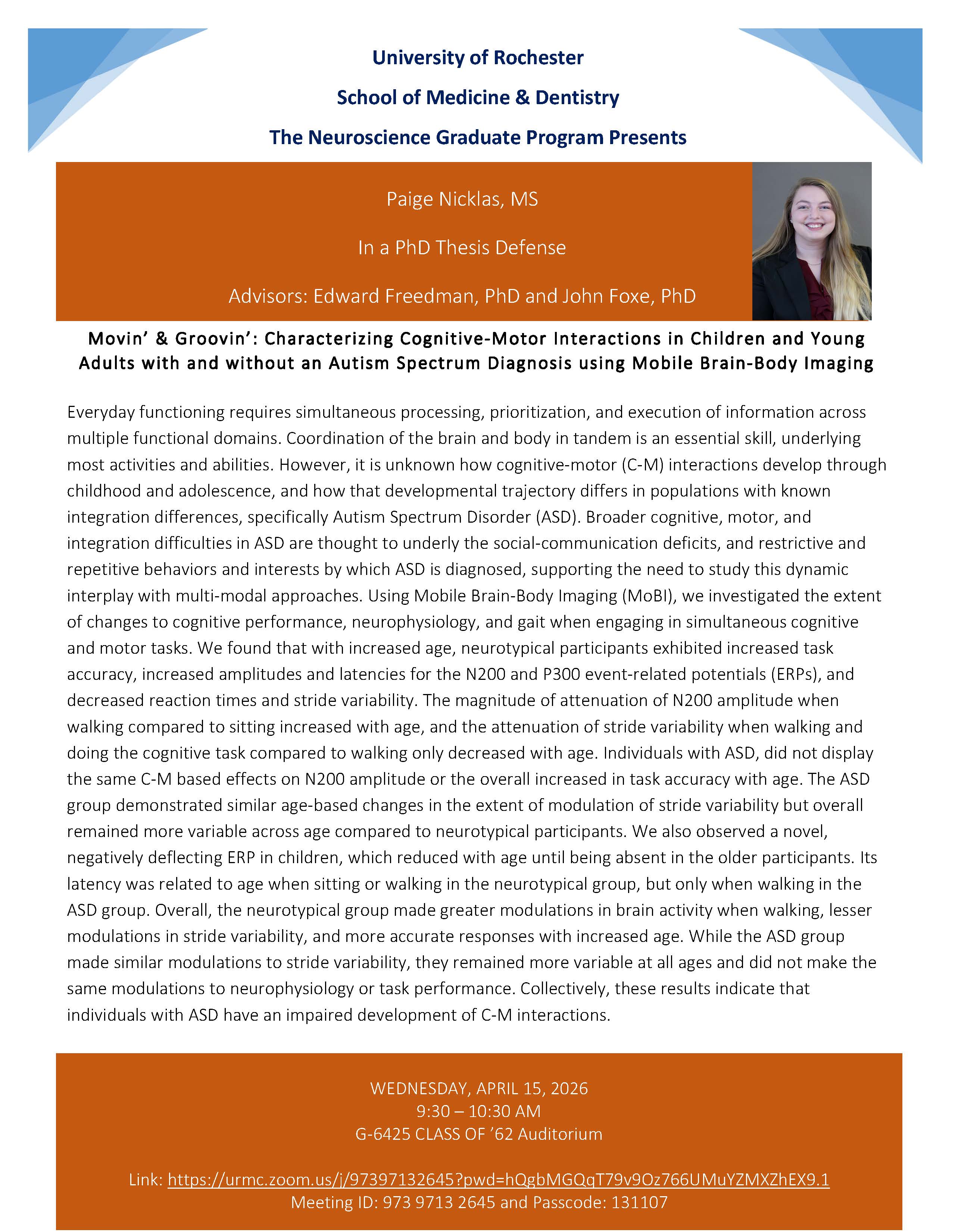
Apr 15, 2026 @ 9:30 a.m.
School of Medicine and Dentistry | Class of '62 Auditorium
Hybrid EventHost: Advisors: Edward Freedman, PhD and John Foxe, PhD
"The Role of MAP2K4 and MAP2K7 in Glaucoma-Relevant Retinal Ganglion Cell Death" - Thesis Defense
Sarah Yablonski, MS - PhD Candidate
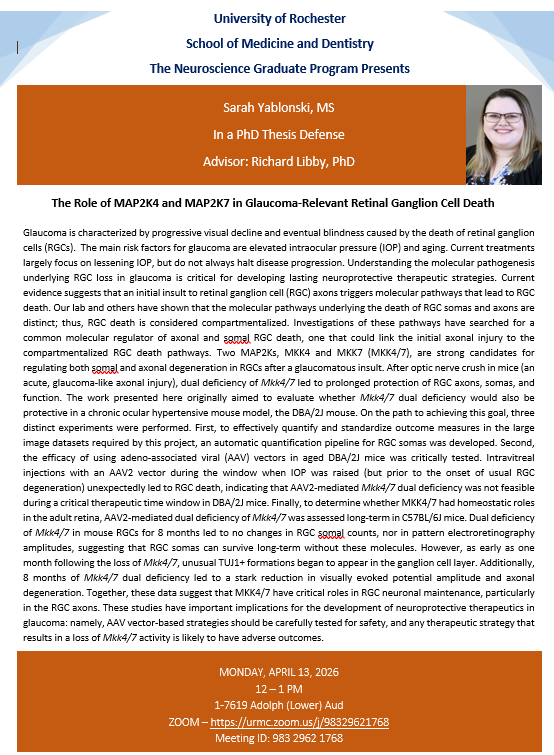
Apr 13, 2026 @ 12:00 p.m.
Medical Center | Lower Adolph Aud. (1-7619)
Hybrid EventHost: Advisor: Richard Libby, PhD
Vibrotactile feature encoding in distinct neuronal subtypes of primary somatosensory cortex - Thesis Defense
Michael DuHain, MS - PhD Candidate
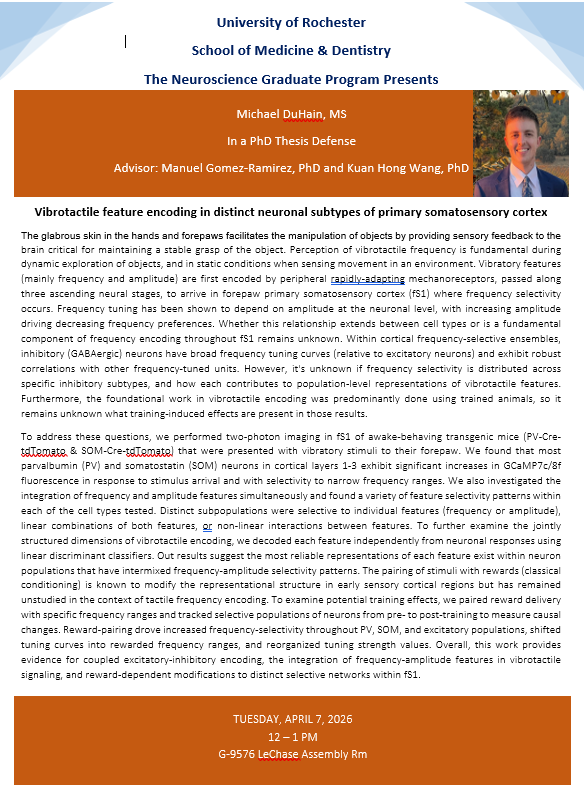
Apr 07, 2026 @ 12:00 p.m.
Medical Center | G-9576 LeChase Assembly Rm.
Host: Advisors: Manuel Gomez-Ramirez, PhD and Kuan Hong Wang, PhD
Effect of retrograde degeneration on parallel pathways in the ferret LGN after V1 damage - Thesis Proposal
Nicole Popp - PhD Candidate
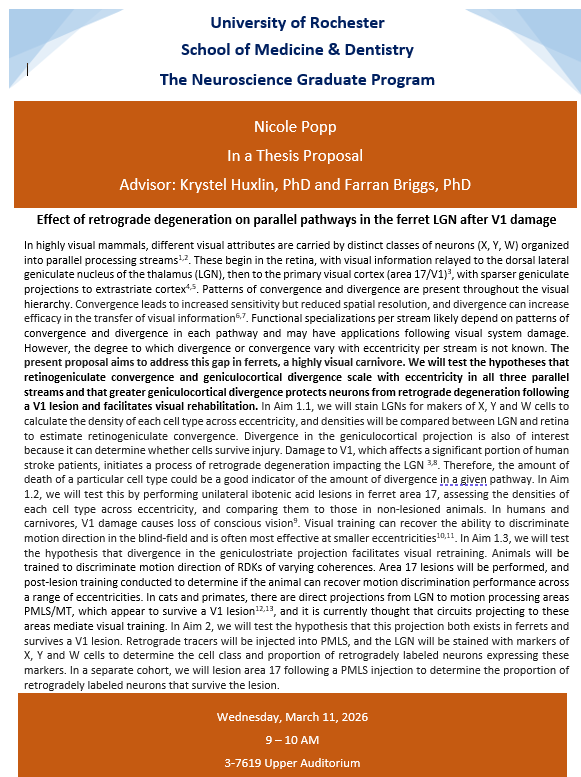
Mar 11, 2026 @ 9:00 a.m.
Medical Center | 3-7619 Upper Auditorium
Host: Advisors: Krystel Huxlin, PhD and Farran Briggs, PhD
"Dissociating Adaptive from Maladaptive Language Network Reorganization in Patients with Glioma" - Thesis Proposal
Emma Strawderman, BS - PhD Candidate
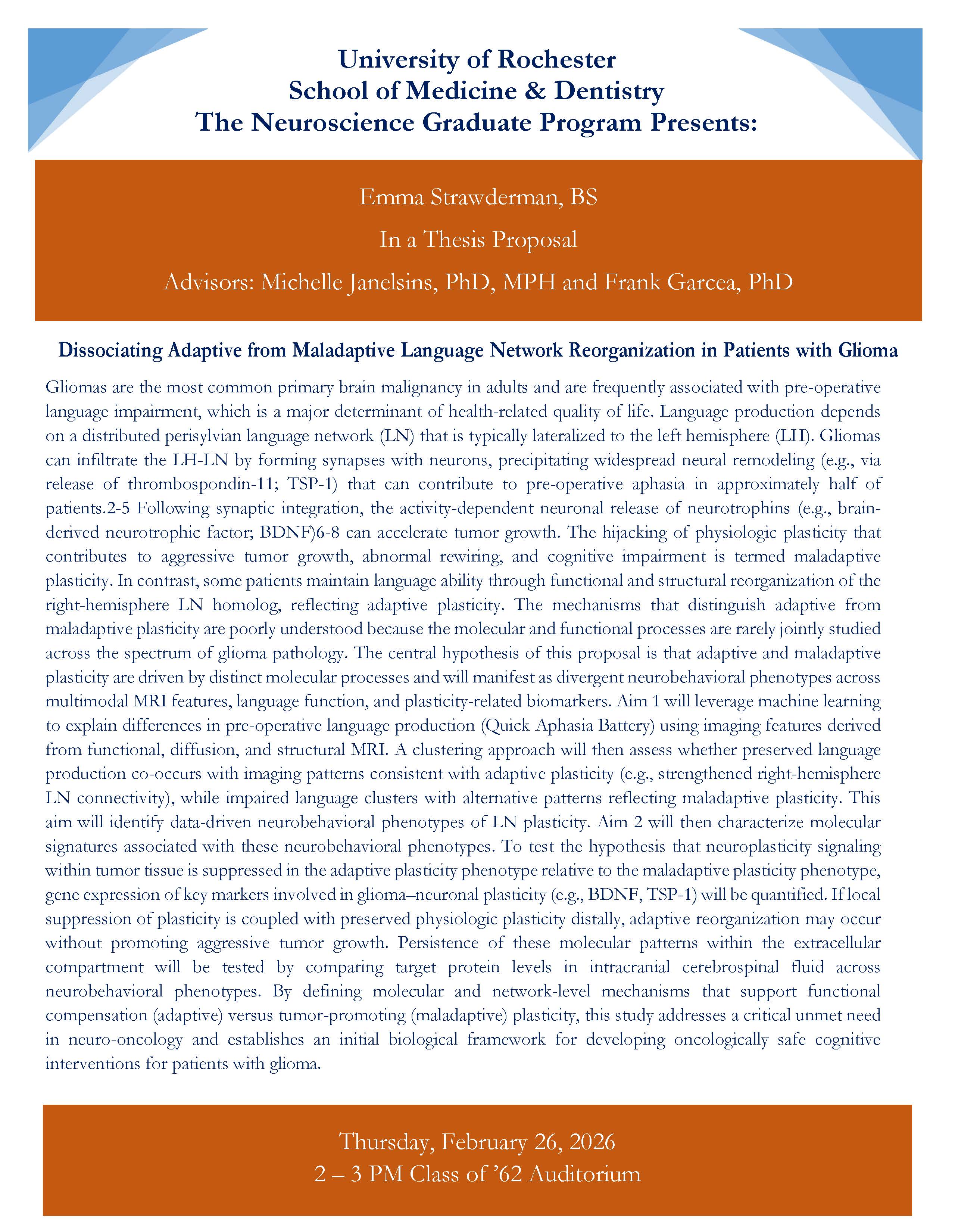
Feb 26, 2026 @ 2:00 p.m.
School of Medicine and Dentistry | Class of '62 Auditorium
Host: Advisors: Michelle Janelsins, MD, PhD and Frank Garcea, PhD
"Investigating the emergence and trajectory of the discoordination of upper extremity muscle activations in stroke patients" - Thesis Proposal
Aaron Huynh - PhD Candidate, Neuroscience Graduate Program
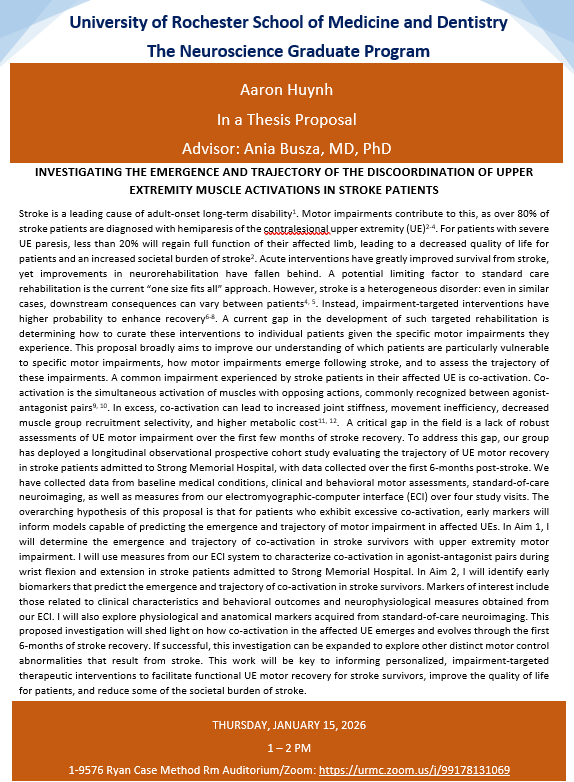
Jan 15, 2026 @ 1:00 p.m.
Medical Center | Ryan Case Method Rm (1-9576)
Hybrid EventHost: Advisor: Ania Busza, MD, PhD