
Seminars
Seminars
Regulatory T-Cell Control of Allergic Airway Disease
Rod Rahimi, MD, PhD - Assistant Professor of Medicine, Harvard Medical School
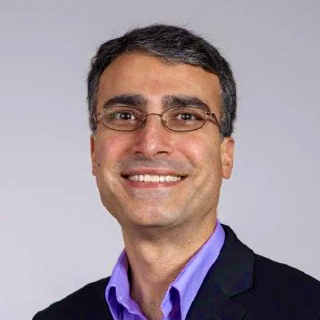 Dr. Rahimi is a physician-scientist conducting cutting-edge research on the initiation and maintenance of Type 2 immune responses in barrier tissues. Inappropriate Type 2 immune responses to noninfectious environmental antigens are a major driver of allergic diseases and asthma. His NIH-funded laboratory studies the mechanisms by which allergens regulate CD4+ T-cell fate and Type 2 immunity in vivo, using mouse genetics, cellular immunology, microscopy, and multi-omics appproaches. Dr. Rahimi earned his MD/PhD from the Mayo Clinic, completed his Internal Medicine residency at Johns Hopkins, and his Pulmonary Fellowship at Harvard. He is a Fellow of the American Thoracic Society and a recipient of the Transformative Scholar Award from the Department of Medicine at Mass General.

Sponsored by the Pulmonary T32 Program and the Institute for Immunologic Sciences. NIH T32HL171029: Multidisciplinary Training in Pulmonary Research (PI’s: S. Georas and M. O’Reilly)
Sep 10, 2026 @ 11:00 a.m.
School of Medicine and Dentistry | Ryan Case Method Room (1-9576)
Host: Pulmonary T32 Seminary Series
Bronchiolitis Obliterans: Exposures the Leave a Lasting Mark
Matthew McGraw, MD - Associate Professor and George Washington Goler Chair in Pediatrics, University of Rochester Medicine
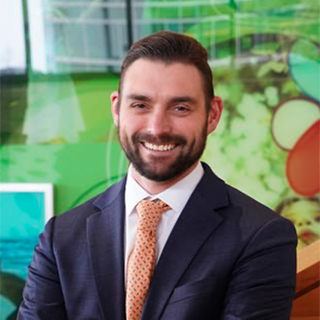 Matt McGraw is an Associate Professor of Pediatric Pulmonology at University of Rochester Medicine in Rochester, NY. He received his undergraduate degree from Bucknell University, completed medical school at SUNY Upstate Medical University, pediatrics residency at the University of Virginia and pediatric pulmonology fellowship at the University of Colorado (CU). His primary goal as a pediatric pulmonologist is to provide excellent care for all children with underlying lung disease. His research interests are in childhood interstitial and diffuse lung disease (also known as chILD syndrome). He is an NIH R01-funded, principal investigator (PI) who oversees a basic science lab studying the mechanisms of environmentally induced bronchiolitis obliterans, a fibrotic disease of the small airways. The purpose of the talk will be to compare and contrast bronchiolitis obliterans after different forms of environmental inhalation exposures that lead to airway injury.
Sponsored by NIH T32HL171029 Multidisciplinary Training in Pulmonary Research (PI’s: S. Georas and M. O’Reilly)
Jun 04, 2026 @ 11:00 a.m.
School of Medicine and Dentistry | Ryan Case Method Room (1-9576)
Host: Pulmonary T32 Seminar Series
Transitional Cell States: Decision-Making at the Crossroad of Development and Disease
Wellington V. Cardoso, MD, PhD - Professor of Medicine and Genetics and Development, Division of Pulmonary, Allergy and Critical Care Medicine, Columbia University Medical Center
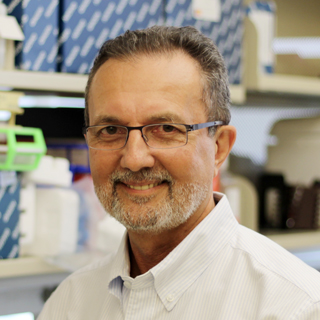 Wellington V. Cardoso, MD, PhD is a Professor of Medicine and Genetics & Development, Associate Vice-Chair for Research & Director of Interdisciplinary Programs at the Department of Medicine, Columbia University. In his tenure at Columbia he established and directed the Columbia Center for Human Development (CCHD), a multi-disciplinary research hub for studies on stem cell, organ development and the developmental basis of human diseases. Dr. Cardoso’s research focuses on lung development and regeneration, particularly the understanding of the origin, organization and behavior of the lung stem cell compartment during development and repair. Work from his lab pioneered discoveries on the roles of FGFs, Notch, Hippo-Yap, and retinoids in the normal lung, providing fundamental insights into the pathogenesis of developmental abnormalities and human conditions, such as COPD, asthma and neuroendocrine hyperplasias. Recent contributions include the characterization of viral-host interactions and drug targeting in human airways, the establishment of innovative technology for generation of lungs in vivo by blastocyst complementation, the development of a non-invasive platform for functional analysis of human newborn airway stem cells, and the identification and functional characterization of epithelial progenitors undergoing a transitional cell state conserved during lung morphogenesis and regeneration in mice and humans.
Sponsored by NIH T32HL171029 Multidisciplinary Training in Pulmonary Research (PI’s: S. Georas and M. O’Reilly)
(*In-person attendance preferred; for Zoom link email Nicole_Cruz@urmc.rochester.edu)
Jan 22, 2026 @ 12:00 p.m.
School of Medicine and Dentistry | Adolph Auditorium, Lower (1-7619)
(Zoom link available on request*)Host: Pulmonary T32 Seminar Series