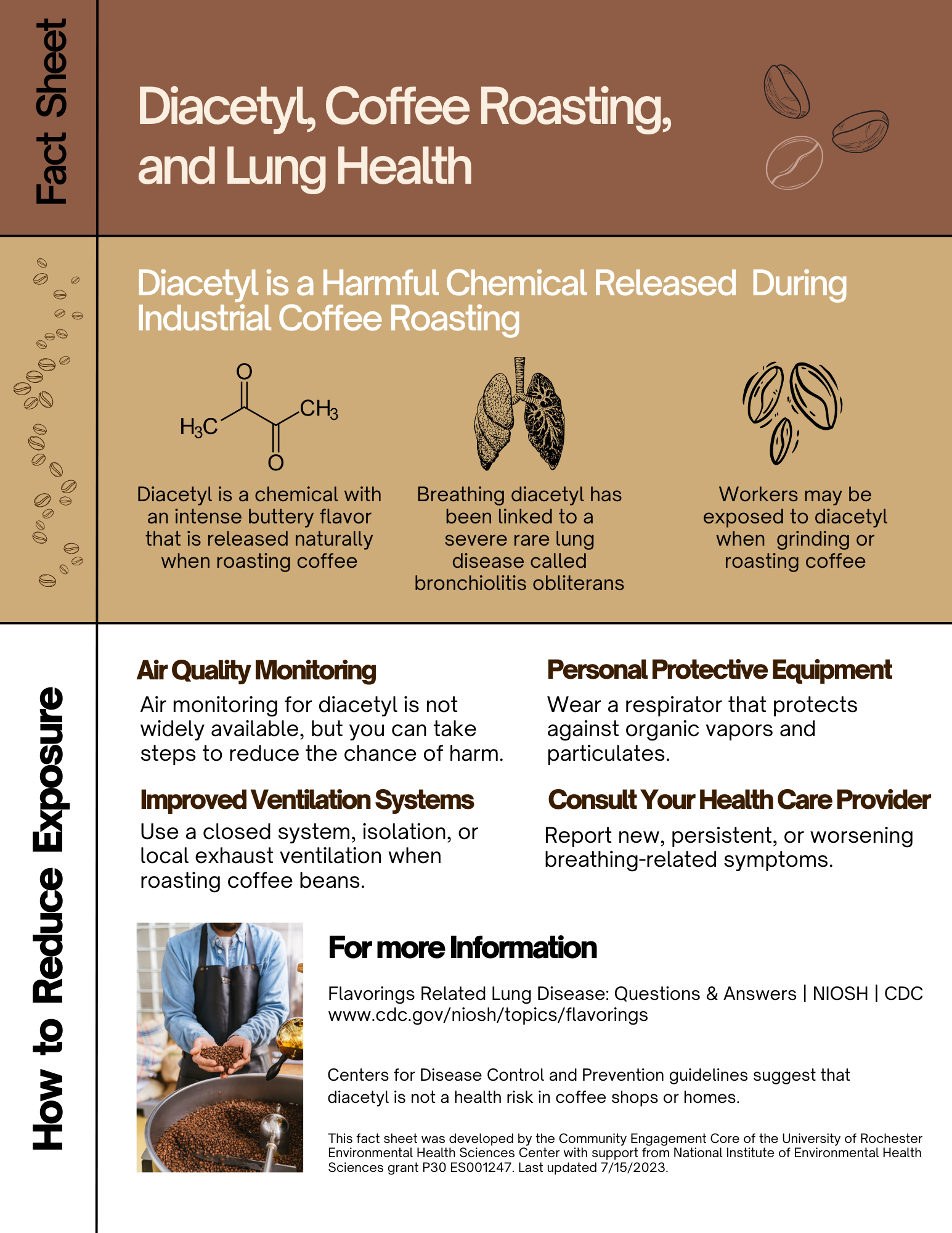
Diacetyl, Influenza Exposure, and Lung Health
Diacetyl, Influenza Exposure, and Lung Health
A research summary based on:
Diacetyl inhalation impairs airway epithelial repair in mice infected with influenza A virus. McGraw MD, Yee M, Kim SY, Dylag AM, Lawrence BP, O'Reilly MA. American Journal of Physiology-Lung Cellular and Molecular Physiology 323 (5) 2022 Nov 1; L578-L592.
What’s the study about?
 Diacetyl is a buttery-smelling chemical that was formerly used to flavor microwave popcorn. Prior studies of people who inhaled high amounts of diacetyl while working at microwave popcorn factories showed that the chemical can cause severe lung disease, particularly obliterative bronchiolitis. Popcorn manufacturers in the US stopped using diacetyl after serious concerns arose over the lung health of workers. However, certain food processing activities, such as roasting coffee beans, naturally produce diacetyl. New research shows that multiple exposures can cause greater health problems. A recent study in mice by Dr. Matt McGraw suggests that exposure to diacetyl for shorter periods of time, even just an hour for one week, increases the chance of lung damage when paired with influenza (flu) infection.
Why does it matter?
Coffee roasters have exhibited symptoms of lung disease after inhaling large amounts of diacetyl. Studies in mice and rats have shown that breathing diacetyl at similar concentrations produced during coffee roasting can damage the lungs and airways. This new study by Dr. McGraw suggests that exposure to diacetyl for shorter periods of time makes the lungs more vulnerable to infections such as the flu. Therefore, preventing exposures to diacetyl may be of greater importance than previously thought, especially for coffee roasters who may inhale diacetyl in the workplace.
How was it done?
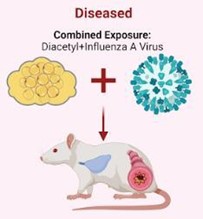
Mice exposed to both diacetyl and flu fared worse than mice exposed to either exposure alone
McGraw examined the interaction between influenza virus, inhalation exposure to diacetyl, and lung health outcomes in mice. Researchers exposed mice for 1 hour per day for 5 days to amounts of diacetyl similar to what coffee roasters may encounter at work. Mice were then exposed to influenza A virus, which causes seasonal flu in humans.
What did they find?
The lungs of mice exposed to both diacetyl and influenza showed abnormal lung function and impaired airway repair compared to mice exposed only to diacetyl or to influenza alone.
What does this mean?
The researchers hope to apply this groundbreaking study to a growing understanding that exposures to multiple agents, such as a chemical and a virus, can interact and harm health. Although this study was done in mice, the findings that diacetyl and flu interact have potential implications for people who are exposed to diacetyl at work. Coffee roasters exposed to diacetyl when grinding or roasting beans could be especially vulnerable to lung damage after a flu infection.
How can risks from coffee roasting be reduced?
Ideally, coffee roasters could monitor air in workplaces for diacetyl to determine if there are exposures above limits set by the National Institute of Occupational Safety and Health (NIOSH.) However, diacetyl testing is not widely available. In the absence of monitoring, coffee roasters can take steps to reduce potential exposure, such as using a closed system, isolation of the roasting process, or local exhaust ventilation systems. Workers can wear respirators (masks) that protect against organic vapors and particulates. Educating employers and workers can also raise awareness about the risks of inhaling diacetyl and ways to minimize potential risks.
Is it safe to grind coffee at home?
Currently, research does not suggest that exposure to small amounts of diacetyl--like from grinding coffee at home--is a health risk. However, researchers continue to explore how lower amounts or shorter periods of exposure to diacetyl impacts lung function and the lung’s ability to recover from infection with the flu.
For more information:
Centers for Disease Control and Prevention resources on diacetyl in occupational settings:
- Flavoring-related Lung Disease www.cdc.gov/niosh/topics/flavorings/
- Blog: “Diacetyl and food flavorings” blogs.cdc.gov/niosh-science-blog/2008/11/10/diacetyl/
- Flavoring Exposure Control and Intervention www.cdc.gov/niosh/topics/flavorings/control.html
Infographic