

Microplastics and the Immune System
Microplastics and the Immune System
 A research summary based on:
Ingestion of polyethylene terephthalate microplastic water contaminants by Xenopus laevis tadpoles negatively affects their resistance to ranavirus infection and antiviral immunity. Cai B., De Jesus Andino F., McGrath J. L., Romanick S. S., Robert J. Environmental Pollution 356 (2024) 124340.
What’s it about?
Studies have found microplastics, small pieces of plastic less than 5 mm in diameter, throughout the environment as well as in animals and in peoples’ bodies. In this study, researchers asked the question “How do microplastics accumulate in Xenopus laevis tadpoles and affect their developing immune system?”
Why does it matter?
Microplastics can be directly created (for example, for manufacturing) or can result from the breakdown of larger plastic products in the environment. The kind of plastic used in this study, polyethylene terephthalate (PET), is often found in plastic packaging and bottles. PET is a common component of environmental plastic pollution. Studies have found that microplastics have negative health effects on animal species. However, the effects of microplastics on human health are uncertain. One area of research is the effect of microplastics accumulation in the body on ability to fight infection. Because the immune system of Xenopus laevis tadpoles shares many similarities with that of humans, this research may shed light on whether and how microplastics affect human health.
How was it done?
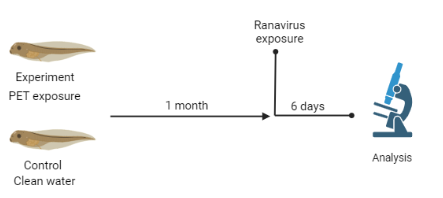 Researchers compared two groups of tadpoles. One group (experiment) was placed in a water bath containing small amounts of PET microplastics. Another group (control) was placed in clean water. After one month, both groups of tadpoles were transferred into clean water free of microplastics. They were then exposed to ranavirus Studies have found microplastics, small pieces of plastic less than 5 mm in diameter, throughout the environment as well as in animals and in peoples’ bodies. In this study, researchers asked the question “How do microplastics accumulate in Xenopus laevis tadpoles and affect their developing immune system?” Frog Virus 3, a well-known amphibian pathogen. Six days later, tadpole organs were assessed for microplastic accumulation and viral loads.
What did they find?
Tadpoles exposed to microplastics were more susceptible to viral infection than those raised in microplastic-free water. The researchers found that the tadpoles ingested microplastics, which then traveled through the intestinal lining into the liver and kidneys. Infected organs where microplastics accumulated showed only moderate inflammation and uninfected organs showed no inflammation. This suggests that the reduced resistance to the virus came from disruption of the immune cells, not from inflammation.
What does this mean?
Ingestion of large amounts of plastic particles is known to cause inflammation and tissue damage. This study reveals the potential of exposure even to lower amounts of microplastics to directly impair the immune system. Microplastics particles also contain many chemical additives. Future experiments will determine the respective impact of these chemicals and of microplastics particles on immune function. Because Xenopus laevis and mammalian immune systems are similar, these findings strongly suggest that exposure to microplastics could also affect the human immune system and impact the body’s ability to fight infectious diseases. More research is needed to understand how exposure to PET microplastics disrupted immune cells and weakened the tadpoles’ immune response.
Behind the Research
 Dr. Jacques Robert, PhD, is the Albert & Phyllis Ritterson Professor and Chair of Microbiology & Immunology and Professor of Environmental Medicine at the University of Rochester. He is the director of the Xenopus Research Resource for Immunobiology, the world's most comprehensive facility specializing in the use of Xenopus laevis for immunological research. Dr. Robert’s team studies the development of the immune system and immune responses to viruses and bacteria, using the amphibian Xenopus as an animal model relevant for human health. His lab is also interested in long-term effects of water pollutants such as microplastics on the development of the immune system and antiviral immunity across the lifespan. Outside of the lab, Dr. Robert enjoys wildlife, hiking, volleyball, reading, and is passionate about opera and classical music.