Middle-Age Female with Abdominal Mass
Middle-Age Female with Abdominal Mass
Veronica Ulici, M.D., Ph.D., Roula Katerji, M.D.
Clinical History
A 45-year-old otherwise healthy woman presented with a painless, progressively enlarging mass in the left lower quadrant that had been increasing in size over the past six months. She denied weight loss or other constitutional symptoms. Computed tomography revealed a 12.5 cm, well-defined but locally infiltrative soft tissue mass involving the abdominal wall musculature. An initial biopsy was performed, followed by surgical resection of the lesion.
Gross Examination
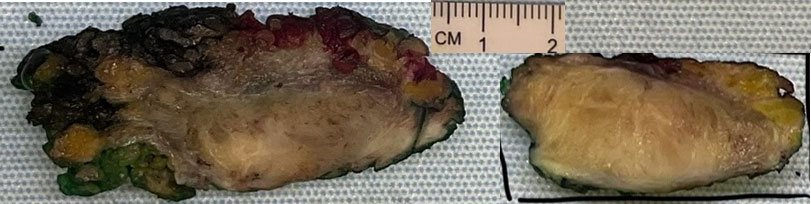
On gross examination, the lesion was tan-white, firm, and poorly circumscribed, measuring 12.5 cm in greatest dimension. The cut surface was homogeneous, without evidence of necrosis or hemorrhage (Figure1).
Microscopic Findings
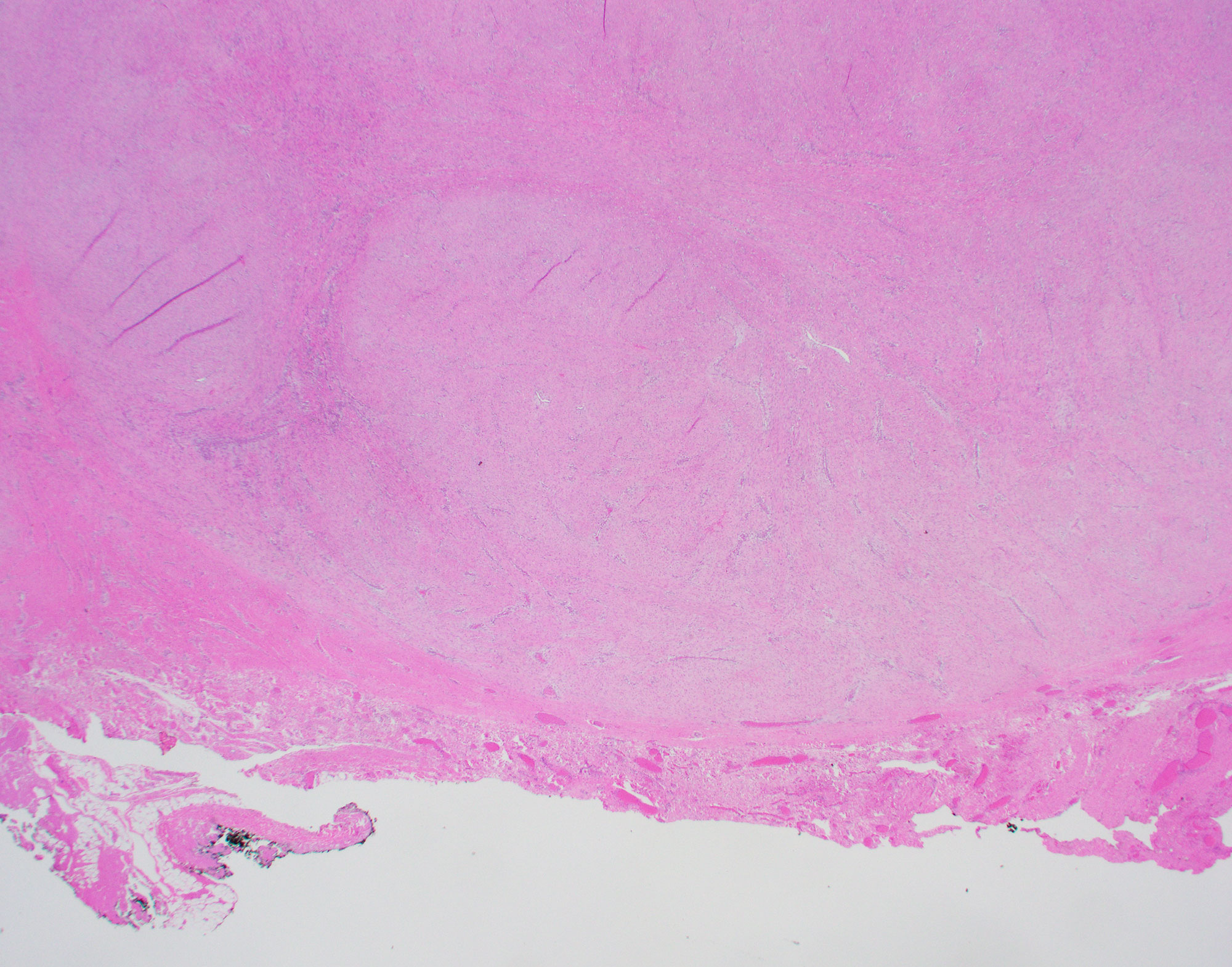
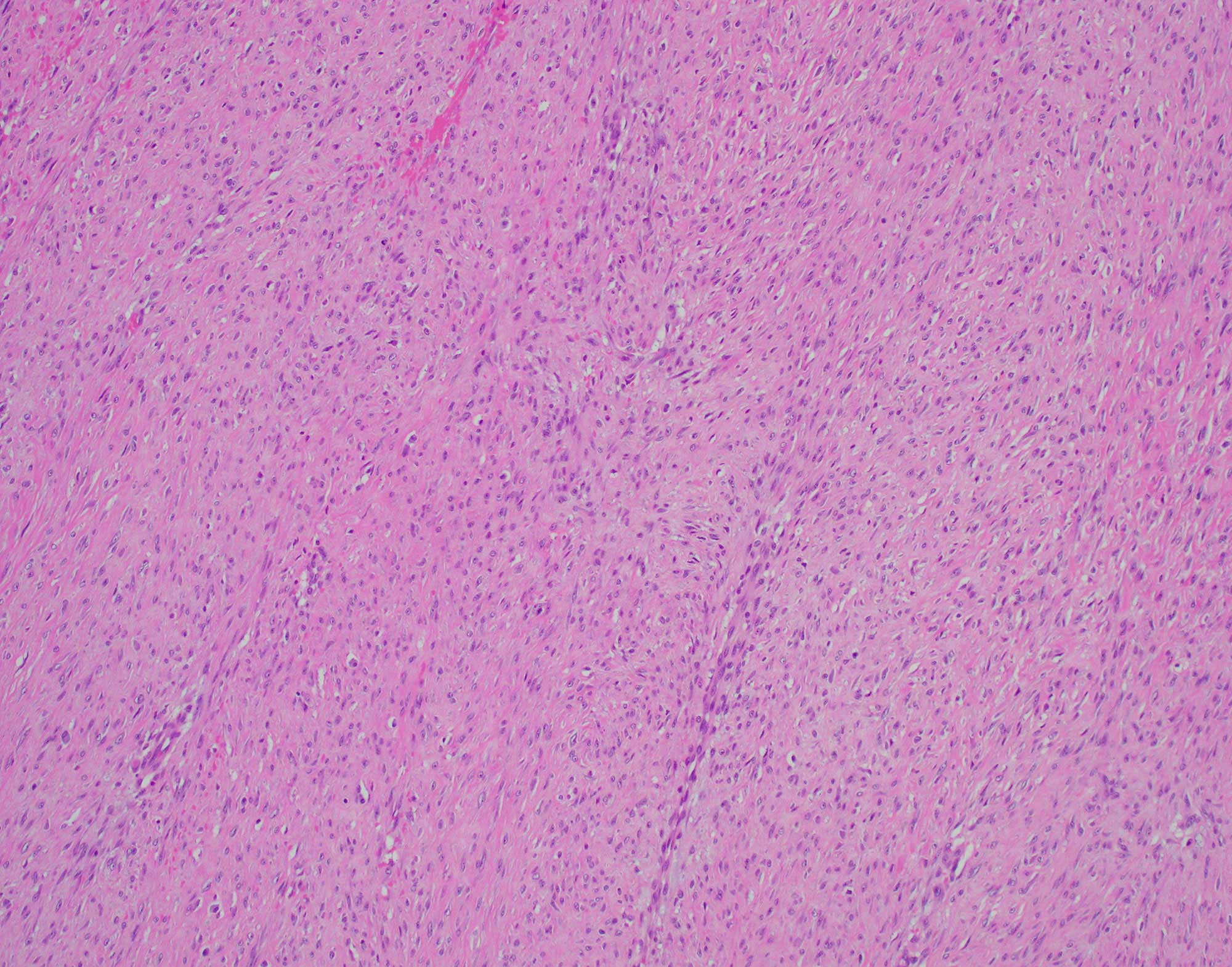
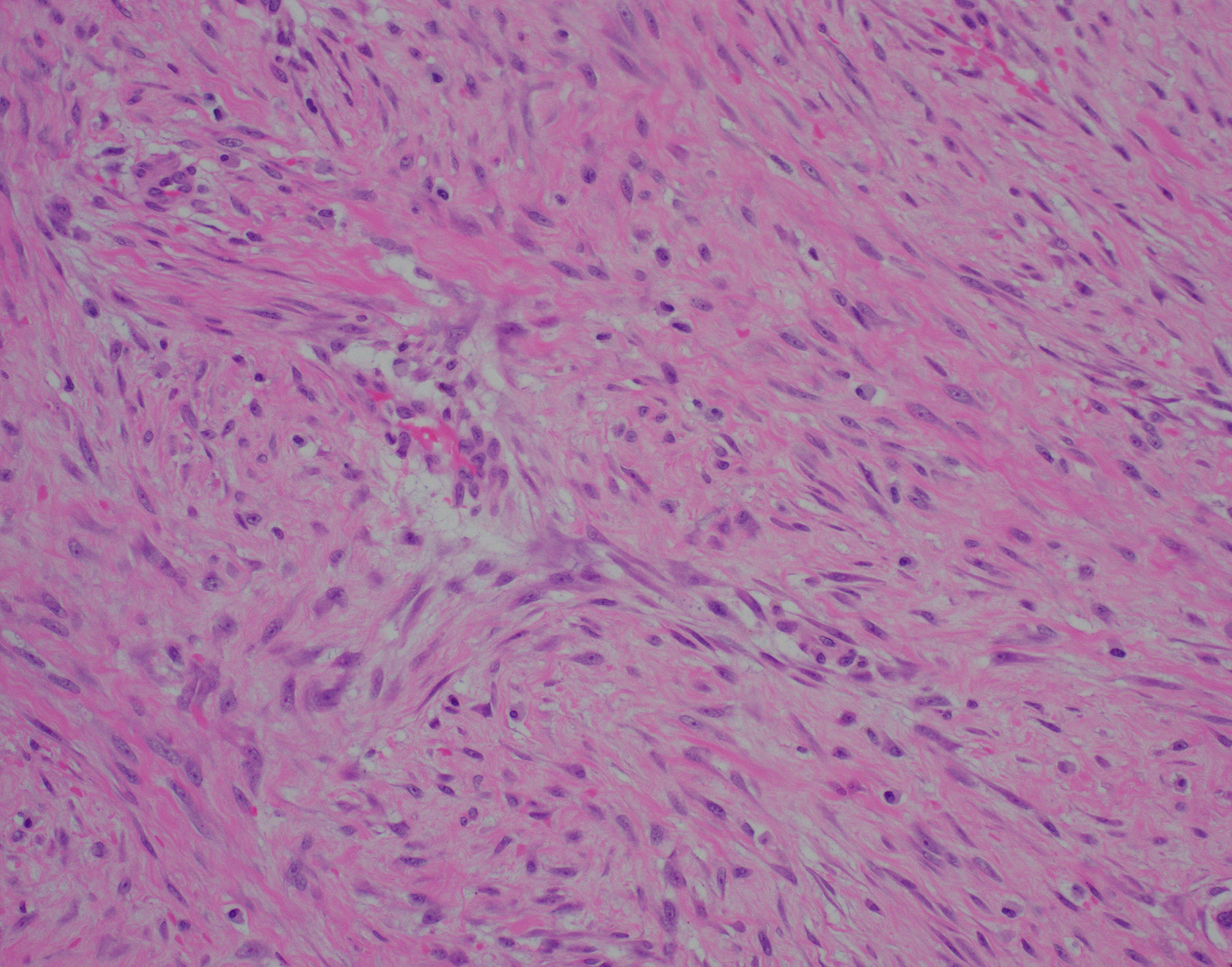
Hematoxylin and eosin–stained sections demonstrate a spindle cell proliferation of low to moderate cellularity composed of uniform, bland-appearing cells arranged in long, sweeping fascicles within a collagenous stroma (Figures 2&3). The tumor cells exhibit amphophilic cytoplasm and elongated nuclei with fine chromatin and small nucleoli. No significant nuclear hyperchromasia is identified, and cytologic atypia is minimal (Figure 4). Mitotic figures are rare. Thin-walled blood vessels are present, with associated perivascular edema (Figure 5). The lesion demonstrates infiltrative borders with extension into the surrounding soft tissue.
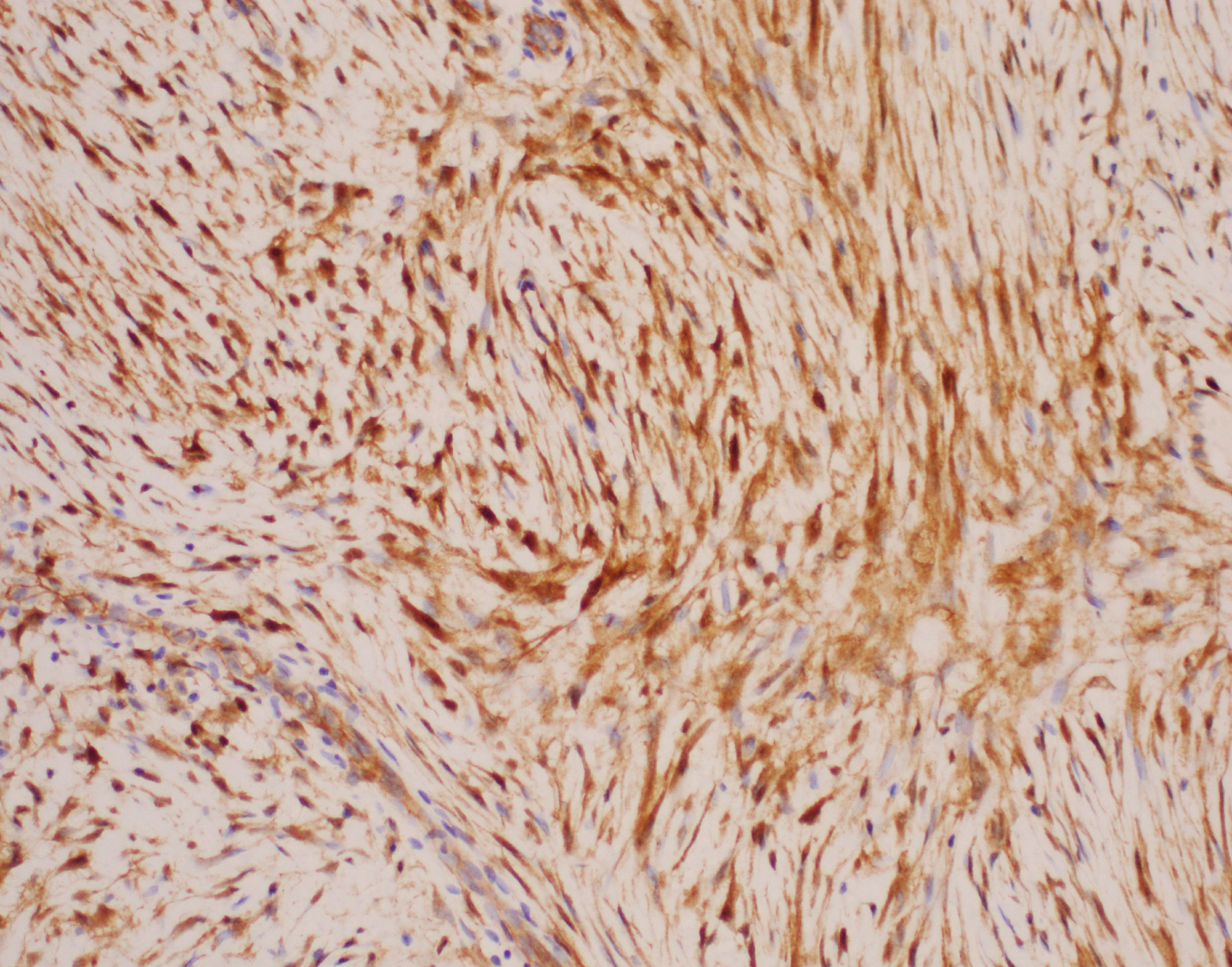
Although not performed in this case, SMA is usually positive in the lesional cells in a tram track pattern”. β-catenin immunostaining demonstrates diffuse nuclear positivity in the neoplastic cells (Figure 6).