

News
Developmental and Behavioral Pediatrics' Dr. Emily Knight studies the impact of how people with autism process visual illusions
Tuesday, July 23, 2024
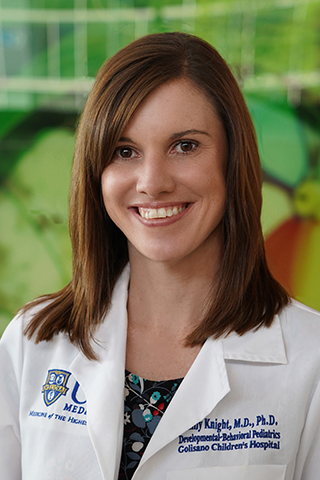 Visual illusions continue to provide clues to how the brain processes what people with autism see. New research suggests that connections in the brain that send information about the context of what is being seen may operate more slowly in people with autism. “In that case, it would make sense for the brain to focus more on the details of what we are seeing than on the big picture,” said Emily Knight, MD, PhD, assistant professor of Neuroscience and Pediatrics and first author of the study published in the Journal of Neurophysiology. “Some of the things we would like to explore next are how these changes in timing might relate to the sensory or repetitive behaviors that we often see in individuals on the autism spectrum.”
Tom Golisano makes $50 million commitment to the University of Rochester to build the new Golisano Intellectual and Developmental Disabilities Institute
Thursday, June 13, 2024
The University of Rochester announced today that entrepreneur, philanthropist, and civic leader B. Thomas “Tom” Golisano has made a historic $50 million commitment, making it possible to build the Golisano Intellectual and Developmental Disabilities Institute at the University of Rochester Medical Center. The new world-class transdisciplinary center will provide solutions to the health and quality of life issues that affect people with intellectual and developmental disabilities (IDD). Those with IDD are a traditionally underserved population, with approximately 19,000 people affected locally, 120,000 regionally, and 200 million worldwide.
Read More: Tom Golisano makes $50 million commitment to the University of Rochester to build the new Golisano Intellectual and Developmental Disabilities InstituteBuilding Better Bridges: Outcomes of a Community-Partnered New School Transition Intervention for Students on the Autism Spectrum
Wednesday, June 12, 2024
Originally published June, 12 2024 in the Journal of Autism and Behavioral Disorders. Nuske, H.J., Smith, T., Levato, L. et al. Building Better Bridges: Outcomes of a Community-Partnered New School Transition Intervention for Students on the Autism Spectrum. J Autism Dev Disord (2024).
New school transitions can be challenging for students on the autism spectrum. No published, evidence-based interventions exist to support families and teachers of students transitioning to elementary and secondary school during this critical period. Using Community Partnered Participatory Research, we developed Building Better Bridges (BBB), a caregiver coaching intervention that includes training on effective school communication, educational rights, advocacy, and child preparation strategies.
Read More: Building Better Bridges: Outcomes of a Community-Partnered New School Transition Intervention for Students on the Autism SpectrumWhat Families of Children with Medical Complexity Say They Need: Humanism in Care Delivery Change
Tuesday, May 7, 2024
There is growing consensus that centering lived experience is needed to meaningfully transform the burdensome systems of care for children with medical complexity (CMC) and their families. The Collaborative Improvement and Innovation Network to Advance Care for Children with Medical Complexity quality improvement initiative, co-led with family colleagues, illuminates a critical real-world view of systems change to address unintended bias and demystify the medical model of care. We share candid themes in which families describe the need for systems to counteract widespread misconceptions and bias to achieve meaningful system change. We held family-designed, family-led focus groups (N = 127 across 27 groups) within 10 diverse state teams. Families were asked about CMC quality of life and family wellbeing.
Read More: What Families of Children with Medical Complexity Say They Need: Humanism in Care Delivery ChangeDr. Adriana Verwey Publishes Updated Inclusive Recreation Brochure
Sunday, March 10, 2024
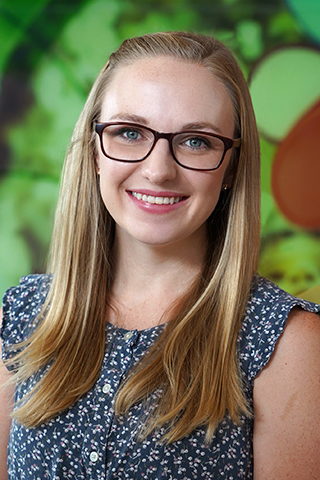 This week at the 24th annual Anne E. Dyson memorial grand rounds and community health symposium Dr. Adriana Verwey, Assistant Professor Department of Pediatrics, Developmental & Behavioral Pediatrics, was the special guest speaker in a discussion about promoting physical opportunities for all children. Dr. Verwey presented her updated inclusive recreation brochure "A Guide to Recreation and Leisure for All in Greater Rochester".
"Accessible recreation is a civil right and outlined in ADA accessible design standards" said Dr. Verwey
She empathized that providers who have knowledge of resources are a main facilitator of promoting inclusive recreation for children with disabilities. She discussed the health disparities that exist for individuals with disabilities and how the benefit of physical activity can improve these health disparities. Her research shows that the barriers to exercise for people with disabilities are not only program cost or transportation as would be expected, but nearly 50% of individuals reported they did not know how to exercise and, they did not know where to exercise or what facilities were available to them.
By creating this inclusive recreation brochure Dr. Verwey aims to share her knowledge of resources to accessible recreation throughout the Rochester community. She said,
“There are a lot of opportunities in our community for physical activity for individuals with disabilities”
The interactive map below was created by Dr. Verwey and displays various options for Inclusive Recreation, Dance/Theater/Music/Art, Parks and Playgrounds, and TIES (Together Including Every Student) programming within the various school districts in our region. Although we have a lot here, we don’t have enough here and we need more, she said. Dr. Verwey wants the community to know that there are places you can go! This brochure was supported with grants from the American Academy of Pediatrics, Special Olympics, and The Hoekelman Center.
Panelists at this event included members of local Rochester businesses and organizations such as - Healthi Kids, Rochester Accessible Adventures, Reconnect Rochester, Abilities Movement, and the Department of Recreation and Human Services.
The University of Rochester Intellectual and Developmental Disabilities Research Center is transforming the landscape of exploration
Tuesday, January 30, 2024

Batten disease is a devastating rare genetic disorder. While the genetic flaw that causes this disease is well known, scientists do not fully understand the connection between this mutation and the disease’s symptoms like behavioral changes, cognitive impairment, seizures, and vision loss. John Foxe, PhD, co-director of the University of Rochester Intellectual and Developmental Disabilities Research Center (UR-IDDRC), recently described a potential neuro marker for the disease that could represent a way to better understand this complex disease and, ultimately, help researchers measure outcomes in clinical trials.
“We [researchers] know it is a genetic single gene mutation that causes Batten disease and as a scientist that really gives us something to focus on,” said Foxe, who is also director of the Del Monte Institute for Neuroscience at the University of Rochester. “But clinically, what we do not fully understand is how the mutation changes connections in the brain. Our work has been aimed at developing a much better understanding of these changes and developing ways to measure these accurately. If we can figure out how to treat Batten disease, there's a very good chance we will gain insight into how to treat other rare diseases.”
Read More: The University of Rochester Intellectual and Developmental Disabilities Research Center is transforming the landscape of explorationFaculty Q&A: Emily Knight
Monday, October 17, 2022
 Emily Knight, M.D., Ph.D., is an assistant professor of Neuroscience and Pediatrics at the University of Rochester Medical Center. She received her B.S. in neuroscience at Bucknell University and completed her M.D./Ph.D. training at Mayo Clinic in Rochester, Minnesota. She went on to New York Presbyterian Weill Cornell campus for her general pediatrics residency. In 2018, she came to URMC as a fellow in Developmental Behavioral Pediatrics with a combined postdoctoral research fellowship in Neuroscience. Her research aims to understand neural mechanisms of sensory perception in individuals on the autism spectrum.
Can you summarize your research?
Using tools like electrophysiology (EEG) and neuroimaging, while incorporating some newer technologies like virtual reality we’re interested in identifying specific autism-related differences in the neural processing of visual, auditory, and other types of sensory stimuli in the brain. What is especially important to me is that we are looking at these questions through a translational lens. We are trying to understand how these mechanistic differences in sensory processing relate to real-world development and experiences for people on the autism spectrum. As we are building that knowledge base, we can then use it to help us refine diagnostic and intervention strategies that would be more directly linked to the underlying mechanisms and that would actually transform how we approach autism. That’s the future goal.
How did you become interested in this field?
I have always been interested in the brain. I think we can all probably relate to the experience of being tricked by a visual illusion, and mis-hearing lyrics or what someone said in a noisy party environment. It is those types of experiences that have always led me to wonder what is happening in the brain as it takes in the world around us. I became focused on autism during my undergraduate career. I was studying Neuroscience and was working as a summer teacher aid for students on the autism spectrum. It was very fun and rewarding, and it was also immediately clear to me that these students were processing and responding to things in the environment in a way that seemed different than their neurotypical peers in the classroom. When I delved into the neuroscience literature for an explanation, I realized there was a need for more research in this area, and that I could potentially contribute to that.
Why is it important to do research along with clinical work?
It is important to me to have a foot in both domains because I think it offers me a unique perspective. The studies that I have in the lab are directly inspired by observations in the clinic and questions that either the individuals on the autism spectrum or their families may ask. I can then bring them back to the lab and start to systematically dissect them using some of our neuroscience technology. Frequently, I have conversations with families where I will say, here’s what we know currently about the brain, but we are actively working on answering this question to develop new knowledge.
What led you to the University of Rochester?
I was drawn to the institutional tradition and commitment to advancing science in order to improve the health and lives of children in the community. That’s a challenging mission, and I am not alone at URMC. On a personal note, I grew up in the Rochester area so I’m able to give back to the community I was raised in, and that’s a big part of why I trained here and I am staying on as faculty.
Favorite piece of advice.
I take my inspiration from the children I see in the clinic, because children across the developmental spectrum are inherently curious, and not burdened by traditional expectations or viewpoints. Those are the same qualities you need to do good science. They have taught me that it is okay to challenge the status quo and that you need to maintain that sense of curiosity and wonder so that you can keep asking questions like, “why?” and “what if?” That’s how we can keep pushing boundaries forward.
Read More: Faculty Q&A: Emily KnightWelcome Dennis Z. Kuo, M.D., M.H.S. as new Developmental and Behavioral Pediatrics Division Chief
Friday, July 1, 2022
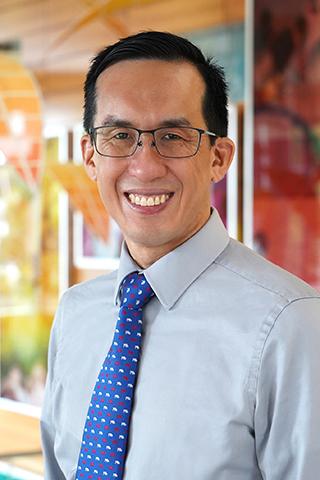 A warm welcome to our new division chief, Dr. Dennis Kuo. Dr. Kuo comes to us most recently from Buffalo, where he was chief of their division of Developmental and Behavioral Pediatrics, and previously from University of Arkansas. He comes with a great wealth of experience in caring for and researching the care of children with complex care needs and developmental disabilities. He brings great energy and enthusiasm for our team.

Professional Background
Dr. Kuo received his MD from the University of Pennsylvania and completed his residency in pediatrics at the University of North Carolina Hospitals and fellowship in General Academic Pediatrics at Johns Hopkins University. Dr. Kuo has a longstanding interest in comprehensive care of children with disabilities and medical complexity. Prior to coming to URMC, Dr. Kuo provided both general pediatric and specialty care for children with medical complexity, developmental disabilities, and feeding disorders at Arkansas Children's Hospital and Oishei Children's Hospital (Buffalo, NY).
More information on Dr. Kuo can be found at his Faculty Page.
DBP Fellow Adriana Verwey Publishes Inclusive Recreation Brochure
Friday, July 23, 2021
Adriana Verwey, a second year fellow in the Developmental and Behavioral Pediatrics Program has created 'A Guide to Recreation and Leisure for All in Greater Rochester'. This brochure was supported with grants from the American Academy of Pediatrics, Special Olympics, and The Hoekelman Center. A link to the brochure can be found at the bottom of this article.
Background
NHANES data reports that 35% of children and adolescents in America are overweight or obese. Obesity rates in children with disabilities is 38% higher than in children without disabilities, increasing to 58% higher by adulthood. This is a striking health disparity. Yet, for a number of reasons, weight status is not often discussed during medical appointments, perhaps due to comparative severity with other medical or behavioral concerns, or perhaps due to discomfort by providers on how to provide guidance regarding interventions that are accessible to someone with a disability. This is where I'm hoping this brochure can be a valuable tool, to allow providers in a variety of disciplines to have a resource available to give to families with children with disabilities to help guide them towards available recreation in our community.
Whimsical Bench Celebrates Tristram Smith, a Pioneer in Autism Research
Thursday, July 1, 2021
The late faculty member was memorialized during a ceremony and bench dedication. "He always worked with such modesty and perseverance that only the hallowed whispers of others when they spoke of him revealed his greatness," said Leona Oakes, one of the many faculty members from Neuroscience and Behavioral Pediatrics who spoke during the ceremony.
URMC Tapped to Advance Research in Intellectual and Developmental Disabilities
Wednesday, July 8, 2020
The University of Rochester has been designated an Intellectual and Developmental Disabilities Research Center (IDDRC) by the National Institute of Child Health and Human Development (NICHD). The award recognizes the Medical Center's national leadership in research for conditions such Autism, Batten disease, and Rett syndrome, will translate scientific insights into new ways to diagnose and treat these conditions, and provide patients and families access to cutting edge care.
The IDDRC at the University of Rochester will be led by John Foxe, Ph.D., director of the Del Monte Institute for Neuroscience, and Jonathan Mink, M.D., Ph.D., chief of Child Neurology at Golisano Children's Hospital. The designation is accompanied with more than $6 million in funding from NICHD.
New Mask Wearing Toolkit
Monday, June 22, 2020
We have recently developed a masking toolkit to provide support tips and resources on wearing masks. This toolkit is designed to assist parents with the challenges of convincing a child to wear a mask in public. The toolkit is provided in both a webpage and PDF Download format
Back-to-School Resources
Tuesday, June 9, 2020
For many, the transition back to school may be complicated by COVID-19. The "Student Snapshot" can be used to capture important information about a student that can be shared with the new school team. The pdfs are fillable or can be printed out. It is suggested that the Snapshot is completed with input from the student, if possible. An English and Spanish version are provided.
English Version (PDF) | Spanish Version (PDF)
View SCDD's response to COVID-19
Monday, May 18, 2020
During COVID-19 SCDD and DBP have worked to adapt services and continue to support individuals and families with disabilities in healthcare, education. We have developed a handout detailing all of these efforts.
New Autism Guidelines Recommend Early Screening, Treatment for Developmental Delays Before Official Diagnosis
Monday, February 3, 2020
Susan Hyman, M.D.
Early intervention for symptoms associated with autism spectrum disorder -- even before the condition is formally diagnosed -- is critical for helping families improve outcomes for their children, according to updated recommendations from the American Academy of Pediatrics (AAP).
The new clinical report to guide diagnosis and care of children with autism is the AAP's first in 12 years and reflects changes in how autism is diagnosed and treated. Specific autism screenings are recommended at 18 and 24 months, at the same time as typical well-child visits. During these visits, pediatricians gauge milestones reflecting social communication, which could provide early signs of autism, according to Susan Hyman, M.D., lead author of the report and professor at the University of Rochester Medical Center's Golisano Children's Hospital.
"Social milestones like eye pointing to indicate interest, pointing to share interest and engaging in pretend play are not milestones that most parents are looking for, and might miss if not specifically asked about in the form of screening," said Hyman, past chair of the AAP's subcommittee on Autism.
New Employment Video
Monday, October 21, 2019
Next up in our National Disability Employment Awareness Month video series is the City of Rochester, NY - Mayor's Office. Watch the clip below to learn why inclusion and diversity is important to our Rochester community.
The Skirboll 2019 Conference is now FULL
Tuesday, October 15, 2019
The Skirboll 2019 Conference is now FULL! If you were not able to register, we will be Livestreaming the event here on our Facebook page, so you can still be a part of all the sessions we have planned, even if you're joining in from home.
Please visit the event page on November 9th to see the full live stream
New Employment Video - Delmonte Hotel Group
Friday, October 11, 2019
National Disability Employment Awareness Month highlights the value people with disabilities bring to the workforce. The DelMonte Hotel Group has seen both dedication and a great work ethic from the people with disabilities they've hired.
Watch the full video to learn more.