
News
Department Alumna is Featured on The Next Step Podcast
Wednesday, August 19, 2026
In the latest episode of The Next Step, Jennifer Newell-Caito (’09) is a featured interviewee. Jennifer completed her PhD in biochemistry with Prof. Philip Fay, and is currently on the faculty of the University of Maine. She discusses her path toward a teaching-focused career, and what search committees look for in faculty candidates.
Dr. Lynne Maquat Honored with Steven C. Beering Award from IU School of Medicine
Monday, August 10, 2026
Lynne E. Maquat, Ph.D., a mechanistic biochemist, Director of the University of Rochester Medicine Center for RNA Biology, and Co-Director of the New York State Center of Excellence in RNA Research and Therapeutics (CERRT), is the winner of the 2026 Steven C. Beering Award for the Advancement of Biomedical Research. Honored for her research on RNA mechanisms that contribute to a wide range of diseases, Maquat’s work has laid the foundation for the development of treatments targeting conditions that can’t be corrected with conventional drugs.
Maquat discovered a cellular quality control mechanism known as nonsense-mediated mRNA decay or NMD. One of the major surveillance systems in the body, NMD protects against mistakes in gene expression by targeting and eliminating deleterious mRNAs that could lead to the production of incomplete and potentially toxic proteins. NMD plays a role in many disorders, including fragile X syndrome and different types of cancer.
The J. Lowell Orbison Endowed Chair and Professor in the Department of Biochemistry and Biophysics at the University of Rochester Medicine School of Medicine & Dentistry, Maquat also identified the molecular “players” and the routes and patterns they need to follow for NMD to work properly. Among her most noteworthy contributions is her discovery of the exon-junction complex (EJC), a splicing-dependent “mark” that tags an mRNA so the cell can define which termination codons are premature and should trigger NMD. She defined the 50-55-nucleotide rule, which determines which mRNAs containing premature termination codons are subject to degradation by NMD. She also discovered the “pioneer round of translation,” during which NMD occurs.
Given by the Indiana University School of Medicine, the annual Steven C. Beering Award honors an internationally recognized individual for outstanding research contributions to advancing biomedical or clinical science. Eight of the past Beering Award recipients have become Nobel laureates.
Maquat also holds appointments in Pediatrics and Oncology and is a member of the Wilmot Cancer Institute. She is the founding director of the Graduates Working in Science program at the University of Rochester and the recipient of several other significant honors, including:
- Albany Medical Center Prize in Medicine and Biomedical Research (2024)
- Dr. Paul Janssen Award for Biomedical Research (2024)
- Gruber Genetics Prize (2023)
- Wolf Prize in Medicine (2021)
- Warren Alpert Foundation Prize (2021)
- Wiley Prize in Biomedical Sciences (2018)
- Vanderbilt Prize in Biomedical Science (2017)
- Gairdner International Award (2015)
- RNA Society’s Lifetime Achievement Awards in Service (2010) and in Science (2017)
Maquat will receive her award and deliver the Beering Award lecture at Indiana University on August 31. Her lecture is titled “Nonsense-mediated mRNA decay (NMD) in human health and disease: Reframing the role of FMRP in fragile X syndrome.”
New Tool Makes Immune Therapy More Effective in Prostate Cancer
Wednesday, July 15, 2026
CRISPR technology could augment treatment of immune cold cancers that don’t respond to immunotherapy
Prostate cancer is often resistant to immunotherapy, which harnesses a person’s immune system to recognize and destroy tumors. But a new technology that targets RNA in cancer cells gave immune therapy new life, improving its ability to unleash cancer-killing cells in laboratory studies.
Most prostate tumors are dubbed “immune cold” because they don’t attract T cells (a type of immune cell) to the tumor. Using a CRISPR-based tool, researchers altered RNA to make the cancer cells more like magnets for T cells, allowing them to draw in and use the anti-tumor cells to destroy the cancer.
Published in Nature Biomedical Engineering, the study found the technology made prostate tumors more responsive to immune checkpoint therapy in mice, increasing the number of immune cells that infiltrated the tumor and subsequently destroyed cancerous cells.
“Immune therapy is a monumentally different way to treat cancer, and a great way because you don’t have to give patients terrible drugs that kill the cancer but harm healthy cells in the process,” said Eric J. Wagner, PhD, co-author of the study from University of Rochester Medicine. “The problem is that some cancers respond well to immune therapy, but others develop resistance or don’t respond at all. Our tool strengthens the immune system’s ability to make the cancer go away and could be used in conjunction with existing immunotherapies in prostate and potentially other immune-cold tumor types.”
Read More: New Tool Makes Immune Therapy More Effective in Prostate CancerWedekind Honored for Educational Leadership
Friday, April 10, 2026
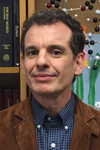 Professor Joseph Wedekind has been inducted into the inaugural class of the University of Rochester Medical Center Academy of Educators. The Academy develops educational leaders, and applies the science of teaching and learning to advance health professions education. It aims to be a nationally recognized center of excellence, driven by a thriving community of educators and scholars invested in the transformation of health professions education.
Professor Wedekind is an internationally recognized expert on the biophysics of non-coding RNAs, with a special interest in the structural biology of these molecules. He has served on the editorial board of the Journal of Biological Chemistry, and has been awarded the Faculty Teaching Award in Biophysics on multiple occasions.
We congratulate him on this important recognition!
Read More: Wedekind Honored for Educational LeadershipProfessor Eric Phizicky is Honored by the RNA Society
Wednesday, March 11, 2026
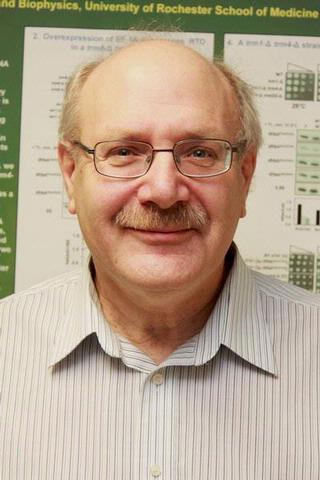 Professor Eric Phizicky has received the RNA Society's Outstanding Service Award. Professor Phizicky was recognized for contributions to the development of the Society's flagship journal, RNA. He joined as an Associate Editor in 2015, became Deputy Editor-in-Chief to Tim Nilsen in 2017, and in 2022 became Senior Editor together with Javier Cáceres. He has been instrumental in enhancing and modernizing the content of the journal, and in upgrading the manuscript submission system.
Professor Phizicky has also served the RNA Society in numerous committee roles, and in the organization of annual meetings. Beyond these accomplishments, he is an internationally recognized researcher in the field of tRNA biology, and a generous colleague and mentor. He has been a member of the Department of Biochemistry and Biophysics since 1987.
We warmly congratulate him on this well-deserved recognition!
Makaia Papasergi-Scott (PhD '17), one of our newest faculty members, recently participated in an episode of “The Next Step”
Monday, January 26, 2026
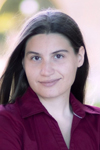
In this episode, Makaia, who is an assistant professor of Biochemistry and Biophysics, as well as Pharmacology and Physiology, talks about what happens when a carefully imagined career path doesn’t unfold the way you expect. She shares her journey through graduate school, postdoctoral training, and into a research career shaped by obstacles, difficult decisions, and moments of uncertainty. Along the way, she reflects on the personal and professional challenges she faced, the mentors and community members who helped guide her, and how she learned to stay open to new directions—including teaching, emerging research technologies, and leadership opportunities.
This conversation is especially relevant for prospective and current trainees who may be questioning their next steps, rethinking long-term goals, or wondering whether it’s okay to change course. Makaia’s story is a reminder that career paths in science and academic medicine are often nonlinear—and that growth can come from the unexpected turns.
The interview can be found here on YouTube.
Lea Vacca Michel is Named an ASBMB Fellow
Thursday, January 22, 2026

Congratulations to Lea Vacca Michel, who was named recently as a Fellow of the American Society for Biochemistry and Molecular Biology. Lea is currently a professor of chemistry and materials science at Rochester Institute of Technology, and director of Access and Belonging in the College of Science. She earned her PhD in biophysics in the Department of Biochemistry and Biophysics, under Professor Kara Bren of the Department of Chemistry. Her lab studies the role of bacterial lipoproteins and crystallin proteins in bacterial infections and cataracts, respectively. Her group also studies bacterial extracellular vesicles as potential vaccine carriers and diagnostic biomarkers for bacterial sepsis.
Lea is a leader in numerous ASBMB activities. She is also active in several programs of the American Chemical Society. In 2024, she was a finalist for the Presidential Awards for Excellence in Science, Mathematics and Engineering Mentoring.