Macular Degeneration
Make Appointments & Get Care
What is Macular Degeneration?
In age-related macular degeneration (AMD), the macula — the part of the eye that helps you see details directly in front of you — deteriorates, resulting in a loss of sharp central vision. It is the most common cause of decreased vision in people over 50.
Types of Macular Degeneration
There are two main types of age-related macular degeneration (AMD):
Dry Macular Degeneration
Dry AMD is the most common form. It happens when parts of the macula become thinner over time.
Symptoms may include:
- blurry central vision
- trouble reading
- needing brighter light
- difficulty recognizing faces
Wet Macular Degeneration
Wet AMD is less common but more serious. It occurs when abnormal blood vessels grow under the retina and leak fluid or blood.
Symptoms may include:
- sudden vision changes
- wavy or distorted lines
- dark spots in central vision
- rapid vision loss
Wet AMD needs prompt treatment to help protect vision.
Symptoms of Macular Degeneration
In early stages of the disease, patients might not experience symptoms. But later, symptoms can include:
- Blurred or decreased central vision
- Distorted near vision
- A blind spot
- Visual distortions (such as straight lines appearing wavy)
Macular degeneration affects central vision, which is needed for activities such as reading, driving, and recognizing faces. It usually does not cause complete blindness because side (peripheral) vision is often preserved.
Who Is at Risk?
Risk for macular degeneration increases with:
- age over 50
- smoking
- family history
- high blood pressure
- obesity
- heart disease
- prolonged UV exposure
Regular eye exams may help detect macular degeneration early, even before symptoms begin.
Treatments for Macular Degeneration
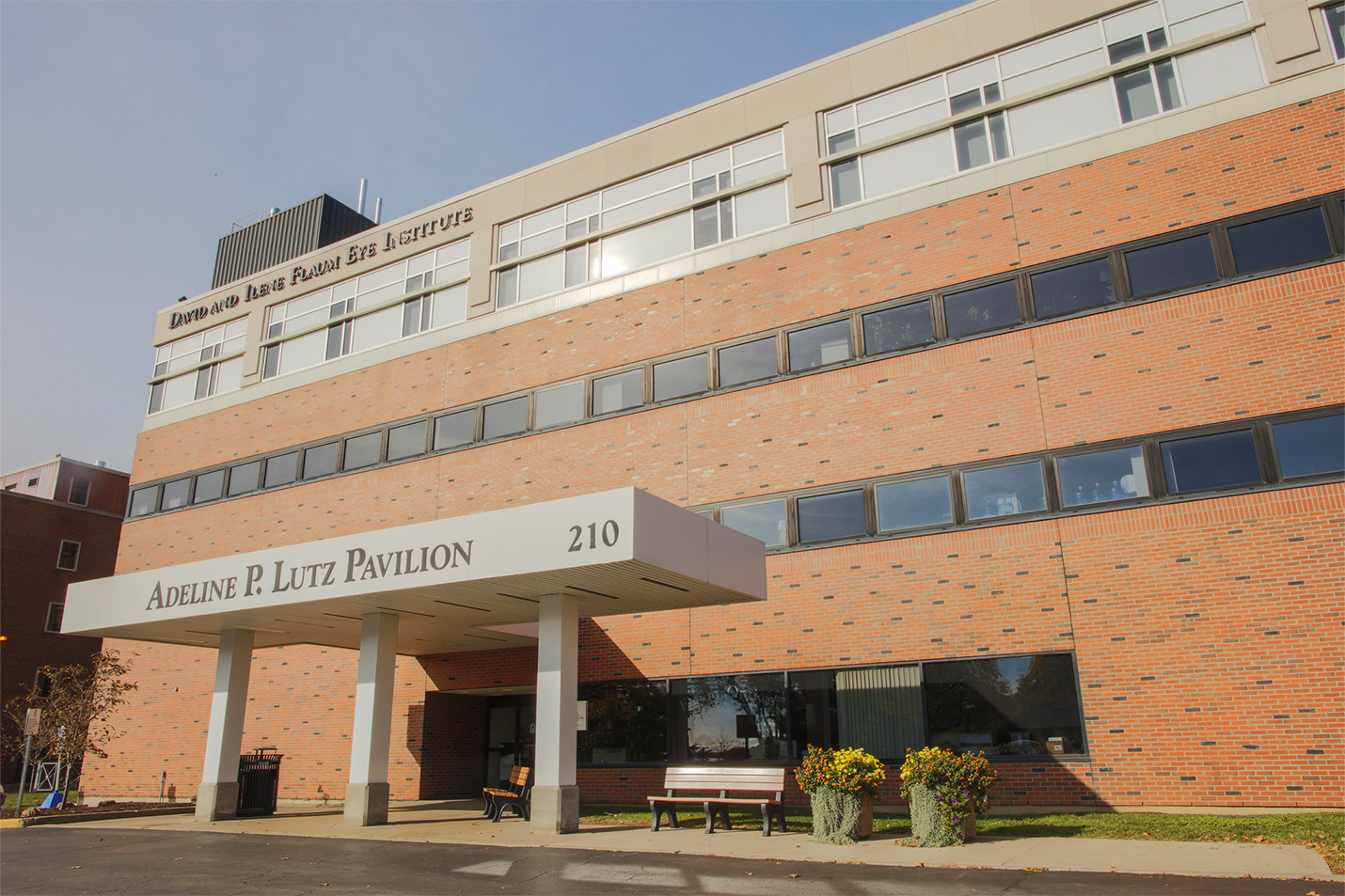
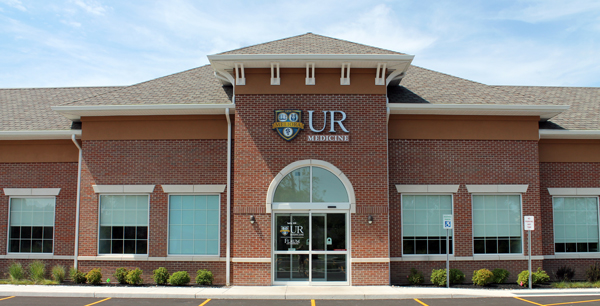
University of Rochester Medicine Flaum Eye Institute diagnoses and manages retina diseases in a new, state-of-the-art facility.
An ophthalmologist or optometrist often diagnoses the condition through a dilated eye exam. Depending on how severe the condition is and how far it has progressed, you might be referred to a retina specialist for more detailed tests.
A growing number of therapies are available to improve vision or slow the progression of vision loss from age-related macular degeneration, including:
- Vitamin supplements
- Administration of special medicines, called anti-VEGF, to stop retinal bleeding
- Laser surgery to seal leaking blood vessels
- Low-vision rehabilitation
A New Target for Treatment
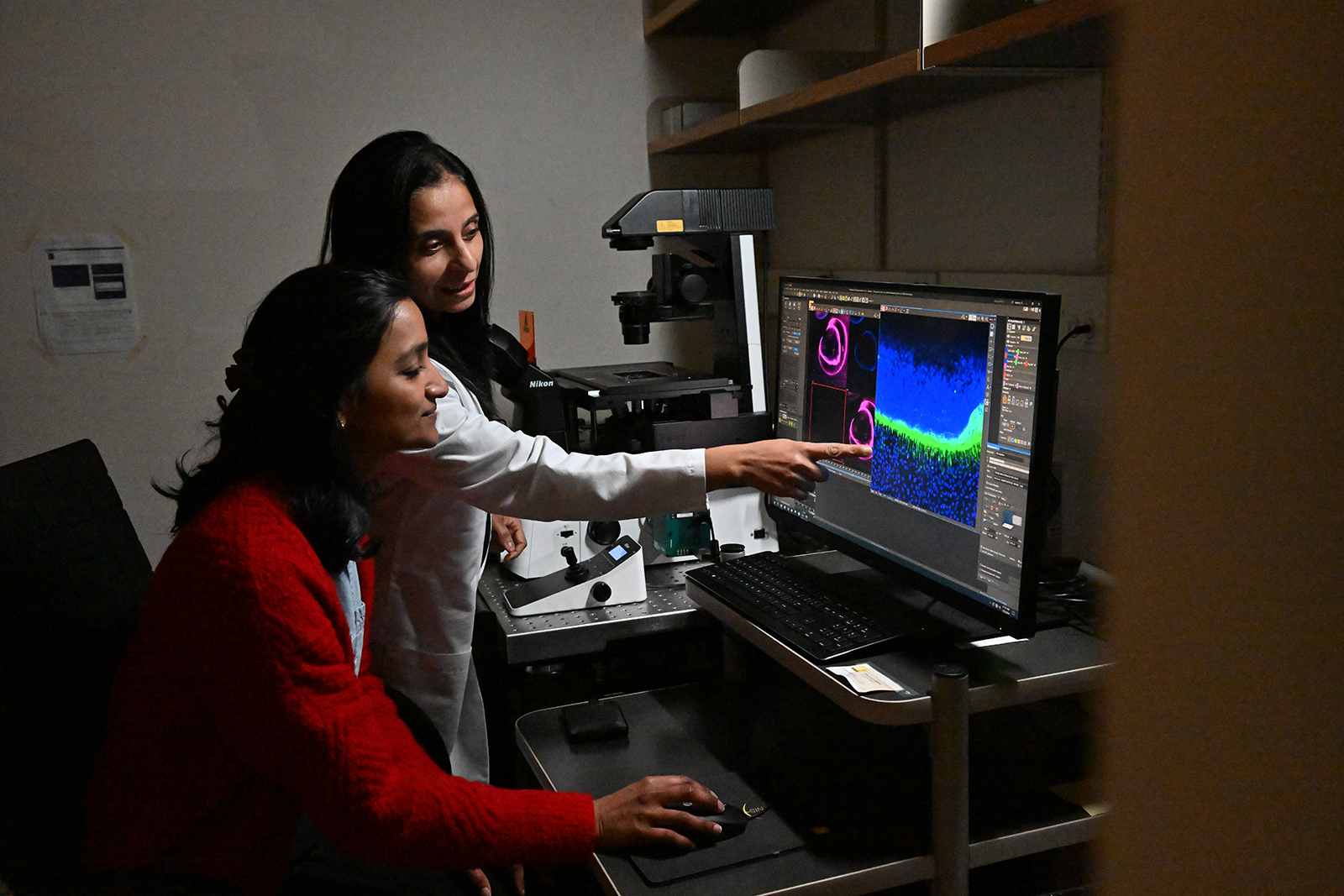
A new National Institutes of Health (NIH) grant will support promising research at University of Rochester Medicine to develop a more precise treatment approach that could help slow or prevent the damage that leads to blindness.
What Sets Us Apart?
At University of Rochester Medicine, we offer:
- Retina specialists experienced in diagnosing and treating complex eye diseases
- Advanced retinal imaging and diagnostic testing
- Access to the latest injections and therapies for wet macular degeneration
- Coordination between ophthalmology, low vision rehabilitation, and support services
- Clinical trials and emerging treatment options
- Personalized treatment plans focused on preserving quality of life and independence
We’re also a nationally recognized research center for understanding the causes of AMD and developing cures. This includes access to the latest pharmaceutical treatments and vision restoration techniques, including gene therapy.
Providers
Locations
View All LocationsWe serve you in the Rochester metropolitan area and surrounding region. Locations are ordered by distance, with those closest to listed first.
9 locations